 Andrew
General educational commentary only, generated automatically with AI. Not investment advice or a recommendation to buy, sell or hold any security. Capital is at risk.
Inflation Data Lifts Rate Expectations
The news brief reports that October inflation came in near 3.7%. That figure pushed expectations for a December rate hike sharply higher. Cleveland Fed President Beth Hammack favored a gradual approach to any further increases, according to Reuters. The 10-year Treasury yield is also rising. Higher yields can pressure valuations, especially for growth stocks whose earnings sit further in the future. One reading is that the market is repricing the path of policy rather than reacting to a single data point.
Housing Slump Adds to Consumer Questions
Existing-home sales fell 5.5% in October to a more than 16-year low, Reuters reported. Mortgage rates near 7% and high prices kept buyers away. The brief also notes that October's federal deficit reached a record $404 billion, up 42% from a year earlier. That adds to questions about government borrowing and inflation. Next week's retail-sales data may help show whether consumer demand is holding up. This may suggest that rate-sensitive parts of the economy are slowing faster than the broad indices show.
Chip Leadership Doubts Meet a Demand Debate
Uncertainty around Nvidia's leadership is weighing on sentiment toward AI and chip stocks, the brief reports. The demand story is not settled. AMD's Lisa Su said computing demand exceeds supply, according to Yahoo Finance. Other reports point to strong data-center investment. Some investors see washed-out positioning and improving participation as possible signs of a semiconductor or materials rebound. The brief notes those views still need price confirmation. One interpretation is that the sector faces a leadership question and a demand question at the same time, and the two may resolve separately.
Oil and Geopolitics Add Another Price Pressure
Oil moved higher amid renewed Middle East tensions, CNBC reported. The brief treats this as another potential source of inflation pressure. Energy costs can feed into headline inflation and complicate the Fed's outlook. The brief also flags next week's October FOMC minutes as an input for assessing policy direction. This may suggest that inflation risk now comes from more than one channel.
Online Sentiment Turns Cautious on Growth Themes
Online sentiment, drawn from unverified posts by anonymous retail users, has turned more cautious on AI and semiconductor themes, according to those posts. Such commentary may include rumour or speculation and has not been checked. It is not institutional flow or confirmed positioning. The same posts show divided views on rate-sensitive sectors. Some describe washed-out conditions; others describe continued concern. One reading is that retail commentary is echoing the news brief's uncertainty rather than leading it. The brief's own sentiment tag is bearish.
Chart Screen Flags Nasdaq Weakness on Several Measures
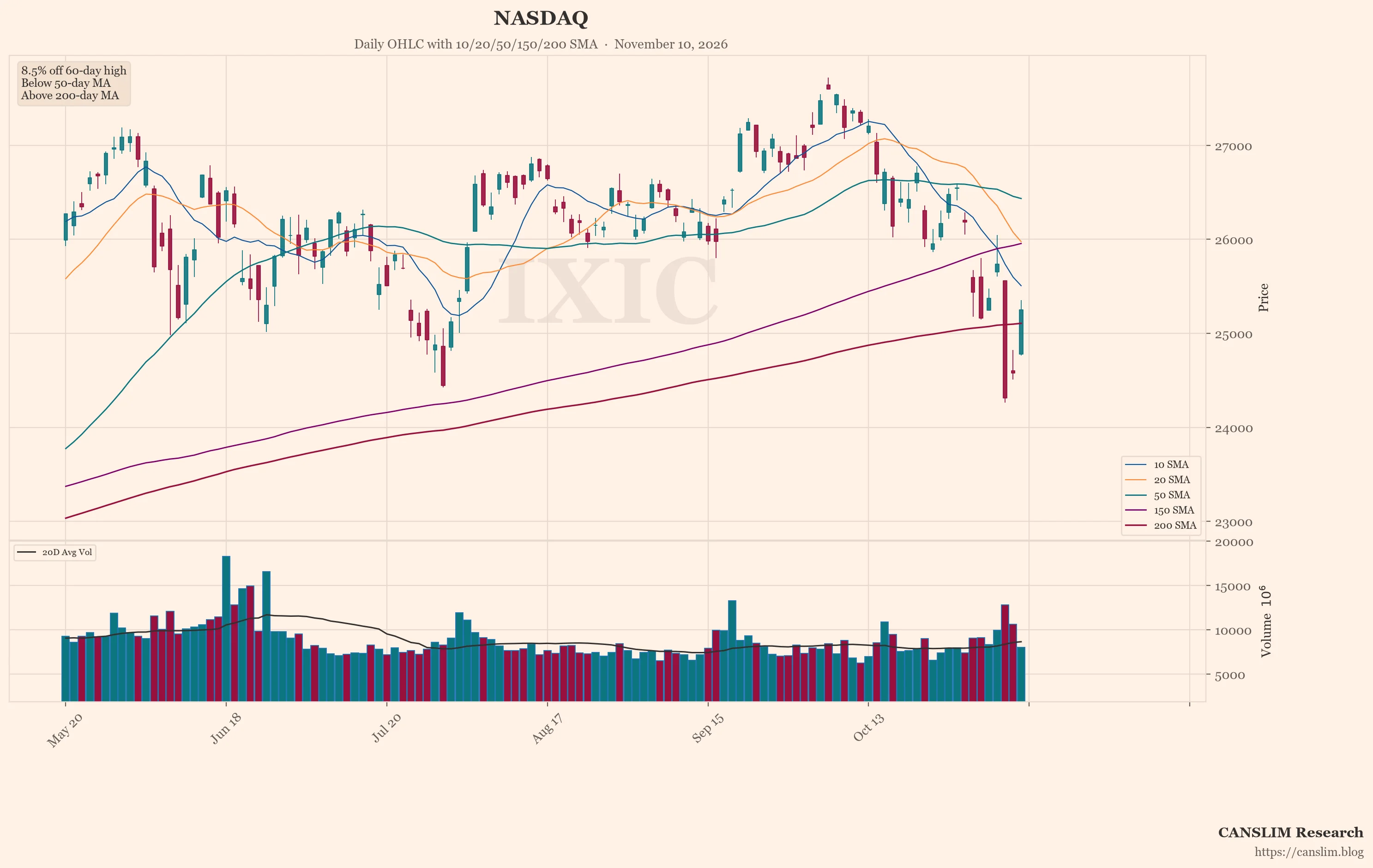
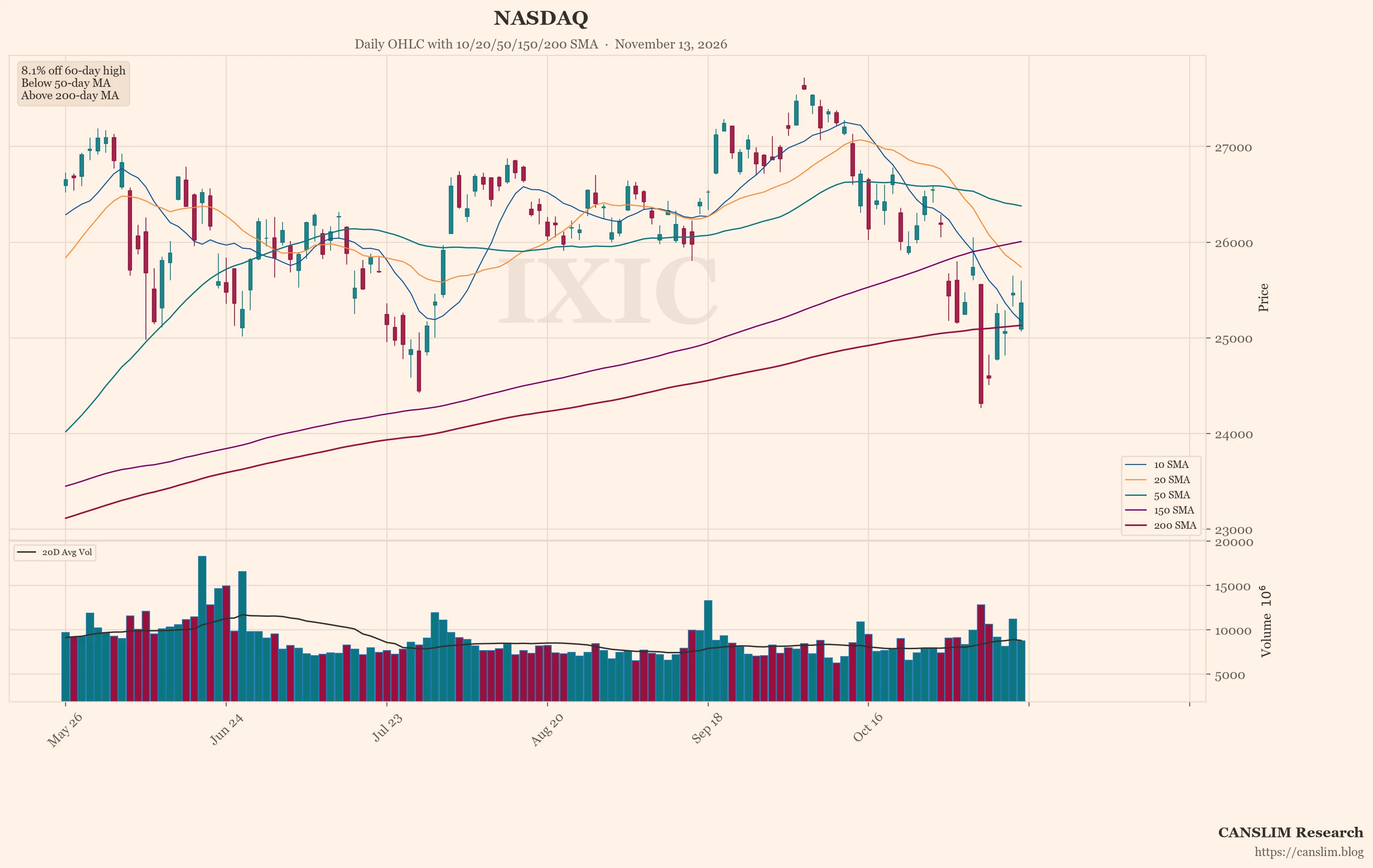
The featured chart shows the Nasdaq Composite (^IXIC). An automated technical screen selected it because, among the indices and stocks it checked, it showed the most weakness on a few measures. These were distance from its recent high, position versus its 50-day and 200-day moving averages, and down days on higher volume. One screen is not a full view of the market. Past price patterns do not predict future results. The reading is descriptive, not a signal.
Mixed Signals Leave Direction Unsettled
Conditions described in the source material are mixed. Inflation near 3.7%, a rising 10-year yield, a record $404 billion October deficit and a 5.5% drop in existing-home sales all argue for caution. Against that, AMD's demand comments and reports of strong data-center investment argue that the AI spending story remains intact. Oil tensions add inflation risk. Online sentiment from anonymous posts is cautious but unverified. The main uncertainties are the Fed's next steps, Nvidia's leadership situation and whether chip-sector weakness stabilizes. The brief suggests near-term direction may hinge on inflation and yield moves. Risks include further yield increases, a weaker consumer and renewed energy-driven inflation.
Sources: a third-party AI-generated market news summary, and an AI summary of unverified posts by anonymous retail users online. This article was written by an AI language model from those summaries and published automatically without human review. Updated 2026-11-13 06:00 HKT.
CANSLIM Research (canslim.blog) is an independent educational publisher. It is not licensed or registered as a broker, investment adviser, research analyst or asset manager in any jurisdiction. This article is general information for education only. It is not investment advice, a research report, an investment recommendation, or an offer or solicitation to buy or sell any security, and it does not consider any reader's objectives, financial situation or needs. No ticker, chart, heading or technical comment is a suggestion to buy, sell, hold or short. Figures come from third-party sources, are not independently verified, and may be incomplete, out of date or wrong. Online sentiment may include rumour, speculation or coordinated posting. Past performance and past price patterns do not predict future results. Investing involves risk, including the loss of capital. This article is not updated after publication. Laws differ by country; seek advice from a licensed professional in your jurisdiction before making any investment decision.