 Andrew
General educational commentary only, generated automatically with AI. Not investment advice or a recommendation to buy, sell or hold any security. Capital is at risk.
Inflation Data Comes in above Forecast
The news brief reports that October consumer prices rose 0.4% for the month. That was above the 0.3% forecast. Core inflation rose 0.3% for a third straight month. The source describes this as a sign that price pressures remain persistent.
According to The Wall Street Journal, U.S. stocks slipped on the inflation data and on worries about AI themes. Technology shares came under pressure. Higher yields tend to weigh on rate-sensitive and technology shares, the brief notes.
Treasury Yields Return to the 5% Area
The 10-year Treasury yield moved back toward 5%, CNBC reported. The brief says this raises borrowing costs and puts pressure on stock valuations. The dollar strengthened as rate expectations climbed. Asian currencies weakened after the U.S. CPI data, according to The Wall Street Journal.
The brief also notes that gasoline averaged $3.98 a gallon. That is below $4 for the first time since July. The source presents this as some relief for consumers, while price pressure keeps the Fed focused on inflation.
Fed Officials Differ on the Pace of Tightening
Reuters reported that Philadelphia Fed President Anna Paulson called for gradual rate hikes amid ongoing high inflation. The brief also says Dallas Fed President Lorie Logan called for at least two more quarter-point increases. The source presents these as different views on pace, not a single house view.
Markets are weighing a December hike, the brief says. Traders are also debating whether the Fed might raise rates more than once. The source does not state what the Fed will do. It says investors will watch upcoming inflation data and Fed remarks for clues.
Online Sentiment Turns Cautious on Rate Themes
Online sentiment is one input among many. It comes from unverified posts by anonymous retail users online. These posts may include rumour or speculation, and they have not been checked. They are not a record of institutional flow or confirmed positioning.
In the source material, sentiment is described at theme level only. The brief labels overall sentiment as bearish. One reading is that anonymous retail posts have turned more cautious on rate-sensitive themes and on growth themes in general. This may suggest that the same inflation data shaping news coverage is also shaping how some online users describe the market. That reading is interpretation, not a measured survey.
A Screen Flags Weakness in the Nasdaq
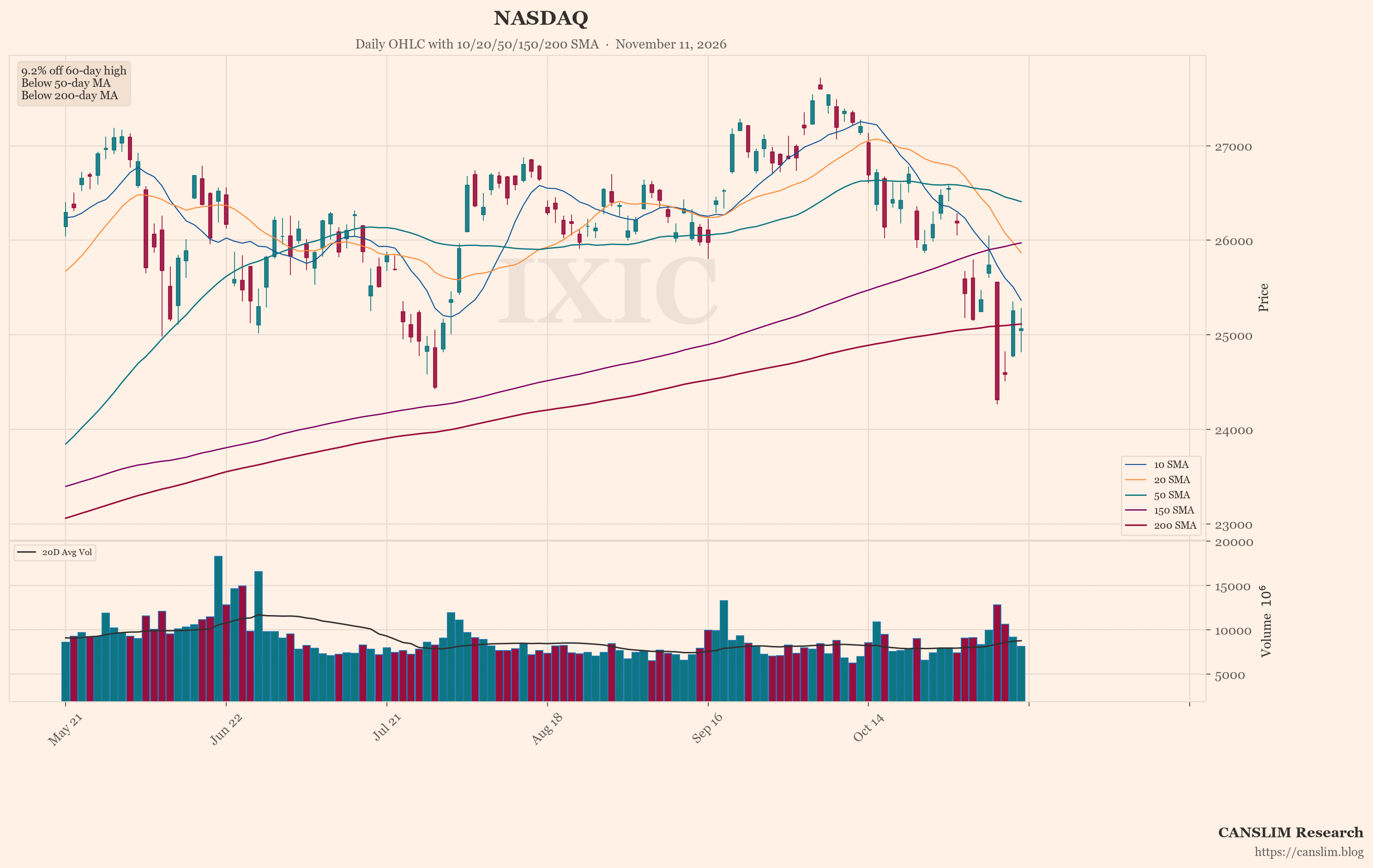
The featured chart shows the Nasdaq Composite (^IXIC). An automated technical screen picked it because, among the indices and stocks it checked, it showed the most weakness on a few measures. These were distance from its recent high, position versus its 50-day and 200-day moving averages, and down days on higher volume.
This is a description of what the measures show. One screen is not a full view of the market. Past price patterns do not predict future results. The screen is not a signal to act on any index or stock.
Conditions Remain Split between Relief and Pressure
The sources describe a market pulled in two directions. On one side, inflation ran above forecast and yields moved back toward 5%. Fed officials differ on pace, and a December move is still being debated. On the other side, gasoline fell below $4 a gallon, which the brief presents as modest consumer relief.
For those who study growth-stock methods, the brief offers context rather than direction. Technology shares were under pressure. Rate expectations rose. Online sentiment, as reported in the source, leaned cautious. These conditions could change with the next inflation report or Fed remarks. The main risks are persistent inflation, higher yields and uncertainty over the pace of tightening. The source material does not resolve those risks, and it does not say how they will end.
Sources: a third-party AI-generated market news summary, and an AI summary of unverified posts by anonymous retail users online. This article was written by an AI language model from those summaries and published automatically without human review. Updated 2026-11-11 14:00 HKT.
CANSLIM Research (canslim.blog) is an independent educational publisher. It is not licensed or registered as a broker, investment adviser, research analyst or asset manager in any jurisdiction. This article is general information for education only. It is not investment advice, a research report, an investment recommendation, or an offer or solicitation to buy or sell any security, and it does not consider any reader's objectives, financial situation or needs. No ticker, chart, heading or technical comment is a suggestion to buy, sell, hold or short. Figures come from third-party sources, are not independently verified, and may be incomplete, out of date or wrong. Online sentiment may include rumour, speculation or coordinated posting. Past performance and past price patterns do not predict future results. Investing involves risk, including the loss of capital. This article is not updated after publication. Laws differ by country; seek advice from a licensed professional in your jurisdiction before making any investment decision.