Andrew
General educational commentary only, generated automatically with AI. Not investment advice or a recommendation to buy, sell or hold any security. Capital is at risk.
Inflation Surprise Lifts Yields and Rate Expectations
October consumer price data came in above forecasts, according to the news brief. The headline CPI rose 0.4%, compared with a 0.3% forecast. Underlying inflation has stayed firm for three straight months. The brief reports that this pushed Treasury yields higher and weighed on stocks on Tuesday. It also strengthened bets on further Fed tightening. Goldman Sachs now expects another rate hike in March, according to Reuters and MarketWatch. Two Federal Reserve officials suggested the central bank may need to quicken the pace of rate increases as the December meeting nears, the Wall Street Journal reported. This is a policy signal, not a market call. Higher yields can pressure stock valuations, especially for growth names whose earnings sit further in the future.
AI Shares Rebound but the Brief Calls It an Early Attempt
Nasdaq futures rallied early Wednesday as AI shares rebounded, Invezz reported. The brief describes the move as an early recovery attempt, not evidence that the tech selloff is over. Concerns about elevated yields, AI valuations and the financing behind data-center expansion remain. Reuters reported that after the US market shake-out, signs suggest it is too soon to say the worst is over. One reading is that a single session of futures strength does not settle the questions the brief raises. The source does not give index levels or the size of the move beyond the futures reference.
Defensive Areas Draw Attention as Tech Volatility Rises
Investors are rotating toward healthcare, consumer staples, utilities and other lower-volatility areas, according to CNBC and MarketWatch. CNBC described markets as entering a "state of alert." The brief ties this shift to anxiety around tech and AI. Sector rotation of this kind has appeared before in growth-stock study, and it is a description of what has happened, not a signal. The brief does not give fund flow figures or the size of the rotation. It also does not say how long the shift might last.
Retail Spending Grows While Household Strain Is Reported
October retail sales increased 0.2% from September and 3.6% year over year, the brief reports. The core measure rose 0.3% monthly. At the same time, the CNBC/NRF Retail Monitor shows consumers showing signs of strain even as they keep spending, CNBC reported. Reports point to strain among households and higher winter heating bills. Gas prices have recently eased, but the brief notes that higher expected heating costs could absorb part of that benefit. One interpretation is that spending growth and household stress can coexist, which makes the demand picture less clear than the headline number alone.
Online Sentiment Turns Cautious on Growth Themes
Online sentiment, drawn from unverified posts by anonymous retail users, may include rumour or speculation and has not been checked. At the theme level, posts tracked in the source material lean cautious on AI and high-multiple growth themes. Some commentary questions whether the AI rebound can hold. Other posts discuss defensive sectors more often. This is not institutional flow, "smart money" or confirmed positioning, and it should not be read as fact. It is a sentiment reading only. The source material does not quantify it.
Chart Screen Flags Nasdaq Weakness on Several Measures
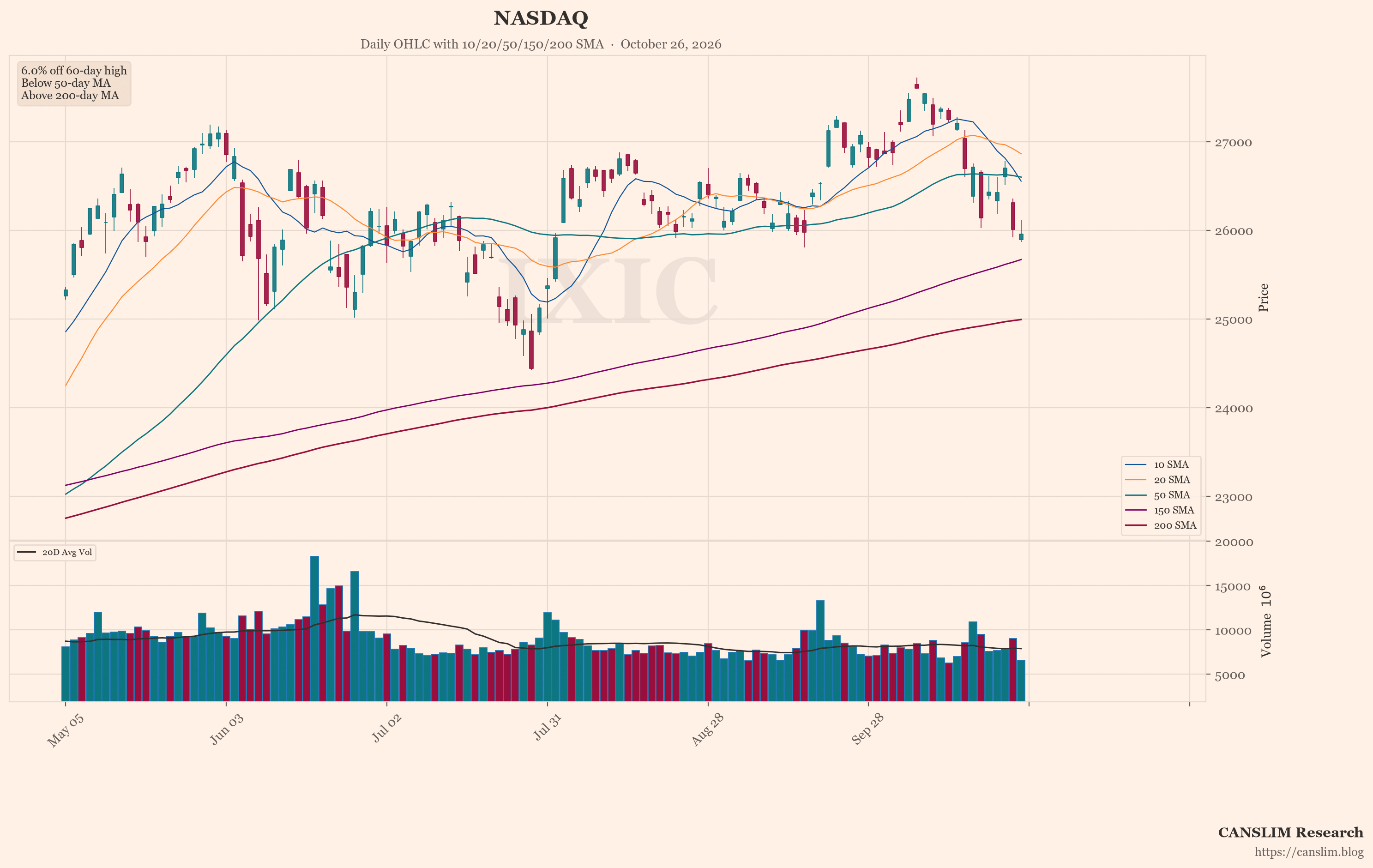
The featured chart shows the Nasdaq (^IXIC). An automated technical screen picked it because, among the indices and stocks it checked, it showed the most weakness on a few measures. These were distance from its recent high, position versus its 50-day and 200-day moving averages, and down days on higher volume. This is one screen, not a full view of the market. Past price patterns do not predict future results. The brief also notes that the AI buildout relies more on debt, which adds credit risk if returns fail to keep pace.
Mixed Signals Leave the Outlook Uncertain
Conditions described in the source material are mixed. Inflation ran hot, yields rose and rate-hike expectations moved forward. AI shares rebounded in early futures trading, but the brief calls that an early attempt. Defensive areas drew attention while retail spending kept growing at a modest pace. Online sentiment leaned cautious on growth themes, though such posts are unverified. Risks include a longer tightening period, pressure on valuations, credit risk in the AI buildout and household strain. The direction of the market remains uncertain, and the sources do not settle it.
Sources: a third-party AI-generated market news summary, and an AI summary of unverified posts by anonymous retail users online. This article was written by an AI language model from those summaries and published automatically without human review. Updated 2026-11-11 22:00 HKT.
CANSLIM Research (canslim.blog) is an independent educational publisher. It is not licensed or registered as a broker, investment adviser, research analyst or asset manager in any jurisdiction. This article is general information for education only. It is not investment advice, a research report, an investment recommendation, or an offer or solicitation to buy or sell any security, and it does not consider any reader's objectives, financial situation or needs. No ticker, chart, heading or technical comment is a suggestion to buy, sell, hold or short. Figures come from third-party sources, are not independently verified, and may be incomplete, out of date or wrong. Online sentiment may include rumour, speculation or coordinated posting. Past performance and past price patterns do not predict future results. Investing involves risk, including the loss of capital. This article is not updated after publication. Laws differ by country; seek advice from a licensed professional in your jurisdiction before making any investment decision.