 Andrew
General educational commentary only, generated automatically with AI. Not investment advice or a recommendation to buy, sell or hold any security. Capital is at risk.
Futures Point Lower after a Strong Week
Stocks enter the week with mixed signals. The S&P 500 rose 2.5% to 7,561.67 last week, according to the news brief. That recovered some earlier losses. But early Monday futures pointed lower. Nasdaq 100 futures were down 0.9% and S&P 500 futures were down 0.4% in an early snapshot, the brief reported. Asian markets were weaker at the same time. The brief describes a tug-of-war between last week's rebound and fresh pressure on AI and semiconductor shares.
Nvidia Results Seen as the Week's Main Test
Nvidia's earnings are the week's key event, per the news brief. The results are framed as a test of whether AI infrastructure demand can keep supporting the market. The brief notes a volatile stretch and reports of a leadership shake-up. It also says the AI investment case is contested. Strong usage and infrastructure demand support suppliers. At the same time, competition, tighter credit and moderating earnings growth raise risks. The wider question in the brief is whether the AI pullback is a temporary reset or a sign that expected growth and valuations are being reassessed.
Inflation Data Lift Rate-Hike Expectations
October CPI ran hotter than expected, according to the news brief. The reported odds of a December Fed rate hike rose to 88.5%. The Wall Street Journal reported that Treasury yields declined but rate-hike prospects stayed in focus. Yields had eased in Asian trading after last week's sharp climb, the brief said. The rate outlook remains unsettled. Higher yields can weigh on stock valuations, the brief notes. Japan's economy also unexpectedly contracted in the third quarter, Reuters reported, which points to softer momentum abroad. U.S.-China tensions over advanced chips remain in view ahead of Trump-Xi discussions, Reuters reported.
Bulls and Bears Split on the Outlook
The brief contains both constructive and cautious views. Morgan Stanley raised its global-equity stance to maximum overweight, Reuters reported, citing cheap valuations and earnings strength. Several bullish views point to resilient earnings and historically strong returns in the third year of the presidential cycle. On the other side, Reuters reported that semiconductor stocks may slide as another recovery fades. One reading is that the market is caught between a rebound in earnings expectations and pressure from rates and chip-sector uncertainty. This may suggest that confidence has not fully stabilised, as the brief itself notes.
Online Sentiment Tracks the AI Debate
Online sentiment offers a separate, less reliable signal. It comes from unverified posts by anonymous retail users, which may include rumour or speculation and has not been checked. In recent discussion, sentiment around AI and semiconductor themes appears divided. Some posts describe the pullback as a normal pause. Others focus on valuation and rate risk. Sentiment on the broad index looks more cautious than it did during last week's rebound. These posts are not institutional flow and do not show confirmed positioning. They are theme-level chatter only. One interpretation is that retail discussion is mirroring the same debate found in the news brief, without adding verified information.
Chart Screen Flags Nasdaq Weakness
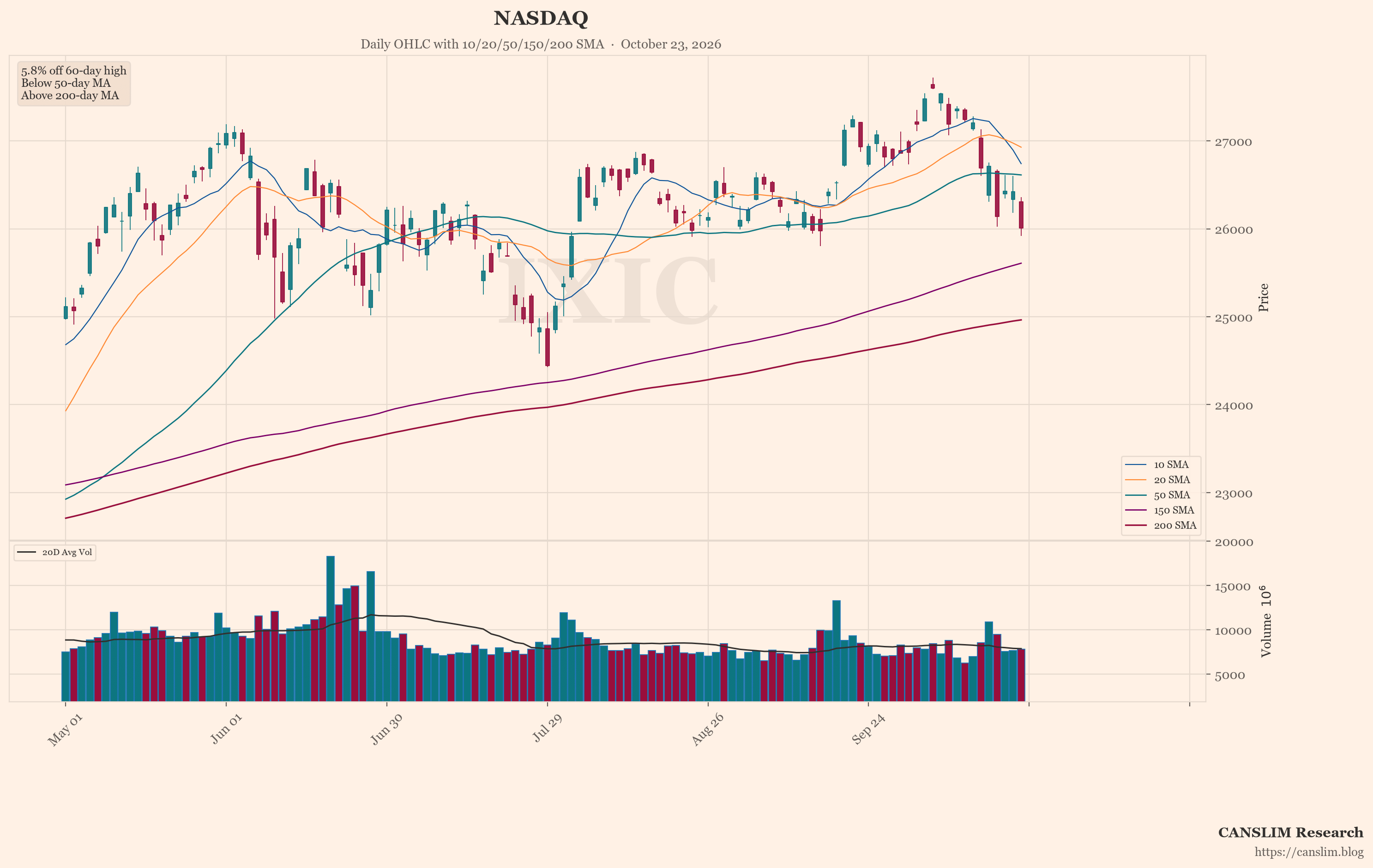
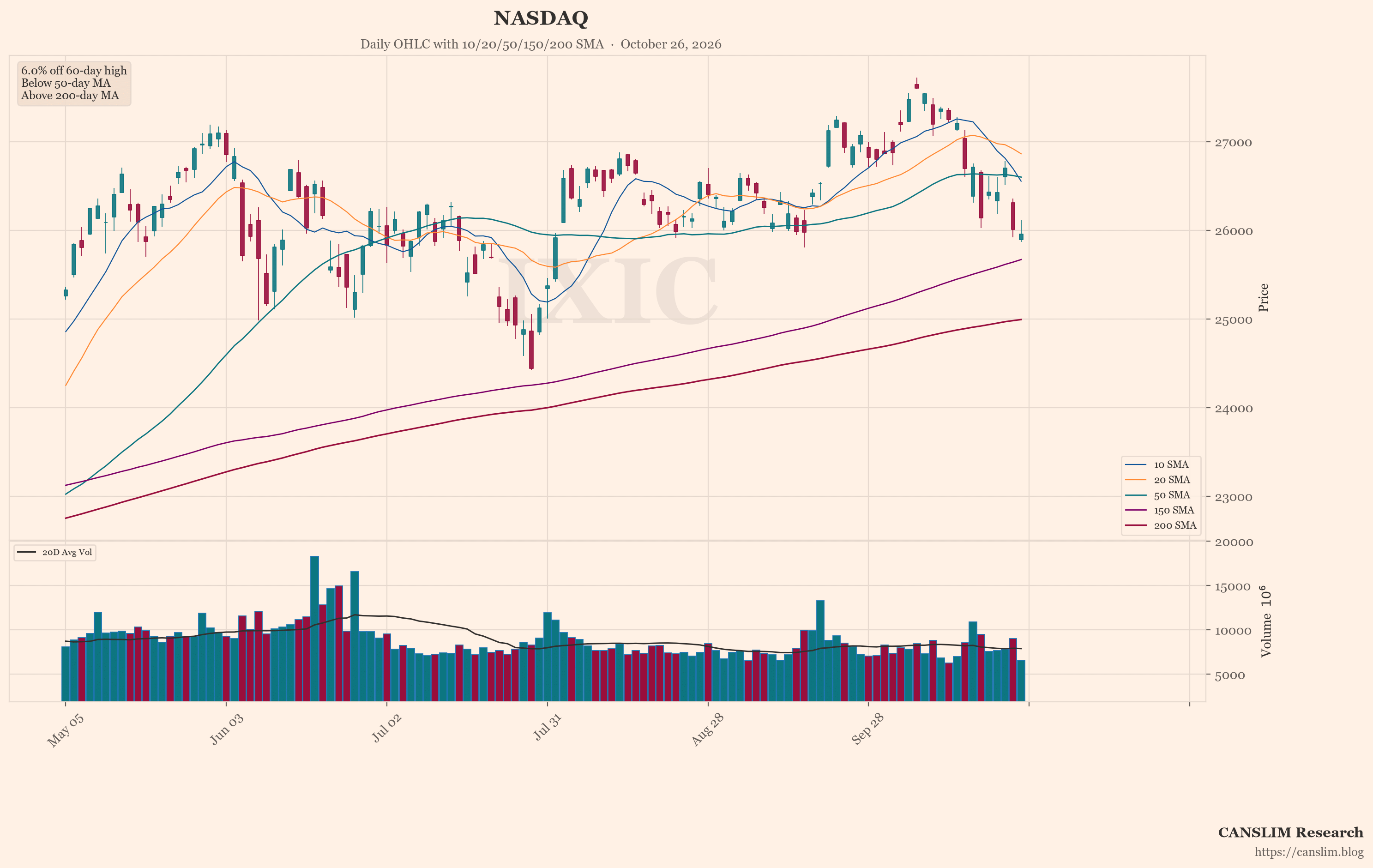
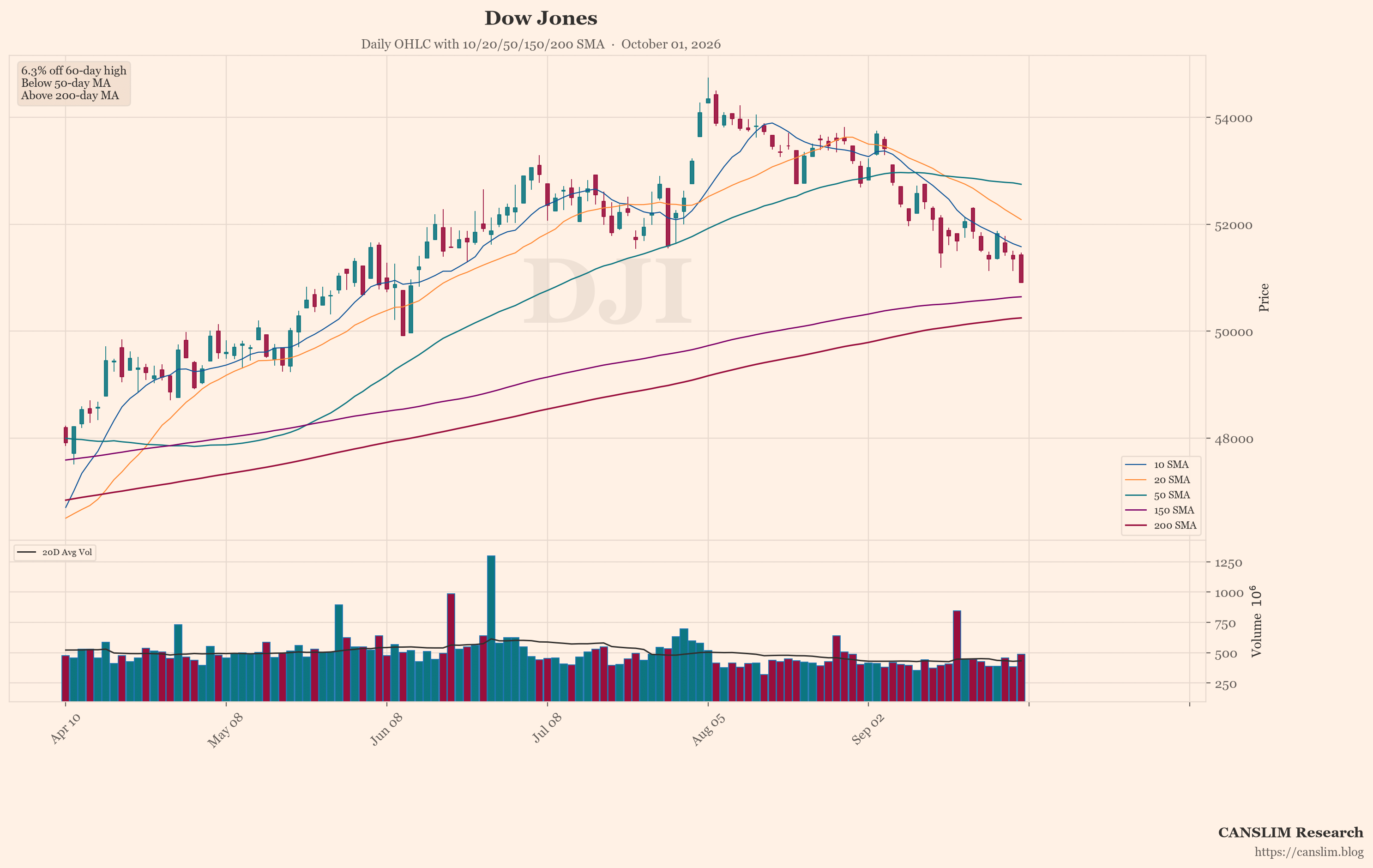
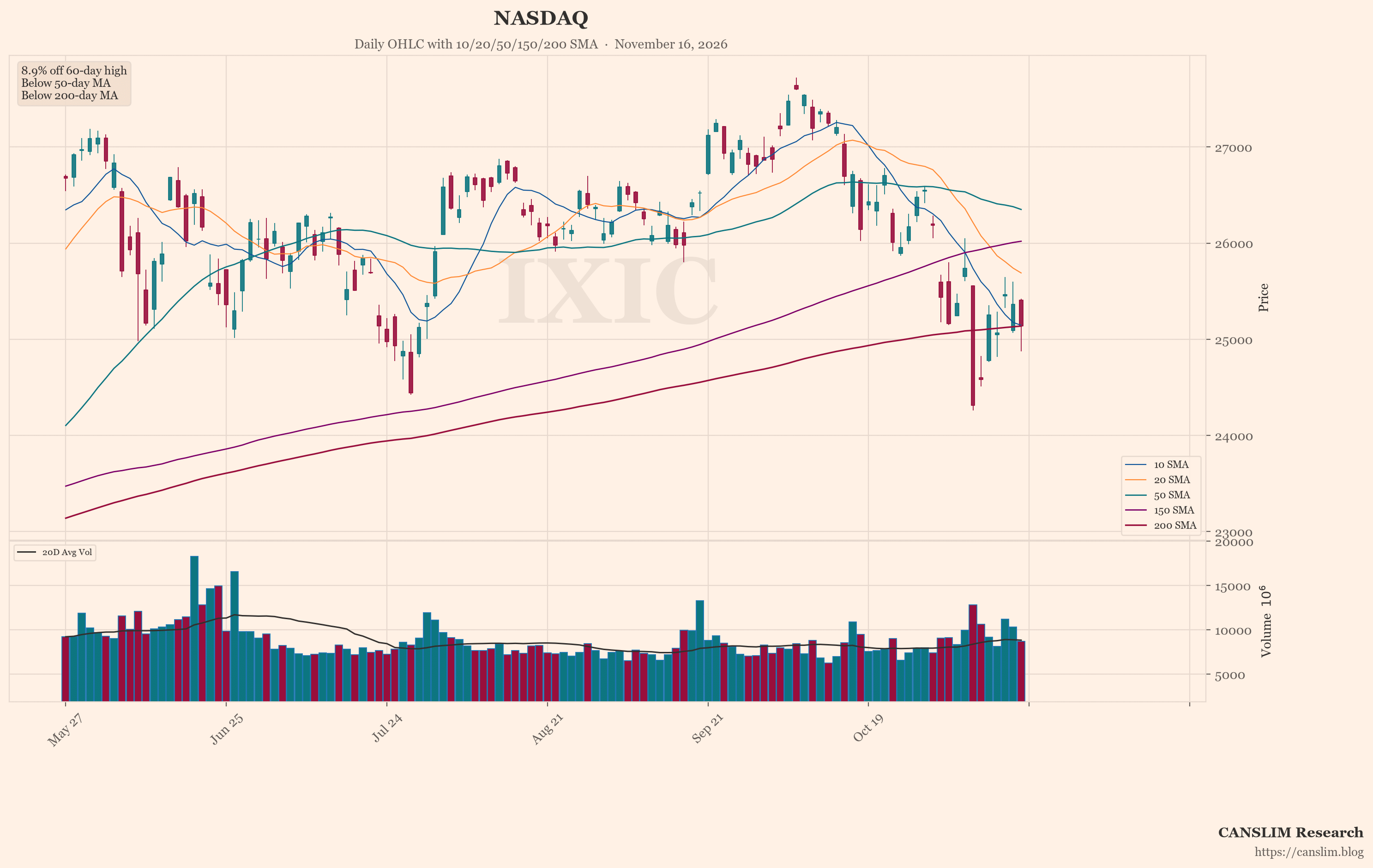
The featured chart shows the NASDAQ (^IXIC). An automated technical screen selected it because, among the indices and stocks it checked, it showed the most weakness on a few measures. These were distance from its recent high, position versus its 50-day and 200-day moving averages, and down days on higher volume. This is a description of what the measures show, not a signal. One screen is not a full view of the market. Past price patterns do not predict future results.
Conditions Remain Split between Support and Strain
The sources describe a market with real support and real strain. Last week's 2.5% gain and bullish calls from Morgan Stanley sit against weaker futures, hot inflation data and a rising probability of a December rate hike. Nvidia's results may shape views on AI spending. Japan's contraction and chip tensions add uncertainty abroad. Online sentiment is divided and unverified. The screen on the NASDAQ (^IXIC) shows weakness on several measures, but one screen is not a full view. Overall, the sources point to a market where the AI theme, rate expectations and earnings reactions remain the main areas of tension.
Sources: a third-party AI-generated market news summary, and an AI summary of unverified posts by anonymous retail users online. This article was written by an AI language model from those summaries and published automatically without human review. Updated 2026-11-16 22:00 HKT.
CANSLIM Research (canslim.blog) is an independent educational publisher. It is not licensed or registered as a broker, investment adviser, research analyst or asset manager in any jurisdiction. This article is general information for education only. It is not investment advice, a research report, an investment recommendation, or an offer or solicitation to buy or sell any security, and it does not consider any reader's objectives, financial situation or needs. No ticker, chart, heading or technical comment is a suggestion to buy, sell, hold or short. Figures come from third-party sources, are not independently verified, and may be incomplete, out of date or wrong. Online sentiment may include rumour, speculation or coordinated posting. Past performance and past price patterns do not predict future results. Investing involves risk, including the loss of capital. This article is not updated after publication. Laws differ by country; seek advice from a licensed professional in your jurisdiction before making any investment decision.