 Andrew
General educational commentary only, generated automatically with AI. Not investment advice or a recommendation to buy, sell or hold any security. Capital is at risk.
Tech Shares Slide as AI Cost Questions Intensify
Stocks fell sharply on Thursday. The news brief reports that investors questioned whether the large sums being directed into AI will produce returns quickly enough. The Nasdaq fell 2.6%, its steepest daily drop since June. The S&P 500 had its worst session since July, according to the brief.
Meta's strong revenue growth and earnings beat did little to calm the market. The brief states that its planned 2026 capital spending of $135 billion to $145 billion sharpened concerns about costs, cash flow and the timing of AI payoffs. Semiconductor shares also weakened. The Wall Street Journal described the session as tech stocks falling on AI concerns.
Oil Prices and Shipping Risks Return to Focus
Oil added pressure on the day. Crude climbed to a five-month high. The brief cites attacks in Saudi Arabia and risks to regional shipping as reasons for fears of a renewed supply shock. MarketWatch reported that oil prices approached Iran-war highs as soaring tanker rates triggered a second energy squeeze. Gulf exports have been recovering, according to the brief, but that did not stop the move in crude.
Producer Prices Exceed Forecasts
September producer prices came in much hotter than expected. The brief reports they rose 1.3% month over month and 6.3% from a year earlier. One outlet, 24/7 Wall St., raised the question of whether an October rate hike is all but assured. The brief does not settle that question. It notes that the market is balancing inflation risk against signs of safety demand.
Treasury Yields Fall as Safety Demand Grows
The 10-year Treasury yield moved below 5% as investors sought safety. MarketWatch framed the move around the idea that "AI is on trial," with bond yields sinking as investors looked for safety. One reading is that caution spread beyond equities into the rate market. Falling yields can reflect demand for safer assets, but the brief does not say what the move means for Fed policy.
Breadth Holds Up Better than Headline Indexes
Early market breadth was less weak than the index performance suggested. The brief notes that more S&P 500 stocks advanced than declined at midday. Seeking Alpha described it as a bad day with decent breadth. This may temper, but does not erase, the warning from the selloff. Weekly jobless claims fell to 194,000, near multidecade lows, according to the brief. CNBC reported that claims are near the lowest since the 1960s as a low-fire trend continues. The Wall Street Journal said claims returned to a downward trend.
Online Sentiment Turns Cautious on Growth Themes
Online sentiment around growth themes has turned more cautious, based on unverified posts by anonymous retail users. These posts may include rumour or speculation and have not been checked. They are not a measure of institutional flow or confirmed positioning. Commentary across anonymous retail posts has focused on AI-related spending and whether the payoff timeline is realistic. Some posts describe the semiconductor area with more caution than in prior weeks. Others discuss oil and inflation as renewed headwinds for the broader market. This is theme-level chatter only. It should be treated as unconfirmed and separate from reported data.
Chart Screen Flags Nasdaq Weakness on Several Measures
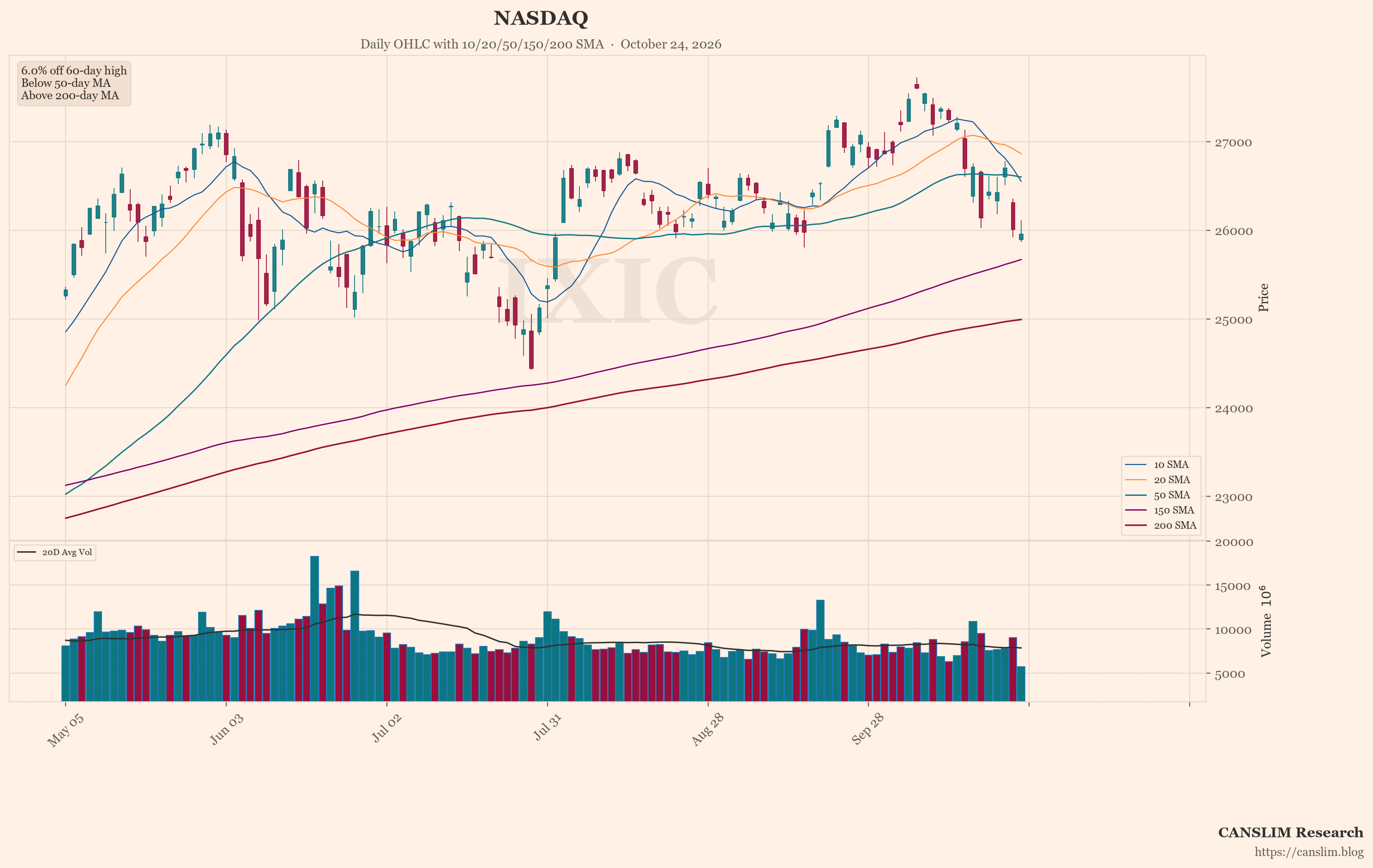
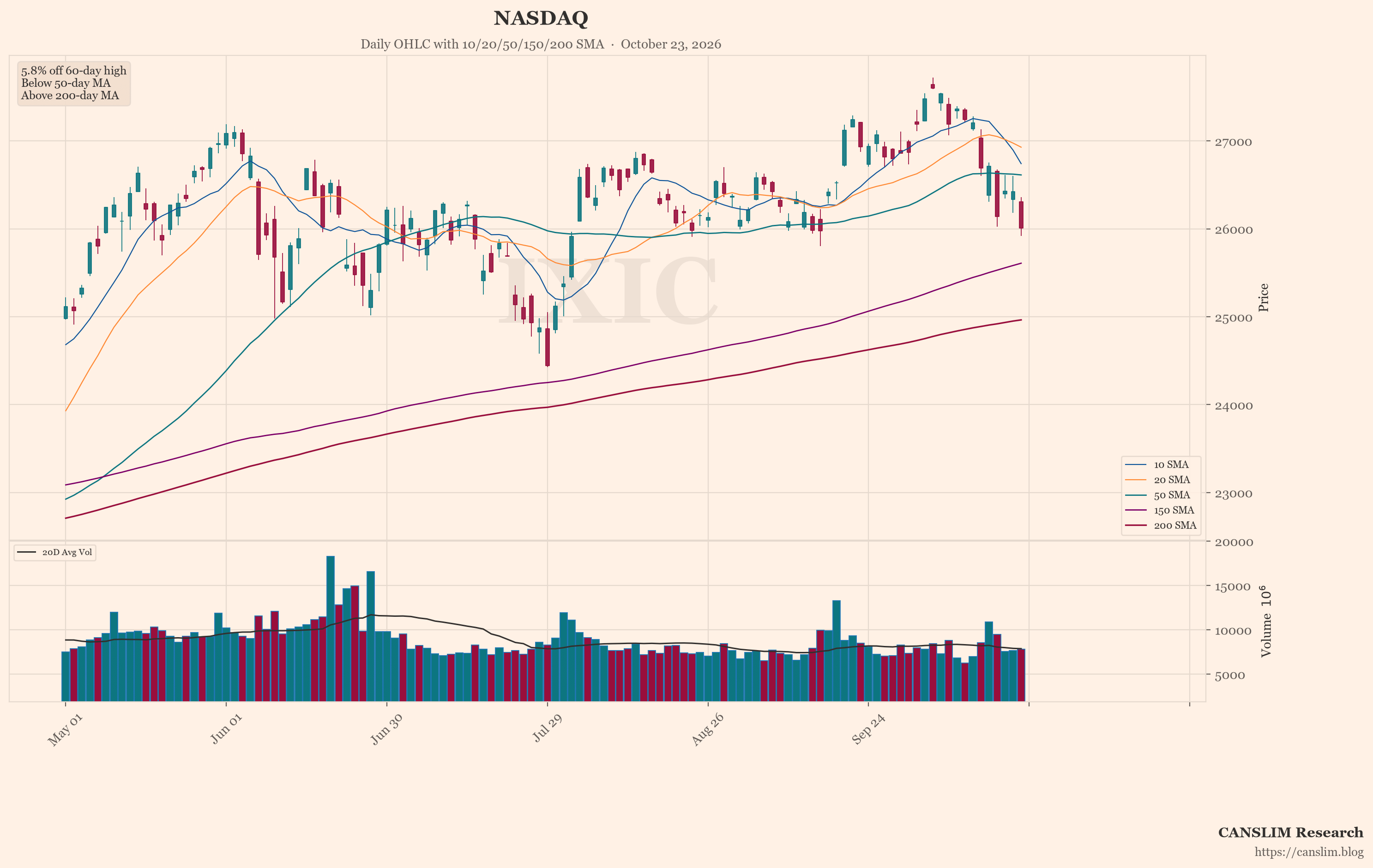
The featured chart shows the Nasdaq (^IXIC). An automated technical screen picked it because, among the indices and stocks it checked, it showed the most weakness on a few measures. These include distance from its recent high, position versus its 50-day and 200-day moving averages, and down days on higher volume. One screen is not a full view. Past price patterns do not predict future results.
Mixed Signals Leave the Outlook Uncertain
Conditions on Thursday were mixed. Index declines were sharp, and AI spending questions drove the tone. Oil and producer prices added pressure. Yet Treasury yields fell, jobless claims stayed low, and early breadth was less negative than the headline numbers. Online sentiment, drawn from unverified anonymous posts, leaned cautious on growth themes. The main risks are a supply shock from oil, inflation that stays hot, and doubt about when AI spending produces returns. Whether upcoming results show credible returns is uncertain. The brief also notes that Middle East tensions and inflation data could change the outlook for Fed policy. These factors may keep volatility elevated, but the sources do not agree on a single direction.
Sources: a third-party AI-generated market news summary, and an AI summary of unverified posts by anonymous retail users online. This article was written by an AI language model from those summaries and published automatically without human review. Updated 2026-10-23 06:00 HKT.
CANSLIM Research (canslim.blog) is an independent educational publisher. It is not licensed or registered as a broker, investment adviser, research analyst or asset manager in any jurisdiction. This article is general information for education only. It is not investment advice, a research report, an investment recommendation, or an offer or solicitation to buy or sell any security, and it does not consider any reader's objectives, financial situation or needs. No ticker, chart, heading or technical comment is a suggestion to buy, sell, hold or short. Figures come from third-party sources, are not independently verified, and may be incomplete, out of date or wrong. Online sentiment may include rumour, speculation or coordinated posting. Past performance and past price patterns do not predict future results. Investing involves risk, including the loss of capital. This article is not updated after publication. Laws differ by country; seek advice from a licensed professional in your jurisdiction before making any investment decision.
Discover more from CANSLIM Research
Subscribe to get the latest posts sent to your email.