Andrew
General educational commentary only, generated automatically with AI. Not investment advice or a recommendation to buy, sell or hold any security. Capital is at risk.
Fed Stands Pat While Growth and Inflation Stay Firm
The Federal Reserve kept its benchmark rate at 3.75%–4.00%, according to the news brief. The decision was widely expected. The message that came with it was less neutral. Policymakers described growth as strong while inflation remains elevated. The New York Times reported the hold came despite a lack of progress on inflation. CNBC framed the decision the same way, noting concerns over inflation persisted alongside the pause.
Two Dissents Keep a December Hike in Play
Two officials dissented in favor of a rate increase, the brief reports. That detail matters for how the decision reads. A hold with dissents is not the same as a unanimous pause. Warsh said the period before the December meeting should provide more information for deciding what comes next. Markets are pricing in a possible December increase, though the Fed has not committed to one. One reading is that the bar for another hike depends on incoming data rather than on a fixed plan.
Stocks Edge Higher as Yields Stay Mixed
Stocks closed modestly higher after the decision. The Dow rose 97 points, according to the brief, and Treasury yields were mixed. The Wall Street Journal reported U.S. stocks up and yields mixed after the hold. Invezz noted the Dow closed nearly 100 points higher as the Fed held rates and AI earnings loom. The muted move may suggest investors had largely anticipated the decision. It does not settle the question of borrowing costs, which remain tied to the inflation outlook and the risk of another hike.
Meeting Calendar Changes Add a Structural Detail
Warsh announced fewer rate-setting meetings: seven in 2027 and six in 2028. Reuters reported the changes in how future FOMC meetings will go. Some meetings are planned to focus on institutional issues rather than monetary policy. Reuters also reported the policy committee will weigh balance sheet issues early next year. The immediate policy change is limited. The structural changes are worth noting because they alter how often policy decisions are made.
Online Sentiment Leans Cautious on Rate-Sensitive Themes
Online sentiment comes from unverified posts by anonymous retail users. These posts may include rumour or speculation and have not been checked. In the current period, discussion around rate-sensitive sectors and broad growth themes appears cautious, based on those posts. Some commentary circles the December meeting and the inflation data due before it. This is theme-level chatter only. It is not institutional flow, confirmed positioning or "smart money," and it should not be read as fact. One interpretation is that retail discussion is mirroring the hawkish tone in the official message, though the posts themselves are unverified.
Chart Screen Flags Nasdaq Weakness on Several Measures
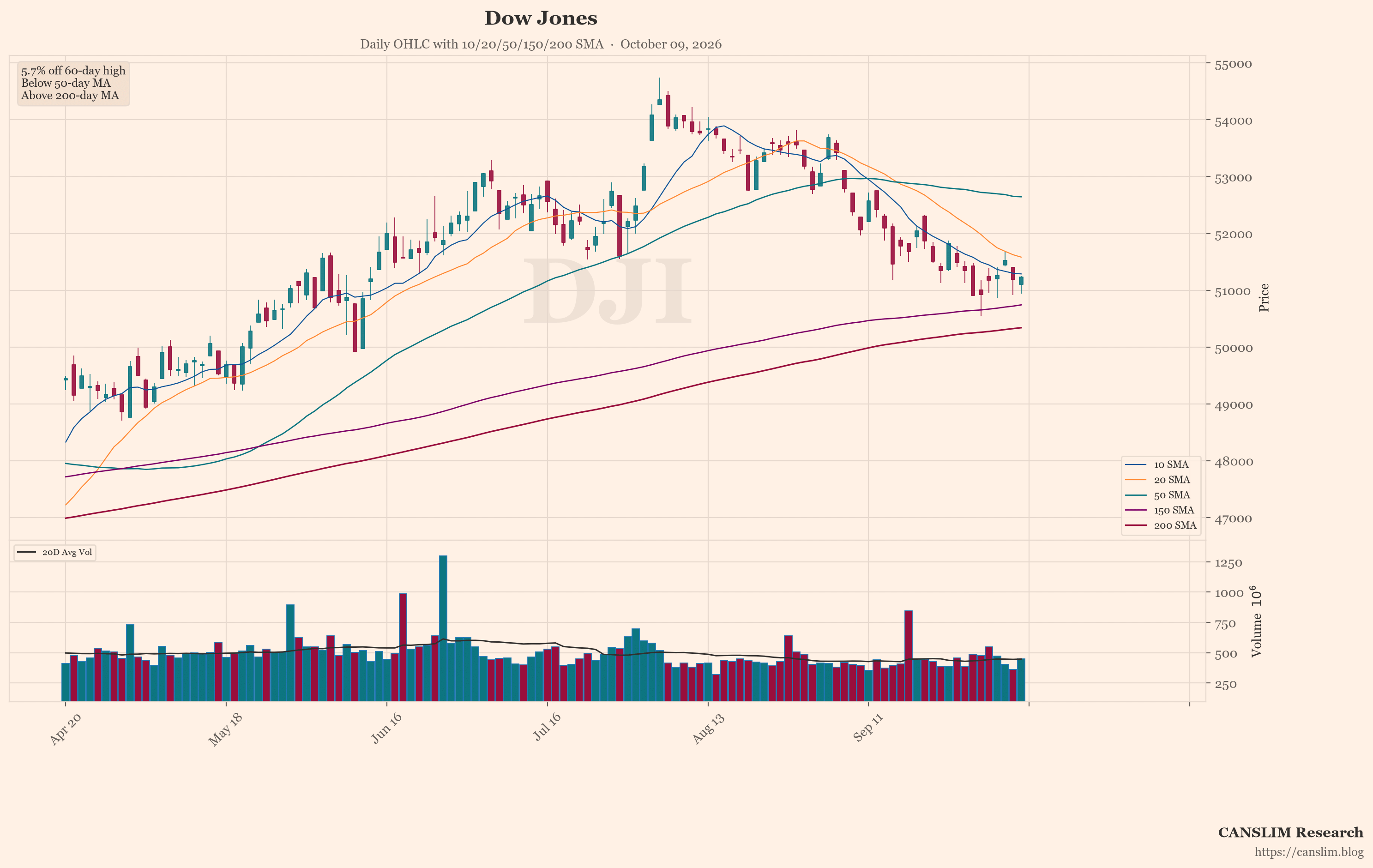
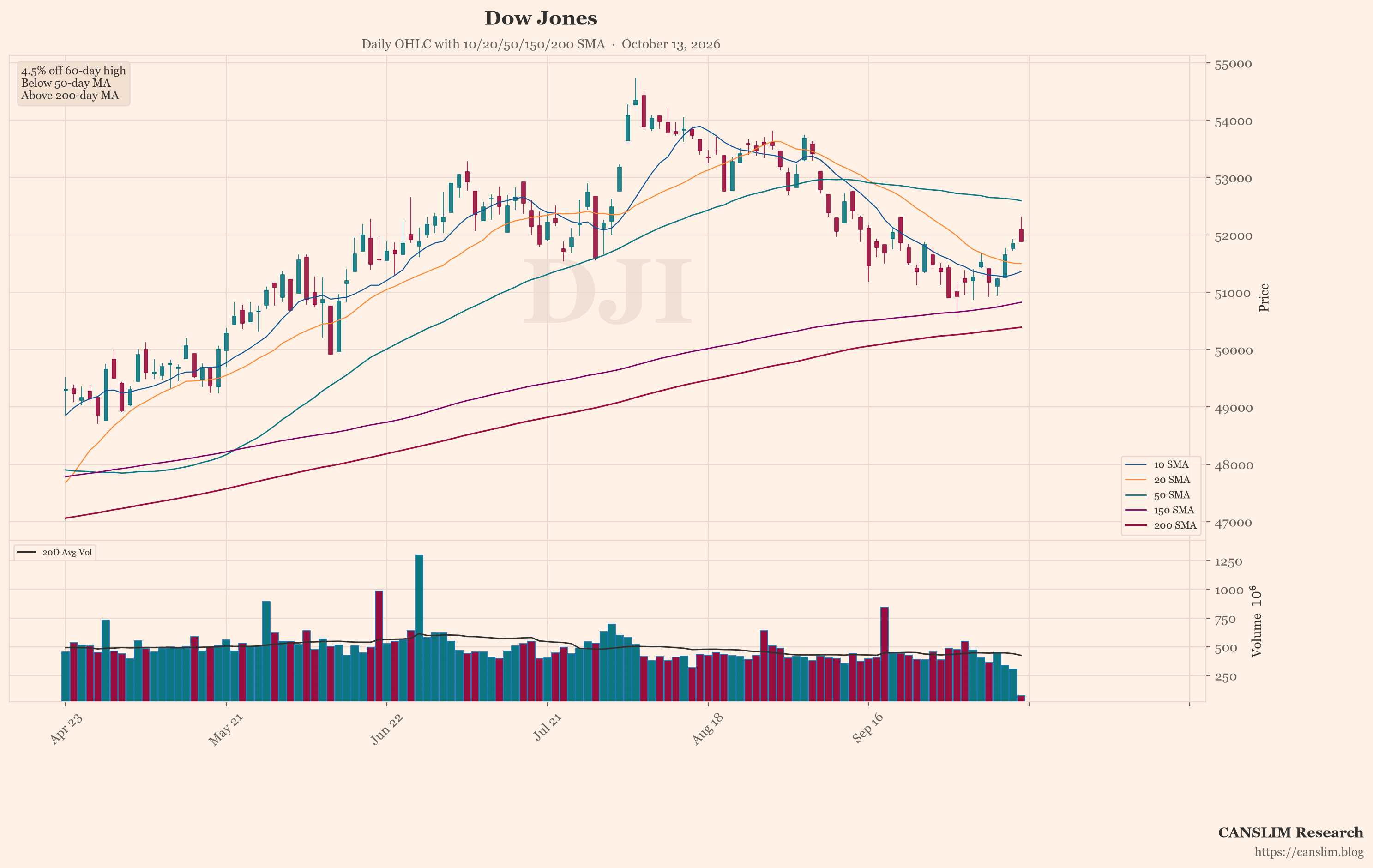
The featured chart shows the Nasdaq Composite (^IXIC). An automated technical screen selected it because, among the indices and stocks it checked, it showed the most weakness on a few measures. These were distance from its recent high, position versus its 50-day and 200-day moving averages, and down days on higher volume. This is a description of what the screen found, not a signal. One screen is not a full view of the market. Past price patterns do not predict future results. The reading may suggest that large-cap technology has lost some short-term momentum, but that is interpretation, not a forecast.
Earnings and Inflation Data Are the Near-Term Tests
The near-term focus shifts to incoming inflation and economic data, the Fed's December decision, and earnings from major technology companies. Energy prices are also cited as a test for markets and the rate outlook. These are the known unknowns. A hotter inflation reading could revive hike expectations. A softer one could ease them. Technology earnings carry their own risk, since valuations are sensitive to borrowing costs. The brief does not give figures for these tests, and none should be assumed.
Conditions Remain Balanced between Support and Uncertainty
The picture is mixed. A expected hold supported stocks, and the Dow finished higher. Against that, two dissents and a hawkish description of growth and inflation keep the risk of another hike alive. Yields were mixed, not falling. Online sentiment, unverified as it is, reads cautious on rate-sensitive themes. The Nasdaq screen shows weakness on several measures, though one screen is not a full view. The main risks are an inflation surprise, a December hike, and disappointing technology earnings. Each could pressure valuations. Conditions look balanced rather than resolved, and the next set of data may matter more than the last decision.
Sources: a third-party AI-generated market news summary, and an AI summary of unverified posts by anonymous retail users online. This article was written by an AI language model from those summaries and published automatically without human review. Updated 2026-10-29 06:00 HKT.
CANSLIM Research (canslim.blog) is an independent educational publisher. It is not licensed or registered as a broker, investment adviser, research analyst or asset manager in any jurisdiction. This article is general information for education only. It is not investment advice, a research report, an investment recommendation, or an offer or solicitation to buy or sell any security, and it does not consider any reader's objectives, financial situation or needs. No ticker, chart, heading or technical comment is a suggestion to buy, sell, hold or short. Figures come from third-party sources, are not independently verified, and may be incomplete, out of date or wrong. Online sentiment may include rumour, speculation or coordinated posting. Past performance and past price patterns do not predict future results. Investing involves risk, including the loss of capital. This article is not updated after publication. Laws differ by country; seek advice from a licensed professional in your jurisdiction before making any investment decision.
Discover more from CANSLIM Research
Subscribe to get the latest posts sent to your email.