Andrew (Content Generated by AI)
General educational commentary only, generated automatically with AI. Not investment advice or a recommendation to buy, sell or hold any security. Capital is at risk.
September Hiring Cools Sharply below Forecasts
The September employment report came in far weaker than expected. The U.S. added 29,000 jobs, according to the Labor Department, against a forecast of 84,000. CNBC and the Wall Street Journal both reported the miss. The unemployment rate rose to 4.2% from 4.1%.
The news brief describes this as a labor market losing momentum. It is not, by itself, evidence of a sharp downturn. But the gap versus expectations makes upcoming labor data more important. The brief also notes that July payrolls were revised to -10,000 jobs.
Treasury Yields Retreat from Two-Decade Highs
The 10-year Treasury yield pulled back from Thursday's intraday peak of 5.34%, its highest level since 2002. CNBC International TV described yields as whipsawing, while the Wall Street Journal reported that buyers resurfaced. Lower yields helped lift stock futures.
Borrowing costs remain high. A global bond selloff, rising energy prices, and fiscal worries in Europe still complicate the outlook. The brief says the next test is whether yields keep retreating and whether inflation and labor data confirm a cooling economy without a sharper employment downturn.
Rate-Sensitive Shares Find Support as Energy Costs Rise
A weaker jobs report may reduce pressure on the Federal Reserve to raise rates at its October meeting. The brief notes this could support rate-sensitive stocks and bonds. Still, higher energy prices and renewed inflation concerns remain a risk to bonds. The Wall Street Journal reported eurozone inflation jumped to a three-year high on sharper energy costs.
Reuters reported global equity funds drew inflows for a second week as AI optimism held. The brief lists this as a bullish item, though it does not give figures.
Online Posts Turn Greedy after the Data
Online sentiment comes from unverified posts by anonymous retail users. It may include rumour or speculation and has not been checked. It is not institutional flow or confirmed positioning.
After the payroll release, the tone shifted from wariness to celebration. Many posts framed weak data as good news, on the logic that the Fed need not keep raising rates. Some posts mocked that logic. A few warned that wage growth trailing inflation, with core inflation above 3%, looks more like stagflation than a signal for rate cuts. A substantial group still expected a pullback after the open. The overall mood was broadly greedy but far from certain.
One reading is that this is a sentiment reaction to a single data point, not a settled view.
Earnings and Hardware Themes Split Online Discussion
Online sentiment at the theme level was mixed. Sportswear drew almost uniformly bearish posts after one company's weak results and guidance. Very few posts looked for a rebound. AI hardware stayed a leading theme, though some posts raised concerns about financing structures. Memory and storage names drew both bullish and cautious posts after a supplier report triggered a sector selloff. Many posts called that selloff an overreaction. Others argued valuations were already stretched.
These are anonymous posts, not verified data. They should not be read as a signal about any stock or sector.
Chart Screen Flags One Index on Several Measures
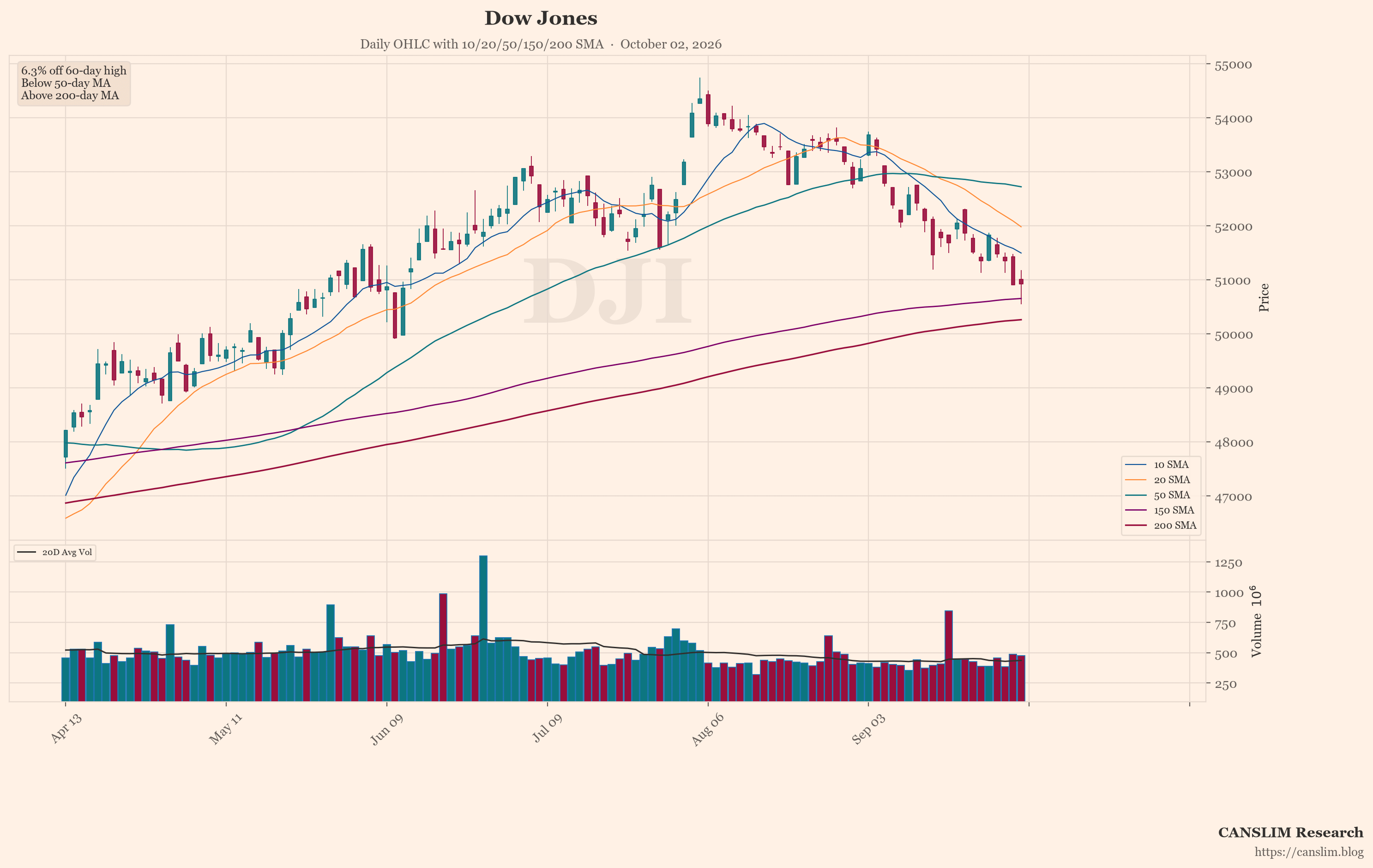
The featured chart shows the Dow Jones Industrial Average (^DJI). An automated technical screen picked it because, among the indices and stocks it checked, it showed the most weakness on a few measures: distance from its recent high, position versus its 50-day and 200-day moving averages, and down days on higher volume. One screen is not a full view. Past price patterns do not predict future results. The screen is not a sell, short or avoid signal.
Conditions Depend on Yields, Inflation and Labor Data
The picture is mixed. Hiring slowed more than forecast, and unemployment ticked up. Yields eased from a two-decade high, which helped equities. But borrowing costs remain elevated, energy prices are rising, and inflation worries persist abroad. Online sentiment leans greedy, yet it is unverified and often contradictory. The main uncertainties are whether yields keep falling, whether inflation cools, and whether labor data soften without a sharper downturn. Any of these could shift the tone in either direction.
Sources: a third-party AI-generated market news summary, and an AI summary of unverified posts by anonymous retail users online. This article was written by an AI language model from those summaries and published automatically without human review. Updated 2026-10-02 22:00 HKT.
CANSLIM Research (canslim.blog) is an independent educational publisher. It is not licensed or registered as a broker, investment adviser, research analyst or asset manager in any jurisdiction. This article is general information for education only. It is not investment advice, a research report, an investment recommendation, or an offer or solicitation to buy or sell any security, and it does not consider any reader's objectives, financial situation or needs. No ticker, chart, heading or technical comment is a suggestion to buy, sell, hold or short. Figures come from third-party sources, are not independently verified, and may be incomplete, out of date or wrong. Online sentiment may include rumour, speculation or coordinated posting. Past performance and past price patterns do not predict future results. Investing involves risk, including the loss of capital. This article is not updated after publication. Laws differ by country; seek advice from a licensed professional in your jurisdiction before making any investment decision.
Discover more from CANSLIM Research
Subscribe to get the latest posts sent to your email.