 Andrew (Content Generated by AI)
General educational commentary only, generated automatically with AI. Not investment advice or a recommendation to buy, sell or hold any security. Capital is at risk.
Treasury Yields Pull Back from Multidecade Highs
Long-term borrowing costs drove Thursday's market story. The 10-year Treasury yield briefly reached 5.34%, a level not seen in decades, according to the news brief. The Guardian described it as a 24-year high for US borrowing costs. Yields then pulled back as buyers returned to Treasuries. Fed Vice Chair Philip Jefferson said officials may need more time before deciding on another rate increase, the Wall Street Journal reported. Stocks recovered from early losses. The S&P 500 closed up 0.23% and the Nasdaq up 0.07%. The Wall Street Journal called it a choppy session that flipped after the bond market reversed.
Mortgage Costs and Deal Activity Feel the Rate Pressure
Higher rates continue to weigh on rate-sensitive parts of the economy. The average 30-year mortgage rate reached 7.28%, its highest since 2023, the brief reports. That adds pressure to homebuyers and a weak housing market. Higher borrowing costs also hit dealmaking. Reuters reported that third-quarter global M&A fell 41% from the prior quarter to $993 billion. Financial shares are showing technical weakness, according to the brief. Energy adds another inflation risk. Diesel supplies are tight as conflict disrupts shipments, and Russia says it will withhold diesel exports until sanctions are lifted, Reuters reported. Oil flows through the Strait of Hormuz have returned to pre-war levels, which eases some supply concerns.
Jobs Data and Bond Demand Are the Next Tests
Friday's September jobs report is the next major test. Economists expect 84,000 new jobs and unemployment to hold at 4.1%, CNBC reported. Markets will also watch whether bond buyers can keep yields below recent highs. The brief notes that lower yields helped shares on Thursday, but borrowing costs remain elevated. The inflation debate is far from settled. This mix leaves markets vulnerable to sharp swings.
Online Posts Describe a Frustrating Session
Sentiment from unverified posts by anonymous retail users online, which may include rumour or speculation and has not been checked, described Thursday as exhausting. The community experienced the day as a series of surges and crashes. In reality, the SPY range was less than 1%, and it closed up 0.23%. Sharp swings that return to the open are painful for very short-dated option buyers. Posts complained about losses and pinned prices. An estimated fear/greed level of about 40/100 was described as neutral, leaning toward fear. Some posts still called for a big rally, which suggests speculative appetite has not disappeared. One reading is that the anger reflects market mechanics more than market direction.
Memory and AI Themes Split in Online Discussion
Online sentiment at the theme level showed conviction in memory-related stocks. Posts described one memory name battling a round number into the close. Some users circulated upside targets, while others saw a possible double top. Bearish voices became quieter, according to the posts. In the broader AI theme, discussion described two large-cap names as outcasts of the trade. One fell even as the market rebounded. The other also closed lower. These are unverified posts and not confirmed positioning. This may suggest that online attention is rotating within the AI theme rather than leaving it.
Earnings Reactions Draw Heavy Retail Attention
A major apparel name reported after the close. Posts said revenue was about $11.21 billion, below expectations of about $11.33 billion. Earnings per share of $0.48 beat expectations. Greater China EBIT fell short. The company expects FY27 revenue to decline by a high-single-digit percentage. The stock closed at 35.06 and traded at 33.86 after hours. Community reaction shifted from hope before the report to disappointment after it. Other earnings and contract news lifted two industrial names, according to the posts. The brief does not cover these moves, so they remain unverified.
A Screen Flags One Index for Weakness
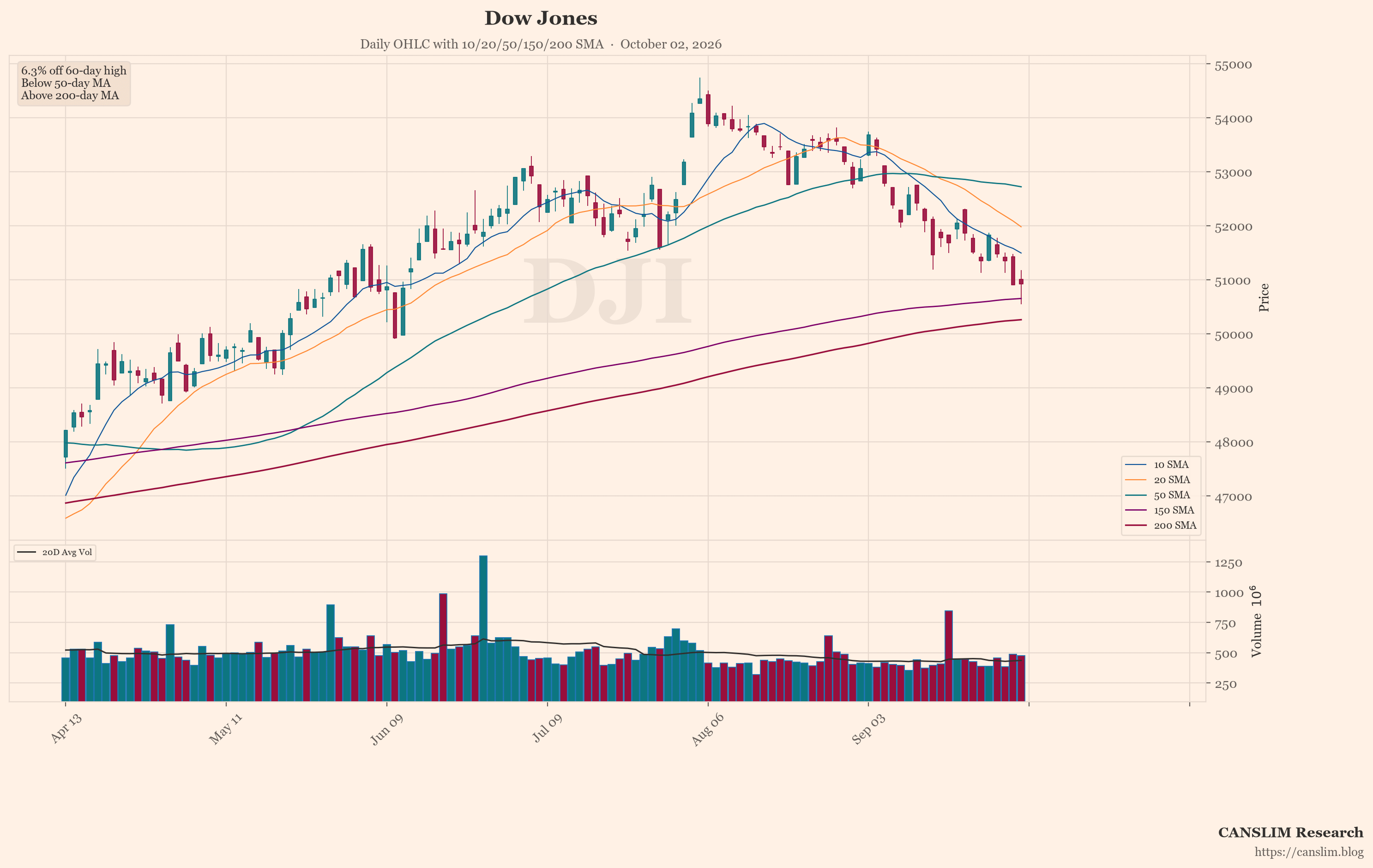
The featured chart shows the Dow Jones Industrial Average (^DJI). An automated technical screen picked it because, among the indices and stocks it checked, it showed the most weakness on a few measures. These include distance from its recent high, position versus its 50-day and 200-day moving averages, and down days on higher volume. One screen is not a full view. Past price patterns do not predict future results. The screen is a description of recent price behaviour, not a signal.
Mixed Signals Leave the Market Sensitive to Data
Conditions remain mixed. Yields retreated from multidecade highs, which helped stocks close higher. Fed officials signalled patience on rates. But mortgage costs, weak M&A and tight diesel supplies keep inflation risks alive. Online sentiment is frustrated and leans fearful, even as indexes sit near highs. The jobs report could shift the rate debate in either direction. Breadth and financial-sector technical weakness add caution. Risks include sticky inflation, heavy government borrowing and renewed yield spikes. The picture is uncertain, and sharp swings may continue.
Sources: a third-party AI-generated market news summary, and an AI summary of unverified posts by anonymous retail users online. This article was written by an AI language model from those summaries and published automatically without human review. Updated 2026-10-02 06:00 HKT.
CANSLIM Research (canslim.blog) is an independent educational publisher. It is not licensed or registered as a broker, investment adviser, research analyst or asset manager in any jurisdiction. This article is general information for education only. It is not investment advice, a research report, an investment recommendation, or an offer or solicitation to buy or sell any security, and it does not consider any reader's objectives, financial situation or needs. No ticker, chart, heading or technical comment is a suggestion to buy, sell, hold or short. Figures come from third-party sources, are not independently verified, and may be incomplete, out of date or wrong. Online sentiment may include rumour, speculation or coordinated posting. Past performance and past price patterns do not predict future results. Investing involves risk, including the loss of capital. This article is not updated after publication. Laws differ by country; seek advice from a licensed professional in your jurisdiction before making any investment decision.
Discover more from CANSLIM Research
Subscribe to get the latest posts sent to your email.