Andrew@CANSLIM RESEARCH
Record Highs Hide a Dangerous Divergence
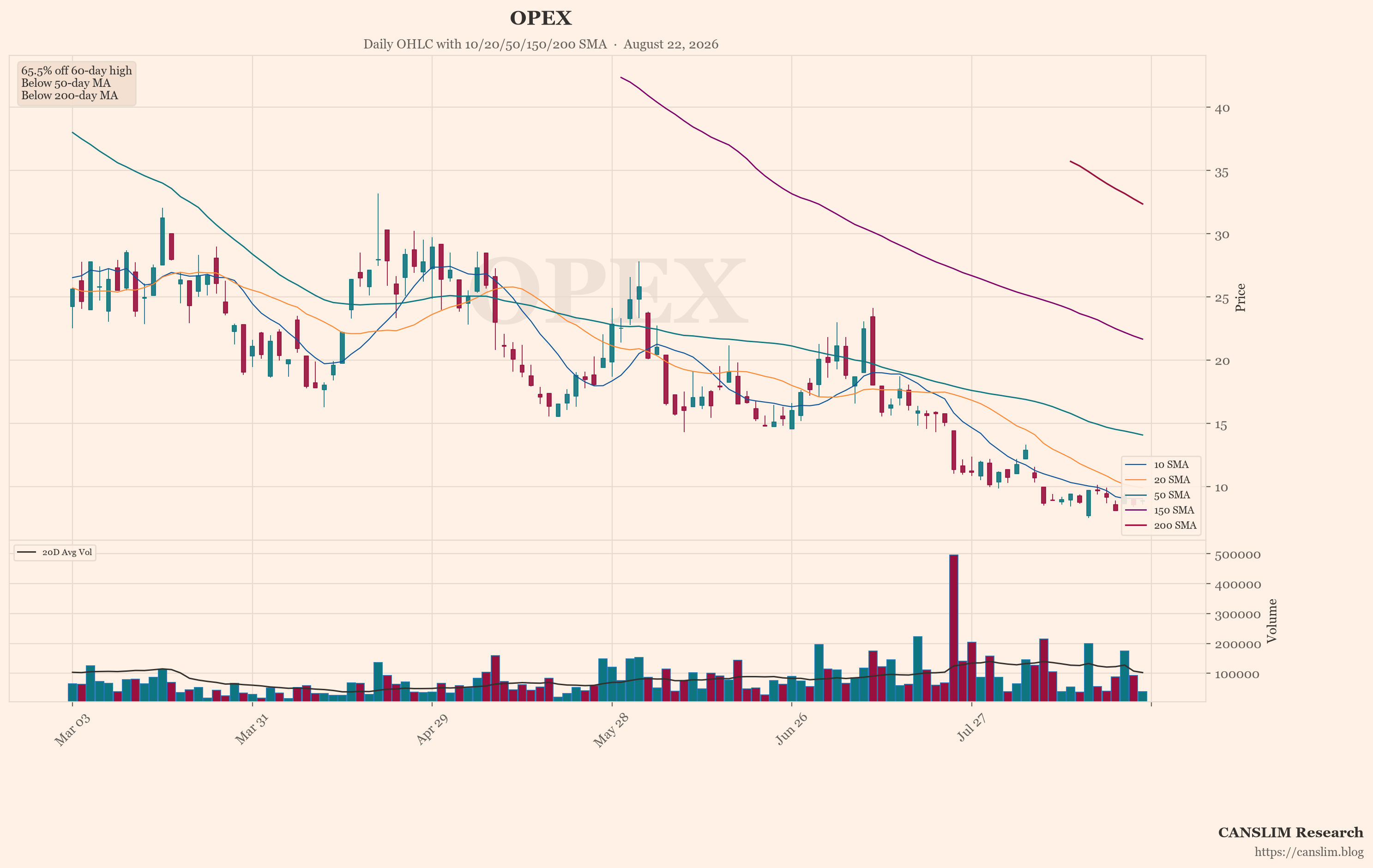
Friday’s tape was a study in contradiction. The S&P 500 closed at a record 7757.64, up 3.58% for the week. The Nasdaq surged 5.19%, its best week since April. Yet the market’s most crowded trade collapsed. Memory stocks plunged against the broader rally. MU opened at 902.77, fell to 847.40, and closed at 876.35. SNDK dropped 3.75%. WDC fell 3.69% and now shows the weakest technical pattern on the featured chart. The online crowd called this their most painful trade. The indexes say one thing. The leaders say another. That divergence is the real story.
Bad News Becomes Good News for Rate-Cut Hopes
The catalyst for the rally was weak jobs data. Nonfarm payrolls fell by 23,000 in July. Economists expected a gain of 80,000. The unemployment rate dropped to 4.1%, but only because workers left the labor force. The market read this as a green light for a September rate cut. SPY rose 0.59% to 773.16. QQQ gained 1.12% to 722.70. IWM added 1.15% to 301.67. This is classic late-cycle behavior. The market cheers bad news because it forces the Fed’s hand. But growth investors should ask why the economy is weakening in the first place.
Memory Bulls Face a Brutal Reality Check
The debate on memory stocks has shifted. It is no longer about cheap valuations. It is about the cycle peak. Bulls argue that even a 30-40% drop in DRAM prices would leave MU with roughly $100 in EPS. That implies a 9x PE. Bears respond that cyclical stocks always look cheap at the top. A low forward PE is meaningless when the cycle turns. Friday’s intraday collapse from 902 to 847 was treated as proof that the market will not allow MU above 900. The online crowd noticed memory bulls capitulating en masse. Some reversed into leveraged short positions. The only remaining bullish anchor is NVDA earnings on 8/26. But even that is shaky. Jensen Huang has said future chips may use less HBM. The featured chart for WDC confirms the weakness. It is the weakest technical pattern in the group. When the laggard breaks down first, the leaders often follow.
Geopolitical Fire Adds Fuel to an Already Hot Market
While traders focused on memory, the Middle East stayed tense. A fire at Saudi Aramco’s Jazan refinery was extinguished. Saudi authorities reported no injuries. But they did not confirm the cause. The Iran-backed Houthis claimed responsibility for a drone strike on the same facility. Jazan processes up to 400,000 barrels per day. It has been a repeat target in recent weeks. The market question is simple. Will this disrupt supply? The online crowd has shifted its narrative completely. It moved from “peace is coming” to “the U.S. has lost.” Iran presented six conditions for reopening the Strait of Hormuz. These are widely seen as poison pills. They are designed to be unacceptable. A vessel was struck off Oman. The UAE said one of its ships was targeted. USO fell 0.71% to 118.02. Gold rose above $4,400. GLD gained 2.25% to 398.47. The crowd is not hedging. It is chasing high-beta junk. OKLO surged 14.76%. SPCX jumped 16.41%. HTZ gained 14.43%. RKLB rose 9.76%. This is greed at 68/100. But fear among memory holders is near an extreme. That is a localized capitulation.
Smart Money Moves While the Crowd Chases
Berkshire became a net buyer of stocks for the first time in 15 quarters. It bought approximately $23.5 billion and sold $3.7 billion in Q2. A new $10 billion Alphabet position entered its top five holdings. Berkshire repurchased $4.5 billion of its own shares. Cash and short-term Treasuries declined to $344.1 billion. BRK.B closed at 520.96. GOOGL fell 0.99% to 354.35. This is a signal. The smartest long-term investor in the market is deploying capital. Meanwhile, the online crowd is asking what to go all-in on Monday. The contrast is stark. Berkshire buys quality. The crowd chases momentum. One of these approaches has a proven track record.
The Earnings Divide Separates Winners from Losers
The week’s largest single-stock disaster was TTD. Q2 revenue of $715 million missed expectations. Q3 guidance of $650 million came in far below the $805 million consensus. The stock fell 22% Friday to close at 13.79. That is a seven-year low. MoffettNathanson cut its price target from $23 to $6. The extreme opposite was SOUN. Q2 revenue reached $61.9 million, up 45%. The company raised full-year guidance. The stock gained 13.15% to close at 8.00. This is the market’s message. It rewards growth with proof. It punishes promises without delivery. The online crowd loves stories. The market pays for numbers.
The Tape Demands Discipline, Not Euphoria
The record highs are real. But the cracks beneath them are deeper. Memory stocks are breaking down. Geopolitical risk is rising. The labor market is weakening. The crowd is greedy. The featured chart for WDC shows the weakest technical pattern. That is a warning. When the weakest link fails, the chain often follows. The market is not crashing. But it is rotating. It is rewarding select names and destroying others. Growth investors should respect the divergence. Do not chase the index. Follow the leaders that still work. Avoid the broken charts. The tape is telling you where the risk is. Listen to it.
Sources: market news brief & global social sentiment data. Updated 2026-08-09 20:39 HKT. For educational purposes only — not investment advice.
Discover more from CANSLIM Research
Subscribe to get the latest posts sent to your email.