Andrew@CANSLIM RESEARCH
The Tape Says Greed, But the Details Say Caution
The US stock market just closed at a record high. The S&P 500 finished Friday at 7757.64, and the Nasdaq jumped 1.3% on the day. For the week, the S&P rose 3.6% and the Nasdaq added 5.2%. The catalyst was a shockingly weak jobs report. July nonfarm payrolls came in at -23,000 versus expectations for +83,000. This effectively killed any chance of rate hikes. The market loved it. The Fear/Greed reading sits near 72/100, which signals high greed. VIX is low at around 14. Weekly call-option volume on the S&P hit a record 4 million contracts. This is a classic late-cycle setup. The crowd is confident, but the underlying tape is starting to show cracks.
The Online Crowd Piles Into Momentum While Storage Bleeds
Global social sentiment is split into two very different worlds. On one side, the online crowd is aggressively buying high-flying momentum names. PLTR surged +10.29% after a bullish analyst note. SPCX jumped +16.41%, and RKLB gained +9.76%. SOUN rose +13.15%, and SMCI added +5.87%. This is pure risk-on behavior. On the other side, the storage and memory sector is a war zone. STX fell -4.65%, SNDK dropped -3.75%, and WDC lost -3.69%. MU closed down -0.58% after a wild intraday swing from 902 down to 847. The trigger was weak guidance from SanDisk and news that SK Hynix approved $38 billion in new fab capacity. The crowd is deeply divided here. Bulls argue low valuations and strong contracts. Bears point to cyclical tops and oversupply. Both sides are bleeding.
A Self-Inflicted Wound Hits Celsius Hard
While the market celebrates, one growth story is breaking down. Celsius Holdings missed Q2 2026 estimates on both revenue and profit. Core Celsius brand sales fell about 12% year over year. The company cut too many SKUs, delayed shelf placement, and struggled with inventory rebalancing. Club-channel demand also softened. To move product, management spent heavily on promotions. This crushed gross margin down to 48.1%. The stock sold off sharply, with reports of an 18% drop. This was not an external shock. It was a self-inflicted slowdown in the main growth engine. Management calls it temporary integration pain. The market is treating 2026 as a transition year. The bull case rests on a 2027 recovery if execution stabilizes. The valuation has been marked down hard, but the next few quarters will prove whether this is a short-term reset or a deeper problem.
The Featured Chart Shows the Weakest Link in the Market
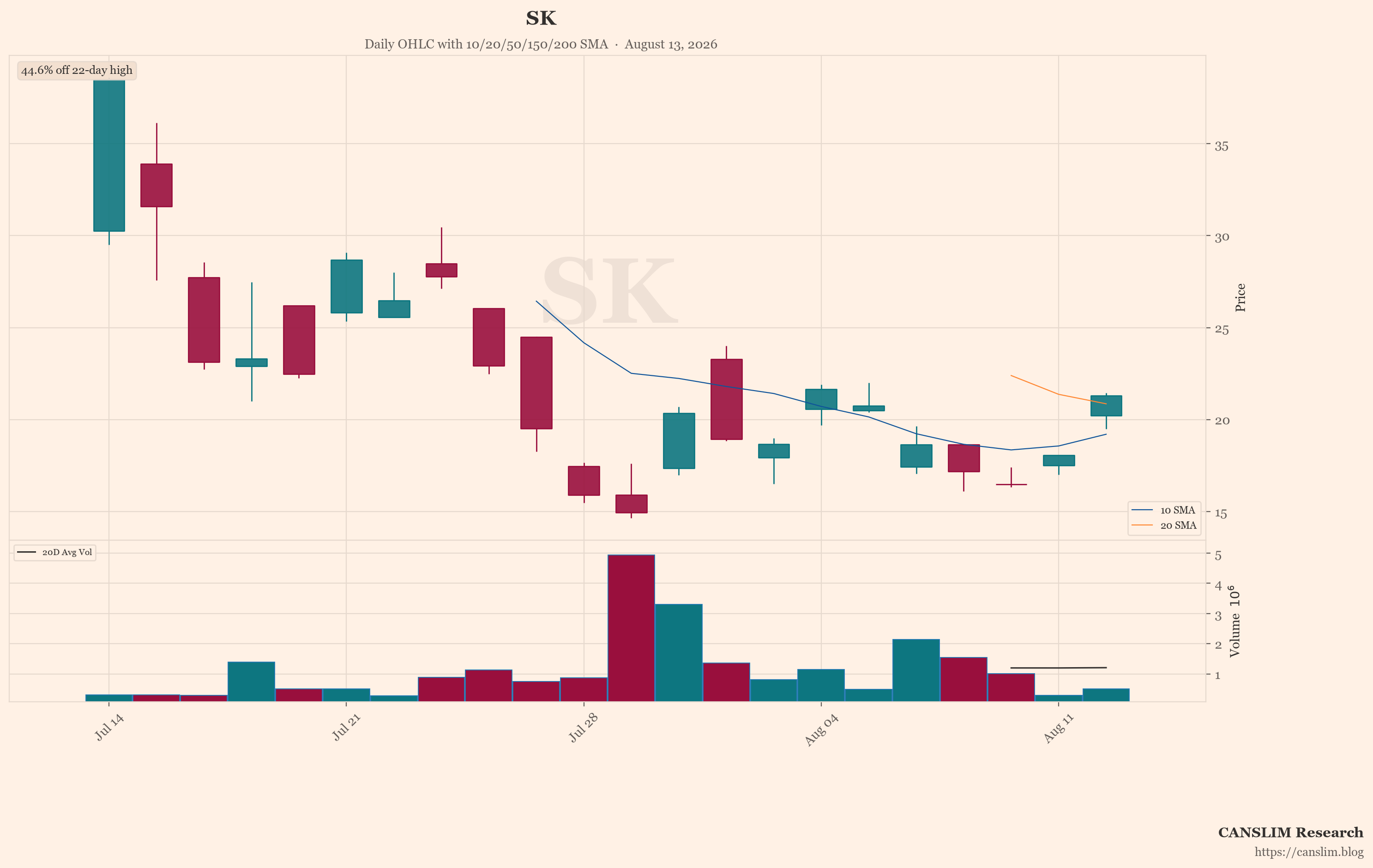
The featured chart for this analysis is AMD. It currently shows the weakest technical pattern among major semiconductor names. This is important context. While the S&P makes new highs and momentum stocks fly, AMD is lagging. The stock is not participating in the same way as PLTR or SMCI. In a market this greedy, leadership should be broad. It is not. The storage sector is breaking down on oversupply fears. AMD’s weak chart adds to that caution. The bulls argue AMD’s new MI455X chip uses 432GB of HBM per card versus Nvidia’s 288GB. That would boost memory demand if AMD takes share. But the tape does not care about hypotheticals. The chart says sellers are in control. For growth investors, a weak leader in a hot sector is a red flag. It suggests the rally is narrowing.
Berkshire Flips the Script While Geopolitics Simmers
Another major shift came from Berkshire Hathaway. The company ended its record streak of 14 straight quarters as a net seller. It made about $19.8 billion in net stock purchases. This includes a roughly $10 billion stake in Alphabet, which immediately became one of its top five holdings. Berkshire also bought back $4.5 billion of its own stock. Operating earnings rose +16%. Cash still sits at a massive $365.5 billion. This is a notable change in behavior from the most cautious investor in the world. Meanwhile, geopolitical risk remains unresolved. Iran presented six conditions for reopening the Strait of Hormuz. An ADNOC tanker was struck by a missile, marking the 16th attack on such vessels. The market is ignoring this for now, but the online crowd is not. Fear is concentrated in two pockets: storage stocks and the strait. Neither has a clear solution.
The Divergence Demands Discipline, Not Euphoria
The market is at an all-time high with extreme greed. But the internal picture is messy. Storage is breaking down. AMD’s chart is weak. Celsius is dealing with self-inflicted wounds. Meanwhile, a handful of momentum names are flying. This is a narrow rally. The online crowd is fully invested in the winners and deeply underwater in the losers. For a growth investor, this is not the time for complacency. The weak chart on AMD and the breakdown in memory names are warning signs. The market can stay greedy for a while, but the leaders are shrinking. Discipline matters more than euphoria. Watch the weak hands. They often signal the turn before the index does.
Sources: market news brief & global social sentiment data. Updated 2026-08-09 11:57 HKT. For educational purposes only — not investment advice.
Discover more from CANSLIM Research
Subscribe to get the latest posts sent to your email.