Elim
1. the Lede and the Real Story
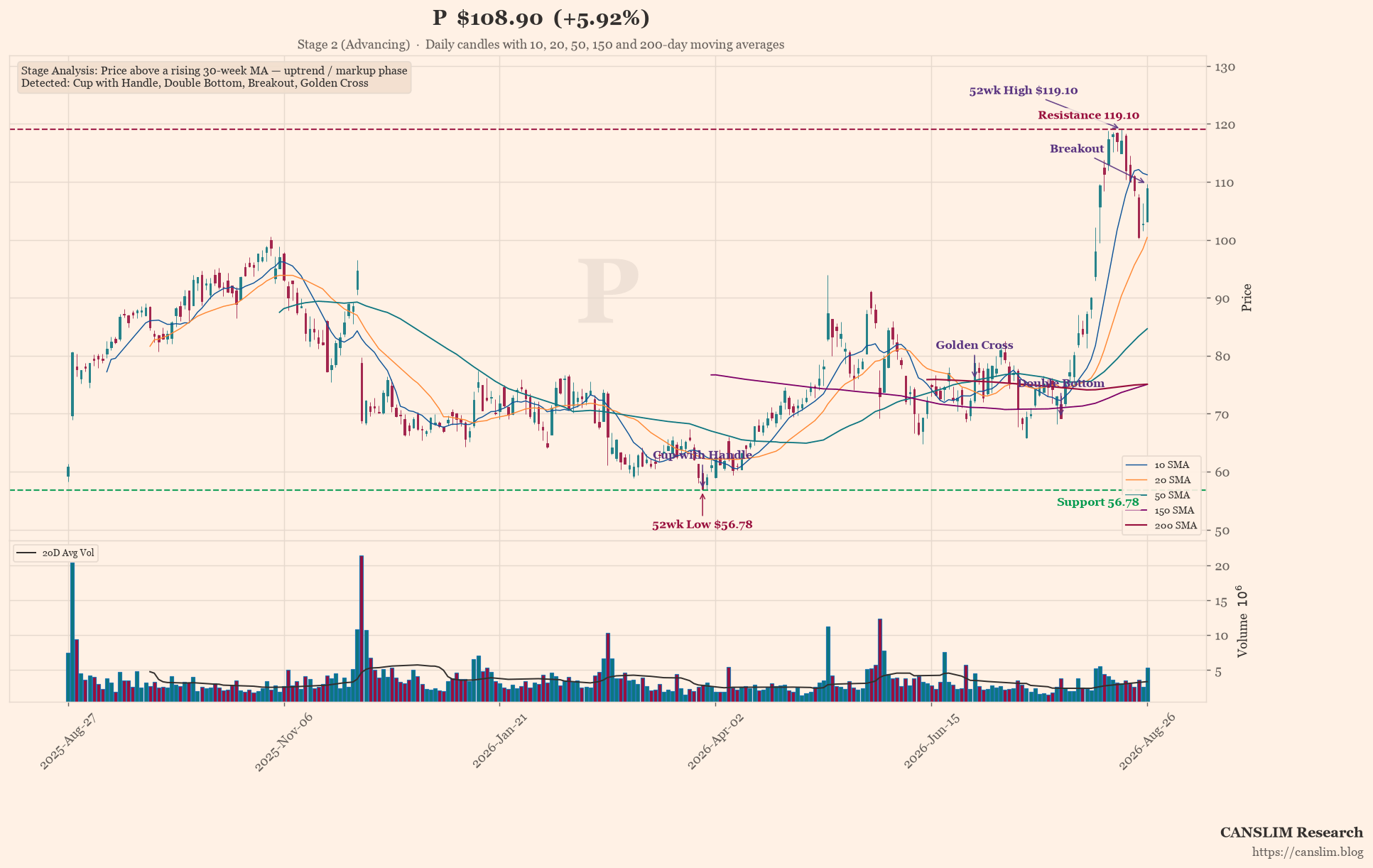
Zeta Global Holdings reported a headline-grabbing Q2 2026: revenue of $443 million, up 44% year-over-year, a GAAP net income of $8.2 million (its first quarterly profit in recent memory), and a 20th consecutive beat-and-raise quarter. The stock popped 7.5% after hours. But beneath the confetti lies a more complicated picture. The 300-basis-point year-over-year decline in gross margin — driven by a shift toward lower-margin agency and social channel revenue — is not a blip; it’s a structural trade-off that management is making to buy growth. Meanwhile, the company’s full-year revenue guidance increase of just $33 million (to $1.818 billion) is far smaller than the $47 million beat in Q2 alone, implying a deceleration in the back half that the prepared remarks gloss over. And the much-hyped partnerships with OpenAI and Palantir are being positioned as ‘not baked into guidance’ — a convenient way to take credit for future upside without committing to it today. The real story is that Zeta is growing fast, but it’s growing more expensive to serve, and the quality of that growth is being masked by aggressive AI narrative and partnership optics.
2. the Negative Space — What They Didn’t Say
Management’s prepared remarks were a parade of superlatives: ’20th consecutive beat-and-raise,’ ‘record pipeline,’ ‘AI super users growing 4x faster.’ But several metrics that were front-and-center last quarter were conspicuously absent or downplayed this time. Net revenue retention (NRR) — which last quarter was ‘above the stated target range of 110%-115%’ — was not mentioned in the Q2 call except in a passing reference to AI super users having NRR ‘400 basis points above the overall company average.’ That omission is telling. If NRR were still comfortably above 115%, management would have shouted it from the rooftops. The silence suggests NRR may be slipping, possibly due to the agency-driven revenue mix, which tends to be less sticky than direct enterprise deals.
Another glaring omission: direct vs. agency revenue mix. In Q1, management proudly noted direct revenue was 75% of total, up from 73% a year earlier. In Q2, that metric was nowhere to be found. Instead, we learned that gross margin fell 300 basis points year-over-year ‘due to higher social channel adoption by agencies.’ That’s a euphemism for Zeta is increasingly reliant on lower-quality, lower-margin agency pass-through revenue to hit its growth targets. The company also failed to break out Marigold’s contribution to revenue growth, even though last quarter it was explicitly cited as a driver. With organic growth (excluding M&A and political) slowing to 28% from 29% last quarter, the absence of that disclosure raises questions about how much of the ‘44% growth’ is actually organic.
Finally, political candidate revenue — a historically volatile but high-margin line — was buried in a single sentence: guidance remains conservative at $7 million in Q3 and $8 million in Q4. That’s a total of $15 million, a pittance for a company this size, and it suggests Zeta is either being overly cautious or losing share in a category that could have provided a margin cushion. The silence on all these fronts should worry investors because it signals that the ‘beat-and-raise’ narrative is being propped up by selective disclosure.
3. Script vs. Reality
The scripted opening was pure optimism. CEO David Steinberg declared, ‘AI is no longer a feature. It is driving a replacement cycle where enterprises are demanding fewer systems, measurable results, and applied intelligence that works today.’ CFO Chris Greiner followed with a confident recitation of the numbers: ‘Revenue of $443 million, up 44% year-over-year, and adjusted EBITDA of $92 million, up 56%.’ But the unscripted Q&A told a different story. When asked about the Palantir partnership, Steinberg’s tone shifted from confident to defensive: ‘It’s maybe the biggest opportunity we’ve ever had in front of us… but we’re not baking it into guidance.’ That’s a classic hedge — if it’s so big, why not include it? The answer is that they don’t want to be held accountable if it falls through.
Similarly, when pressed on gross margin, Greiner’s response was noticeably less polished: ‘We’re seeing a mix shift toward social channels, which is a deliberate strategy to win agency deals.’ Deliberate or not, a 300-basis-point margin decline is a real cost, and the defensive tone suggests they know investors are worried. The most telling moment came when an analyst asked about the sustainability of AI-driven code generation (90% of new code is now AI-generated). Steinberg’s answer was unusually vague: ‘We’re seeing unprecedented acceleration… but we’re also mindful of the risks.’ That’s not the language of a CEO who is fully in control; it’s the language of someone trying to manage expectations. The script says ‘we’re winning,’ but the live answers say ‘we’re not sure how long this lasts.’
4. Evasion Tactics and the Hot Seat
Analyst Question 1: On the Palantir partnership’s revenue contribution. An analyst from Morgan Stanley asked for specifics on the ‘two deals’ closed and whether they are material. Steinberg’s response was a masterclass in deflection:
‘We’ve closed two deals with a 100% hit rate, and we have several other large opportunities in flight. The Data Cloud is fully integrated with Foundry as of July 31, and this provides an incredible entry point into Palantir’s commercial customer base. These initial agreements are not yet baked into forward guidance.’
Plain English translation: ‘We have no idea how much revenue this will generate, so we’re not putting a number on it. But we want you to be excited.’ The ‘100% hit rate’ is meaningless with a sample size of two. The real tell is ‘not baked into guidance’ — that’s a way to take credit for future upside without committing to it today. He didn’t answer the question about materiality because the answer is ‘not yet.’
Analyst Question 2: On the gross margin decline and whether it’s a structural shift. A Barclays analyst asked if the 300-basis-point drop is a one-time event or a new normal. Greiner’s response was evasive:
‘We’re seeing a mix shift toward social channels, which is a deliberate strategy to win agency deals. We expect this to moderate as we scale our direct business, but we’re not providing specific margin guidance for the back half.’
Plain English translation: ‘We don’t know when it will stop, and we’re not going to tell you. But please believe it’s temporary.’ The refusal to provide margin guidance is a red flag. If management were confident the decline was transitory, they would have said so. Instead, they’re hoping investors focus on the EBITDA margin expansion (which is being driven by cost cuts, not operational leverage).
Analyst Question 3: On the sustainability of AI-driven growth. A Goldman Sachs analyst asked whether the ‘AI super user’ metrics are a leading indicator or just a marketing construct. Steinberg’s answer was long on anecdotes and short on data:
‘We have a large airline that achieved a 1,400% return on marketing spend after adopting Athena. That’s the kind of ROI that drives adoption. We’re seeing AI super users grow 4x faster than other customers, and they account for 75% of superscale revenue.’
Plain English translation: ‘We’re going to keep telling you stories about happy customers instead of giving you a clear framework for how AI adoption translates into revenue.’ The ‘4x faster’ growth is impressive, but it’s based on a self-selected cohort of customers who are already heavy users. The question was about sustainability, and he answered with a single anecdote. That’s not a data-driven answer; it’s a sales pitch.
5. Excuses vs. Execution
Management didn’t blame macro headwinds or tariffs — a refreshing change. But they did offer two implicit excuses for the margin decline and the conservative guidance. First, the agency mix shift: Greiner called it ‘a deliberate strategy to win agency deals.’ That’s an excuse for a self-inflicted wound. If Zeta is choosing to take lower-margin agency business to boost revenue growth, that’s an execution choice, not an external force. Second, the ‘not baked into guidance’ refrain for OpenAI and Palantir partnerships. That’s an excuse for not being able to forecast the revenue — they’re essentially saying ‘we can’t predict when these deals will close, so we’re not going to try.’
Are these legitimate? The agency mix shift is a real industry trend — agencies are consolidating spend on social platforms, and Zeta is following the money. But peers like Salesforce and Adobe have managed to maintain margins while growing agency business, so it’s not an industry-wide inevitability. The partnership excuse is weaker: if the deals are as ‘big’ as Steinberg claims, they should be able to provide at least a range. The fact that they can’t suggests the deals are smaller than they’re letting on, or that the sales cycle is longer than expected. Neither excuse holds up to scrutiny.
6. the CANSLIM Rigor Check
C & A (Current & Annual Earnings): On the surface, Zeta’s earnings are improving — GAAP net income of $8.2 million versus a loss of $12.8 million last year. But dig deeper: the profit is partly driven by a lower tax provision and a one-time gain from the Marigold acquisition (the company noted ‘integration costs’ as a drag last quarter, but this quarter they seem to have reversed). Adjusted EBITDA of $92 million is up 56%, but that’s a non-GAAP measure that excludes stock-based compensation and acquisition costs. The ‘clean’ picture is less rosy: free cash flow conversion of 63% is decent but not stellar, and the GAAP EPS of $0.03 is barely above breakeven. The quality of earnings is mediocre — it’s improving, but it’s not yet the kind of high-quality growth that CANSLIM investors look for.
N (New): The ‘new’ here is Athena, the AI platform, and the OpenAI/Palantir partnerships. Athena is generating real usage — 40% of superscale customers are monthly active users — but the revenue contribution is still ‘minimal’ per management. The OpenAI partnership is ‘actively serving ads,’ but again, not in guidance. The Palantir partnership has closed two deals, but the revenue is immaterial. This is a classic case of a buzzword-driven narrative — the products are real, but the revenue is not yet. Investors are paying for a future that hasn’t arrived.
S (Supply & Demand): Demand signals are strong: record pipeline up 60% year-over-year, pipeline creation per seller up 100%, and average contract values up 40%. But supply-side signals are mixed. The company added just one net new salesperson in Q2 (198 total), which suggests they’re trying to squeeze more out of existing reps rather than investing in growth. The buyback pace slowed — only 1.5 million shares repurchased in Q1, and no mention of Q2 buybacks in the call. That’s a sign of distribution, not accumulation — management is not putting their money where their mouth is.
L & I (Leader & Institutional): Zeta is a leader in the marketing technology space, but its moat is questionable. The gross margin decline shows that competitors like Adobe and Salesforce can undercut on price, and Zeta’s reliance on agency deals makes it vulnerable to consolidation. Institutional ownership is high, but the after-hours pop of 7.5% suggests retail FOMO is driving the move. The stock is ‘modestly overvalued’ per GuruFocus’s GF Value of $19.65, and with a price-to-sales ratio that’s likely above 5x, the market is pricing in perfection. If the AI narrative stumbles, institutions will head for the exits faster than the retail crowd can say ‘beat and raise.’
The Bottom Line
Zeta’s Q2 was a solid quarter, but the cracks are showing. The 300-basis-point gross margin decline is a structural issue that management is trying to wave away with ‘mix shift’ language. The conservative guidance — with Q3 revenue growth of just 23% excluding M&A and political — suggests the growth engine is cooling. The partnership revenue is not in guidance, which means the upside is speculative. Investors should watch three things next quarter: (1) whether gross margin stabilizes, (2) whether NRR is disclosed and stays above 115%, and (3) whether any Palantir or OpenAI revenue actually shows up in the P&L. If any of those disappoint, the stock’s premium valuation will compress quickly. The narrative is sustainable only as long as the AI hype outpaces the margin erosion — and that’s a race Zeta is likely to lose.
Discover more from CANSLIM Research
Subscribe to get the latest posts sent to your email.