Andrew@CANSLIM RESEARCH
The US stock market is telling two different stories. The Dow Jones rose 0.46% to 51947. Defensive stocks led the way. The S&P 500 barely moved at +0.05%. The Nasdaq fell -0.64%. This split matters. Growth stocks got hit hard. Energy stocks stayed strong. The fear level among the online crowd is 7 out of 10. Many investors lost big money. One person turned $15,000 into -$150,000. Another lost 27% this month. But the crowd is not giving up yet. They still talk about what to buy next.

Global Social Sentiment
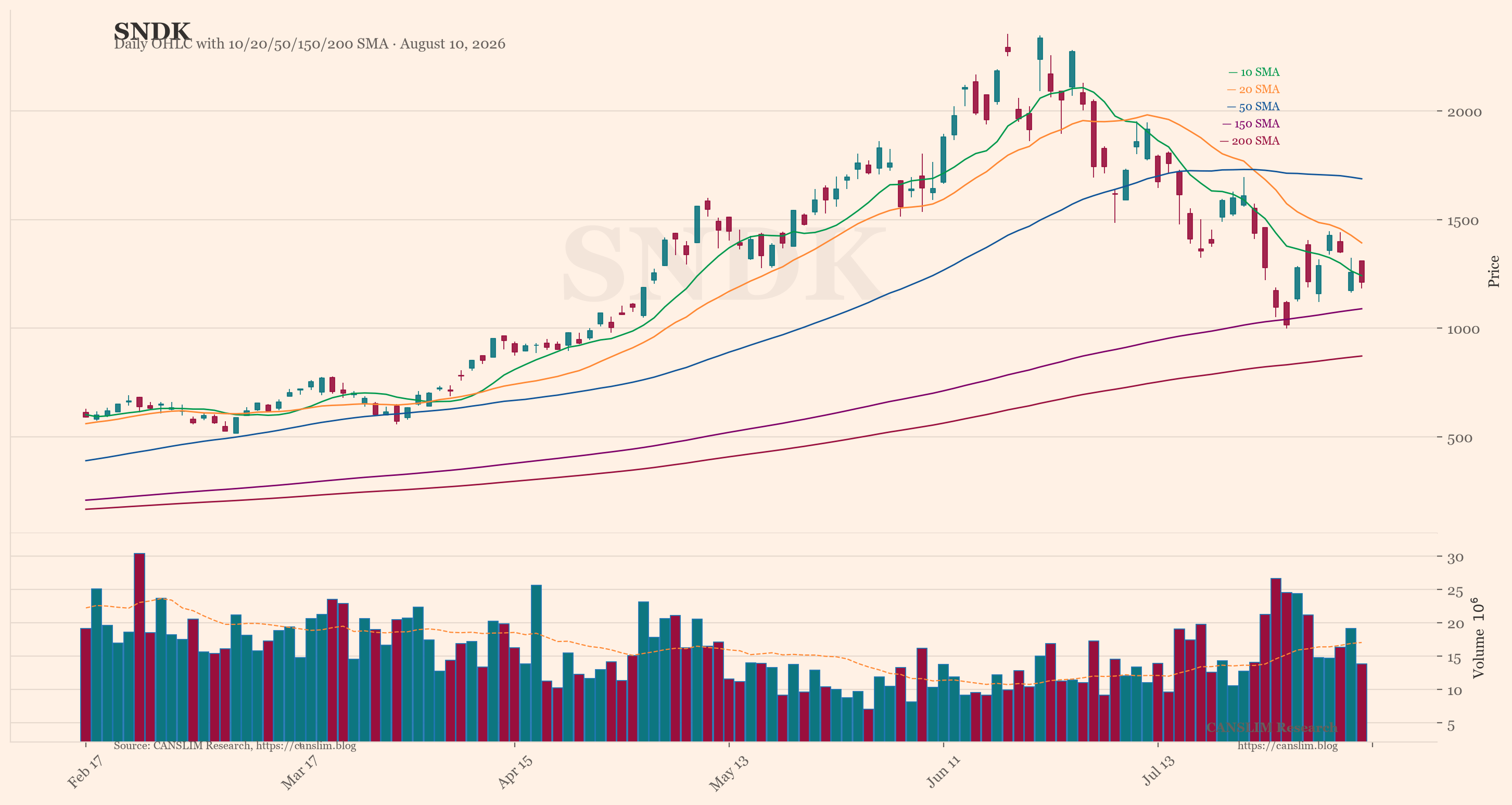
The online crowd is in pain. Their favorite stocks are crashing. Semiconductor stocks like SNDK fell -10.52%. MU dropped -6.88%. INTC plunged -7.67% even after beating earnings. Space stocks got crushed. RKLB fell -8.73%. BE lost -13.91%. The crowd holds many high-risk names. Some are down -30% to -70%. One person showed losses of ORCL -65%, NFLX -46%, MSTR -78%, and OKLO -77%. The crowd knows the indexes look fine. But their own accounts are wiped out. This gap between the market and real portfolios is the main reason for bad mood.
Energy Risk Is the Big Story
Middle East tensions are the main driver for markets. The Houthis attacked a Saudi refinery. This was the first direct hit in four years. Oil briefly surged above $100 per barrel. That is a 40% jump in July alone. Oil later fell back to the $89-90 range. The key risk is the Strait of Hormuz. Supply disruptions there could hit global oil exports. Inventories are very low. The US Strategic Petroleum Reserve is at 311.4 million barrels. That is the lowest since March 1983. Low reserves make the market fragile. Even short outages can cause big price spikes.
Geopolitical Complexity Grows
The US proposed a civilian nuclear deal with Saudi Arabia. This deal could allow uranium enrichment. It adds more uncertainty to the region. It does not remove the underlying risk. The online crowd is watching for any ceasefire news. Iran rejected three ceasefire proposals already. Some think Iran will wait until oil hits $120 before negotiating. Others believe any headline with “framework” or “memorandum” will trigger a rally. The crowd is split. Some expect a violent rebound on Monday. Others expect another collapse.
Tech Stocks Face a Tough Week
Next week is packed with big events. The Federal Reserve meets on July 29. Rates will likely stay at 3.5% to 3.75%. Then MSFT and META report earnings on July 30. AAPL and AMZN report on July 31. The online crowd is worried about tech earnings. GOOGL already showed negative free cash flow. The crowd now thinks that raising spending on AI will hurt stock prices. Cutting spending on AI will also hurt stock prices. It is a no-win situation. AAPL was the only safe haven on Friday. It rose +3.70% to 333.48. The QQQ is now -10% below its all-time high. That is correction territory. The SPY is only -3% below its high.
Key Risks
The biggest risk is oil prices. Diesel is a bigger inflation threat than gasoline. It affects transport, logistics, and everyday goods. Higher oil already weighs on tech and growth stocks. Tariffs add more policy uncertainty. But markets are partly ignoring that for now. Any Iran breakthrough could cool oil prices temporarily. But the overall risk setup still looks fragile. The online crowd is not fully panicked yet. One highly upvoted comment said there is “still too little loss porn.” That means the bottom is not here yet.
What to Watch
Watch the FOMC meeting on July 29. Watch MSFT, META, AAPL, and AMZN earnings. Watch for any Middle East ceasefire news. Watch oil prices around $90-100. Watch the QQQ for further drops. The crowd will watch for any headline that sounds like peace. Even fake news could trigger a rally. But the real risk remains high.
The market is split between safe defensive stocks and risky growth stocks. Oil risk is the main driver. The online crowd is hurting but not giving up. Tech earnings next week will decide the next move. Stay cautious. Focus on energy risk and earnings reports.
Sources: market news brief & global social sentiment data. Updated 2026-07-26 08:50 HKT. For educational purposes only — not investment advice.
Discover more from CANSLIM Research
Subscribe to get the latest posts sent to your email.