Andrew
General educational commentary only, generated automatically with AI. Not investment advice or a recommendation to buy, sell or hold any security. Capital is at risk.
Chip Guidance Eases Immediate AI Demand Fears
Nvidia’s earnings and guidance helped ease concerns about weakening AI demand, according to a market brief citing Seeking Alpha. The results lifted the mood around technology after U.S. stocks had fallen ahead of the report, a move reported by the WSJ. The brief states that the larger question is whether strong chip sales can translate into sustainable returns on the enormous AI infrastructure buildout. This may suggest that near-term demand visibility has improved, while the longer payback question remains open.
Volatility Rose before the Report
The brief notes that U.S. stocks were under pressure ahead of Nvidia’s results. CNBC reported that Wall Street’s fear gauge rose for four straight sessions, pointing to elevated investor anxiety. The brief describes this as a sign of elevated anxiety rather than a resolved condition. One reading is that the options market priced more uncertainty into the days before the report, and that this measure has not yet been described as falling.
Consumer and Factory Data Point in Different Directions
Wells Fargo described consumer finances as broadly solid despite pressure from gasoline prices and inflation, according to Reuters. The same brief notes that import prices rose more than expected in October, also per Reuters. October factory output gained support from motor vehicles and AI investment, Reuters reported. Japan’s exports rose 20.5% year over year in October, CNBC reported, with semiconductor-equipment shipments up 49.7%. The brief presents these as evidence that investment demand is still reaching the real economy, while consumer price pressure persists.
Policy Signals Keep Rate Uncertainty Alive
The brief states that Fed officials continue to emphasize inflation risks, keeping the prospect of easier policy uncertain. The Bank of Japan governor backed further rate increases, according to Reuters, a reminder that global monetary policy may keep tightening even as markets look for support. The brief also flags that U.S. restrictions on access to advanced AI chips could limit some technology sales and add uncertainty to cross-border trade. These items sit alongside the chip results and are not resolved by them.
Online Sentiment Tracks Themes, not Confirmed Flows
Online sentiment, drawn from unverified posts by anonymous retail users, has leaned toward discussion of AI infrastructure themes and chip demand after the earnings report. Such posts may include rumour or speculation and have not been checked. The tone around growth themes appears mixed, with some commentary focused on rate anxiety and consumer pressure. This is theme-level chatter only and should not be read as institutional flow or confirmed positioning. One interpretation is that retail discussion mirrors the same tension the brief describes: relief on chip demand set against unresolved rate and growth questions.
Breadth and Volatility Measures Remain the Weak Point
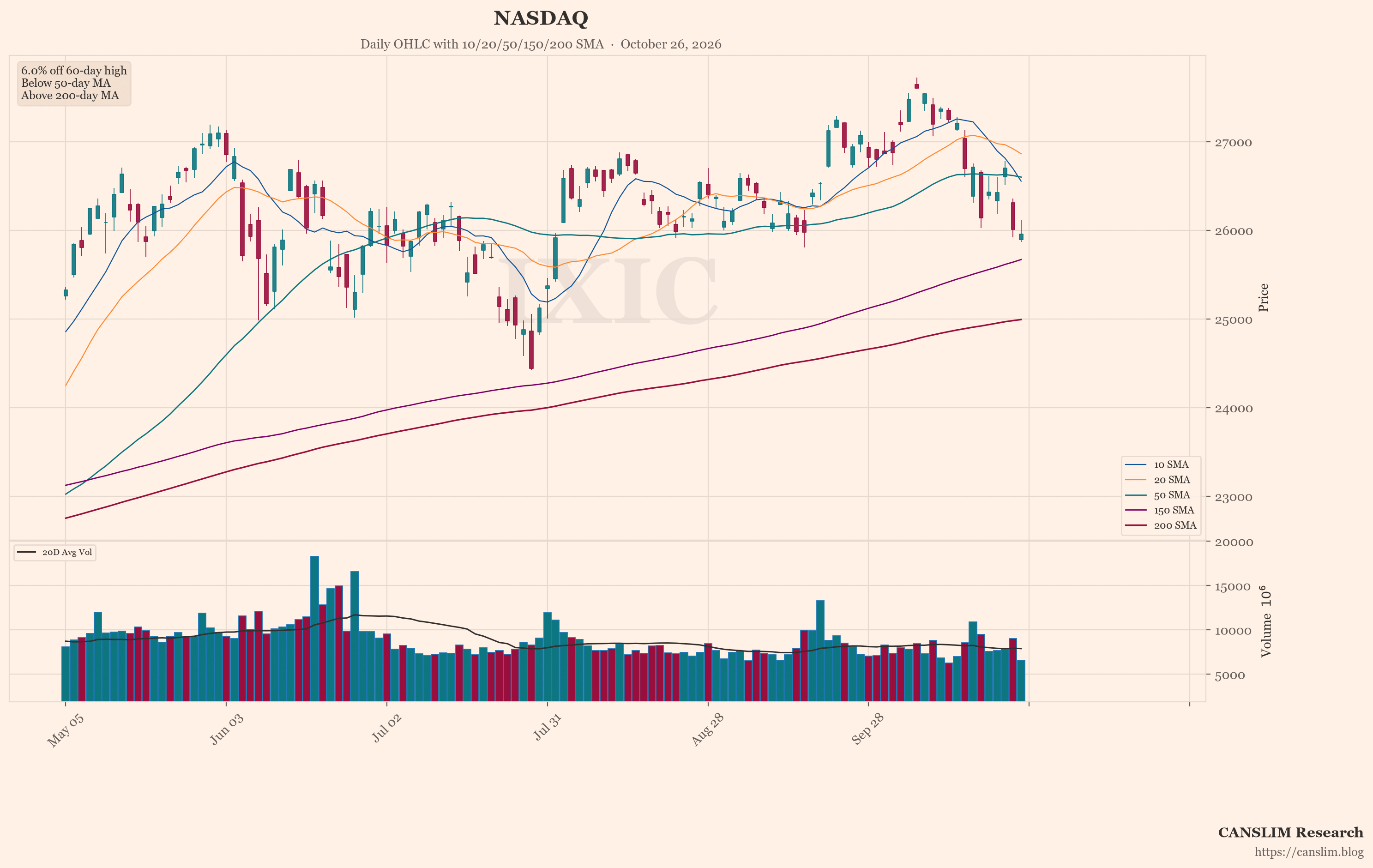
The featured chart shows AI (AI). An automated technical screen picked it because, among the indices and stocks it checked, it showed the most weakness on a few measures: distance from its recent high, position versus its 50-day and 200-day moving averages, and down days on higher volume. This is one screen and not a full view. Past price patterns do not predict future results. The brief’s own risk list is similar in spirit: rising volatility, import prices above expectations, a BOJ governor backing further hikes, and chip export restrictions. Each could weigh on risk appetite if it persists.
Mixed Evidence Leaves the AI Payback Question Open
The sources describe a market that received relief from chip earnings and guidance, yet still faces softer retail sales reports, persistent inflation and rising volatility. Factory data and Japan’s export figures support the idea that AI investment is reaching the real economy. At the same time, import prices, Fed commentary and BOJ signals keep rate uncertainty in place. Online sentiment reflects the same split, though it remains unverified. The central uncertainty is whether heavy infrastructure spending produces durable returns, and the sources do not resolve it.
Sources: a third-party AI-generated market news summary, and an AI summary of unverified posts by anonymous retail users online. This article was written by an AI language model from those summaries and published automatically without human review. Updated 2026-11-18 13:45 HKT.
CANSLIM Research (canslim.blog) is an independent educational publisher. It is not licensed or registered as a broker, investment adviser, research analyst or asset manager in any jurisdiction. This article is general information for education only. It is not investment advice, a research report, an investment recommendation, or an offer or solicitation to buy or sell any security, and it does not consider any reader's objectives, financial situation or needs. No ticker, chart, heading or technical comment is a suggestion to buy, sell, hold or short. Figures come from third-party sources, are not independently verified, and may be incomplete, out of date or wrong. Online sentiment may include rumour, speculation or coordinated posting. Past performance and past price patterns do not predict future results. Investing involves risk, including the loss of capital. This article is not updated after publication. Laws differ by country; seek advice from a licensed professional in your jurisdiction before making any investment decision.