 Andrew
General educational commentary only, generated automatically with AI. Not investment advice or a recommendation to buy, sell or hold any security. Capital is at risk.
Nasdaq Falls about 5% as AI Trade Weakens
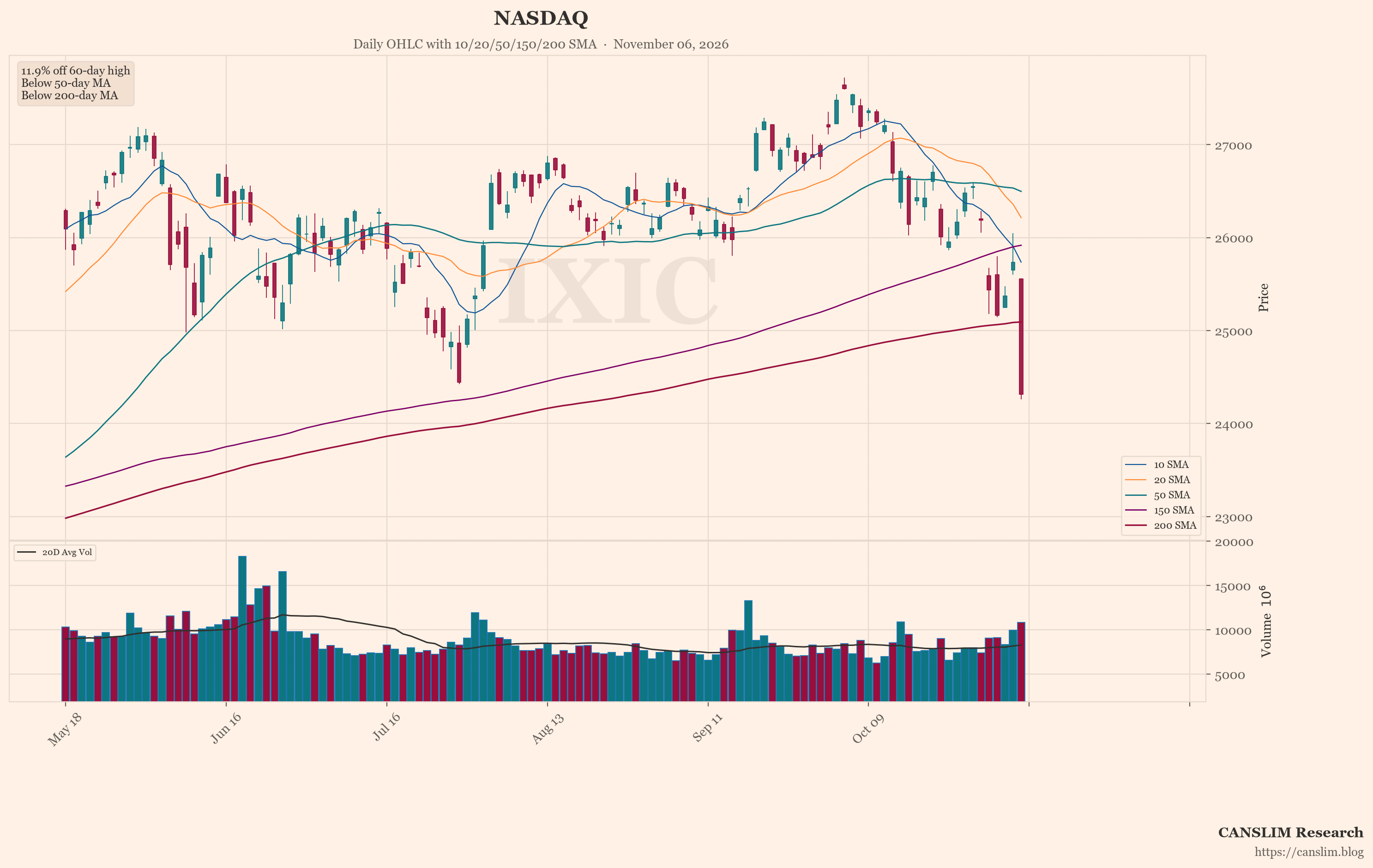
A sharp selloff in technology shares has changed how investors view the AI buildout, according to the news brief. The Nasdaq fell about 5% and entered correction territory. Chipmakers and other data-center suppliers took heavy losses. The brief links the move to the Democratic win of both chambers of Congress. Investors began to price in the risk that regulation, local opposition or permitting delays could slow data-center construction. Reuters reported the Nasdaq was set for a correction as investors reassessed the AI spending boom. Barron's described a market that celebrated Election Day and then saw the AI trade implode.
Policy Fears Add to Cost and Timeline Doubts
The election appears to have triggered the move, the brief states. But worries about rising costs and long construction timelines are adding pressure. The brief says the market is now asking whether expected AI returns justify the spending. This is not only a question of whether demand for AI exists. It is also a question of project economics. One reading is that the market is separating companies with durable demand from those most exposed to delayed or uneconomic projects. The brief describes this separation as a neutral development rather than a settled outcome.
Volatility Jumps and Treasuries Draw Demand
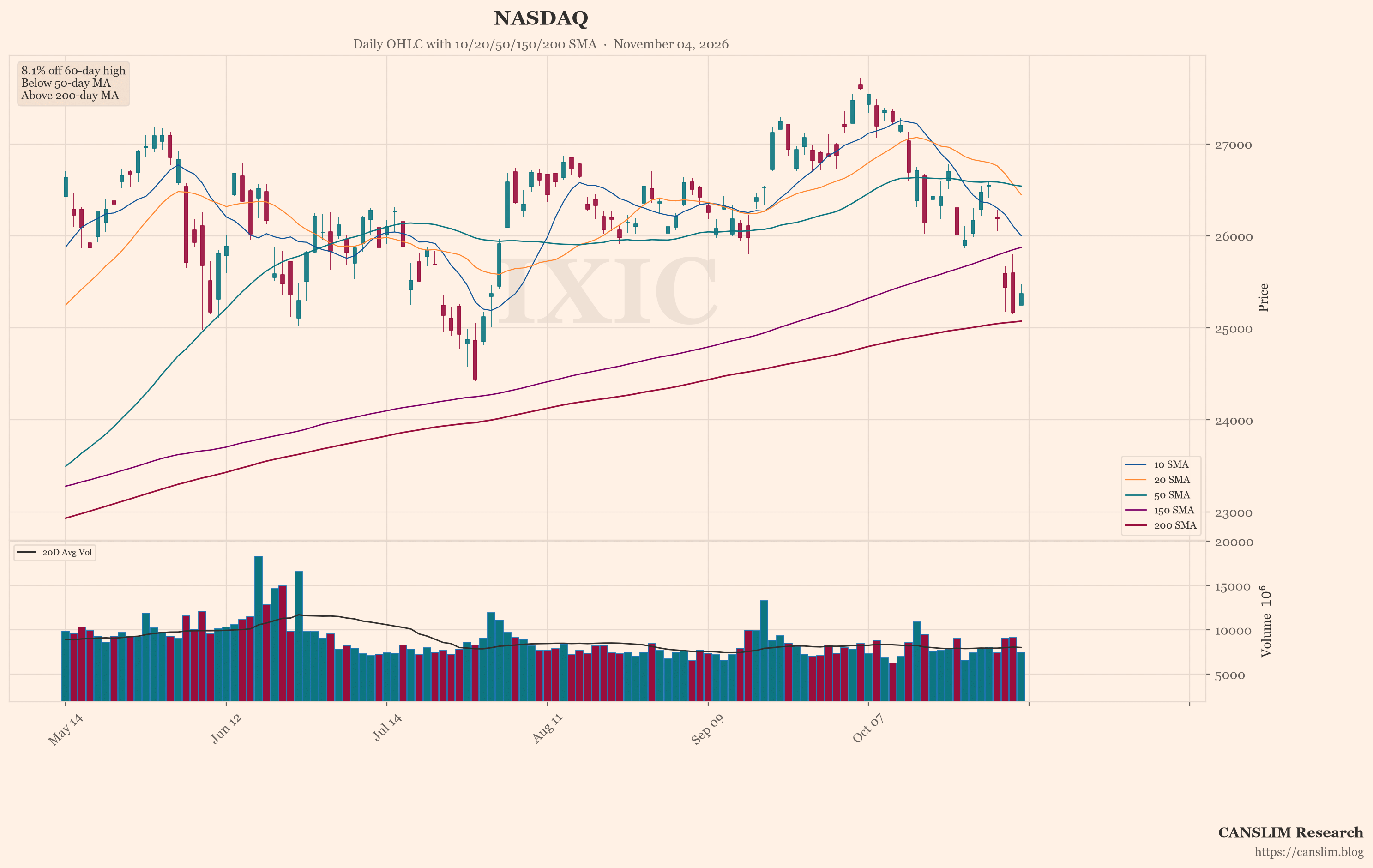
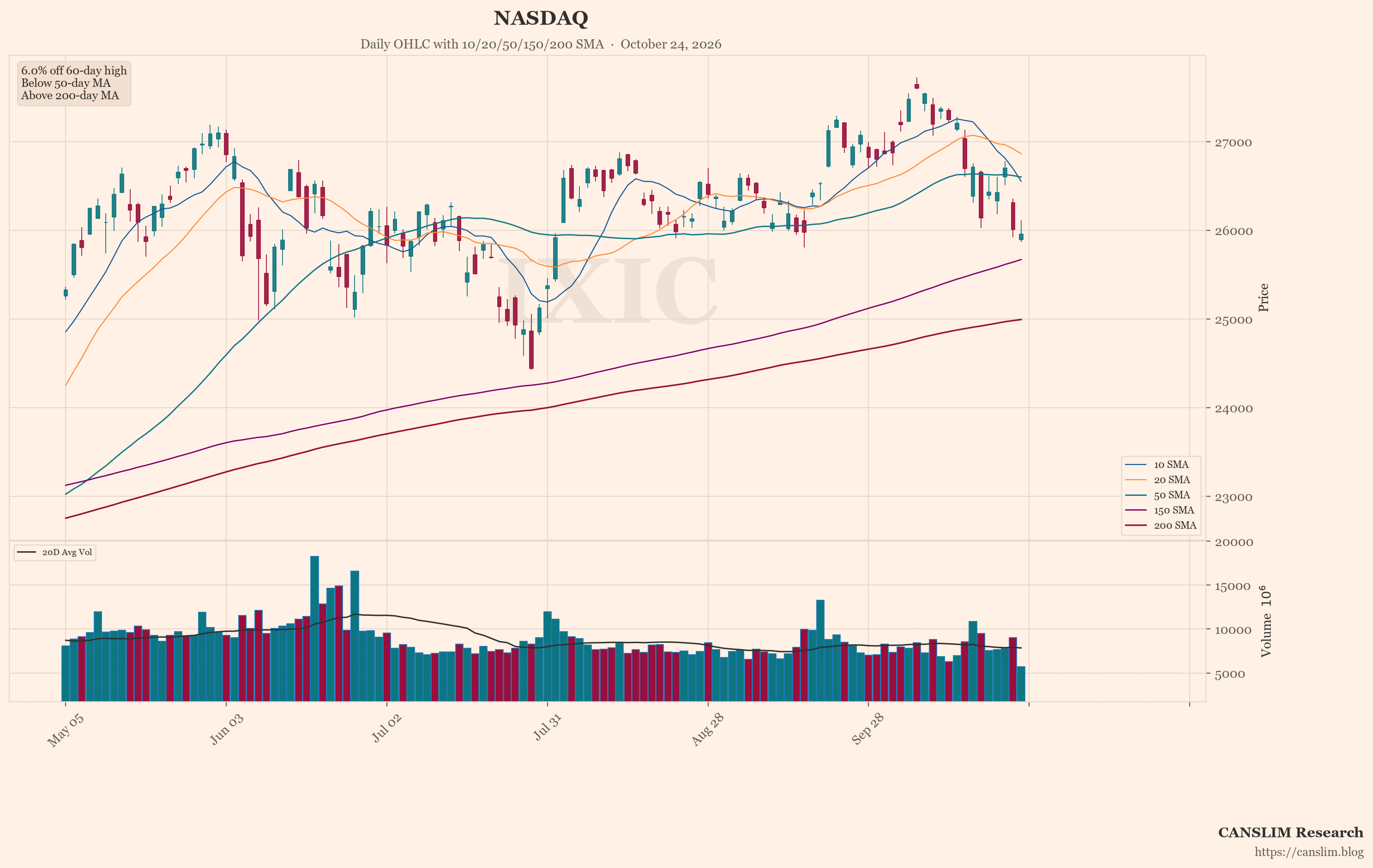
The brief reports a sharp rise in the volatility gauge and a move toward Treasuries. Reuters reported that the Wall Street fear gauge jumped the most since "Liberation Day" as the AI trade stumbled. The brief treats these moves as signs of defensive positioning and heightened uncertainty. Volume and price have pointed in the same direction during the decline, based on the brief's account of heavy losses. The featured chart shows the Nasdaq (^IXIC). An automated technical screen picked it because, among the indices and stocks it checked, it showed the most weakness on a few measures. These were distance from its recent high, position versus its 50-day and 200-day moving averages, and down days on higher volume. One screen is not a full view, and past price patterns do not predict future results.
Hyperscaler Spending still Supports the Buildout
The longer-term AI investment case is not settled, the brief notes. Hyperscalers still have substantial spending plans. Some analysts argue that many projects are already approved, funded or under construction. That could limit the near-term impact of policy changes. The brief lists hyperscaler spending commitments as a support for chip and infrastructure companies. This is a bullish point in the source material. It sits alongside the bearish points rather than replacing them. The brief does not give a figure for total spending or for the share of projects already funded.
Labor and Inflation Data Are the Next Tests
Friday's October jobs report is the next near-term test, according to the brief. Jobless claims fell to 189,000, below forecasts, Bloomberg reported. The brief says this makes the jobs report an important check on labor-market strength and rate expectations. Next week's CPI and PPI readings could add another catalyst by shifting expectations for inflation and interest rates. Schaeffer's Research noted in its week-ahead piece that inflation data is on deck as earnings slow. The brief also points to more detail on data-center policy and company spending plans as items to watch. It asks whether the selloff stabilizes around key technical levels.
Online Sentiment Turns Cautious on AI Themes
Online sentiment around AI and data-center themes has turned more cautious, based on unverified posts by anonymous retail users. These posts may include rumour or speculation and have not been checked. They are not a measure of institutional flow or confirmed positioning. The tone described in these posts tracks the news flow: policy risk, project costs and the drop in chip-related shares. Some posts discuss whether the AI theme has lost its momentum. Others focus on the gap between spending plans and returns. This sentiment is theme-level only and should be treated as unconfirmed. One interpretation is that retail chatter is following price action rather than leading it. The source material does not establish which is true.
A Market Repricing Policy and Project Economics
The sources describe a market that moved quickly from optimism about AI spending to doubt about policy and payback. The Nasdaq's roughly 5% drop and its move into correction territory show how fast risk appetite in tech can change, the brief states. Risks remain. Regulation or permitting delays could slow construction. Rising costs and long timelines could weaken project economics. The volatility gauge and Treasury demand point to uncertainty. Against that, hyperscaler commitments and projects already underway may soften the near-term impact. The brief does not resolve this balance. It presents both sides and leaves the outcome uncertain.
Sources: a third-party AI-generated market news summary, and an AI summary of unverified posts by anonymous retail users online. This article was written by an AI language model from those summaries and published automatically without human review. Updated 2026-11-06 06:00 HKT.
CANSLIM Research (canslim.blog) is an independent educational publisher. It is not licensed or registered as a broker, investment adviser, research analyst or asset manager in any jurisdiction. This article is general information for education only. It is not investment advice, a research report, an investment recommendation, or an offer or solicitation to buy or sell any security, and it does not consider any reader's objectives, financial situation or needs. No ticker, chart, heading or technical comment is a suggestion to buy, sell, hold or short. Figures come from third-party sources, are not independently verified, and may be incomplete, out of date or wrong. Online sentiment may include rumour, speculation or coordinated posting. Past performance and past price patterns do not predict future results. Investing involves risk, including the loss of capital. This article is not updated after publication. Laws differ by country; seek advice from a licensed professional in your jurisdiction before making any investment decision.