 Andrew
General educational commentary only, generated automatically with AI. Not investment advice or a recommendation to buy, sell or hold any security. Capital is at risk.
Nasdaq Gains Give Way to Fresh Questions on AI Spending
The news brief reports a split picture. The Nasdaq rose more than 1% on Monday as buyers returned to chipmakers and megacaps. By Tuesday, the tone had changed. Asian shares fell, and South Korea's Kospi dropped more than 4%. CNBC described the gap simply: tech rebounded in the U.S., but Asia was not buying it yet.
The trigger, per Barron's and MarketWatch, was a weak South Korean data-center listing. A company called Elice fell sharply from its offering price on its first trading day, and several other data-center flotations were postponed. The Wall Street Journal framed the session as a data-center IPO weighing on tech investors. One reading is that public markets are starting to test the financing side of the AI buildout, not just the demand side.
Chip Orders Stay Large While Financing Questions Return
Reuters reported that ByteDance, Alibaba and Tencent placed more than $35 billion worth of Nvidia chip orders. The brief treats this as a counterpoint: demand for chips still looks substantial.
The tension is between orders and returns. The brief says the market now wants earnings to show that heavy investment can deliver results. Heavyweight technology earnings are the near-term test. This may suggest that spending headlines alone carry less weight than they did earlier in the cycle.
Energy Prices and Yields Add Pressure from Two Sides
Oil remains elevated on Middle East supply concerns. Reuters reported oil eased as markets assessed a possible waiver on Russian energy. European gas prices rose as geopolitical risks intensified, according to the Journal.
The brief notes that higher fuel costs could weigh on consumers, retailers and farms. Treasury yields edged lower as investors waited for housing and employment data and next week's rate decision. Even so, inflation worries and government borrowing needs stay in the background. Higher energy costs and sticky inflation are a difficult mix for growth valuations.
Online Sentiment Turns Fearful While Indexes Hold
Online sentiment comes from unverified posts by anonymous retail users, which may include rumour or speculation and has not been checked. It is not institutional flow or confirmed positioning.
Those posts describe a sharp rotation rather than a broad collapse. One widely repeated observation held that two-thirds of stocks were green while AI and semiconductor names fell. Defensive sectors, healthcare and industrials drew interest. A Goldman risk appetite indicator reportedly turned negative for the first time since April, per the same posts.
Sentiment around AI infrastructure and neocloud themes was deeply negative. Posts cited debt levels, high bond yields and default speculation. Leveraged semiconductor themes drew heavy liquidation talk. A fear gauge cited in the posts sat near 25/100, leaning toward fear. None of this is verified, and community pessimism appeared to exceed the actual index moves.
A Screen Flags Nasdaq Weakness on Several Measures
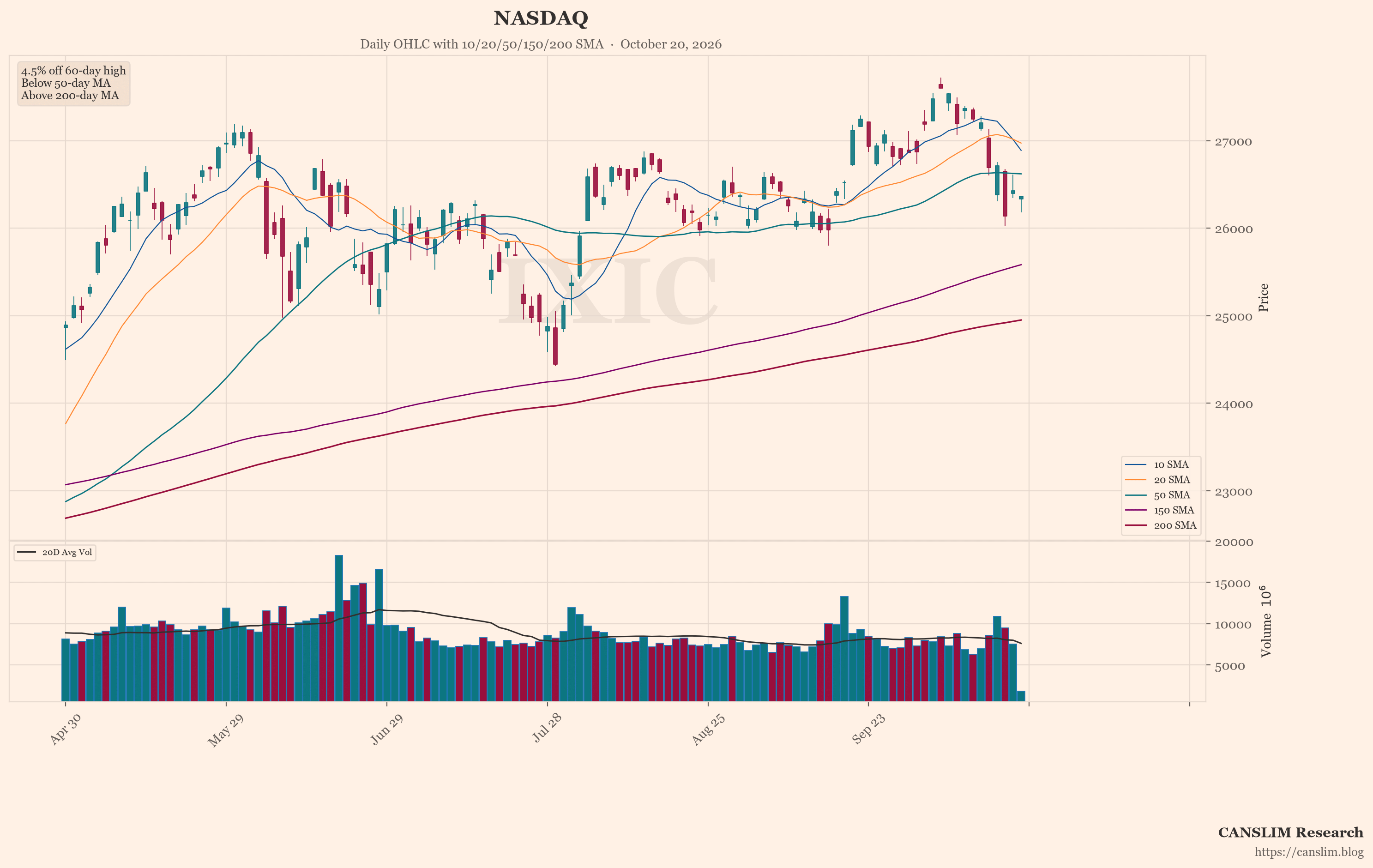
The featured chart shows the Nasdaq (^IXIC). An automated technical screen selected it because, among the indices and stocks it checked, it showed the most weakness on distance from its recent high, position versus its 50-day and 200-day moving averages, and down days on higher volume.
This is one screen, not a full view. Past price patterns do not predict future results. The reading is descriptive of recent price behaviour only.
Mixed Signals Leave the AI Trade at a Crossroads
Conditions are mixed. Chip orders are large, but a failed listing raised financing doubts. U.S. tech bounced, but Asia did not follow. Energy prices and inflation worries sit alongside a rate decision next week. Online sentiment is fearful, yet the brief describes the index-level mood as neutral, and defensive areas held up. The main uncertainty is whether AI spending turns into earnings that justify the debt behind it.
Sources: a third-party AI-generated market news summary, and an AI summary of unverified posts by anonymous retail users online. This article was written by an AI language model from those summaries and published automatically without human review. Updated 2026-10-20 22:00 HKT.
CANSLIM Research (canslim.blog) is an independent educational publisher. It is not licensed or registered as a broker, investment adviser, research analyst or asset manager in any jurisdiction. This article is general information for education only. It is not investment advice, a research report, an investment recommendation, or an offer or solicitation to buy or sell any security, and it does not consider any reader's objectives, financial situation or needs. No ticker, chart, heading or technical comment is a suggestion to buy, sell, hold or short. Figures come from third-party sources, are not independently verified, and may be incomplete, out of date or wrong. Online sentiment may include rumour, speculation or coordinated posting. Past performance and past price patterns do not predict future results. Investing involves risk, including the loss of capital. This article is not updated after publication. Laws differ by country; seek advice from a licensed professional in your jurisdiction before making any investment decision.
Discover more from CANSLIM Research
Subscribe to get the latest posts sent to your email.