 Andrew@CANSLIM RESEARCH
President Trump’s simultaneous trade offensive against Canada and push for AI deregulation are creating significant sector-specific volatility. Meanwhile, Congressional challenges to his foreign policy and tech tax breaks signal growing political risk for defence and technology equities. Investors should brace for heightened uncertainty as these policy battles unfold.
The Trump administration’s aggressive posture on trade and technology is colliding with a Congress increasingly willing to assert its authority, creating a complex political-economic landscape. With a trade war threatening billions in exports and Democrats targeting AI tax incentives, markets are recalibrating risk across defence, agriculture, and technology sectors. The outcomes of these policy clashes will shape investment flows for months to come.
Key Theme: The Trump administration’s assertive trade and technology policies are facing mounting resistance from Congress and foreign partners, creating a volatile mix of sector-specific risks and opportunities.
Trump Canada Trade War Threatens $2.3B Ohio Exports
Published: 16 September
President Trump’s escalating trade war with Canada is putting $2.3 billion in Ohio exports at risk, with five states particularly vulnerable. The dispute centres on tariffs and trade barriers, prompting retaliation threats from Ottawa.
Market Implication: The trade tensions are likely to weigh on manufacturing and agricultural exports, with companies reliant on cross-border supply chains facing margin pressure. Sectors such as machinery, automotive parts, and agriculture are most exposed.
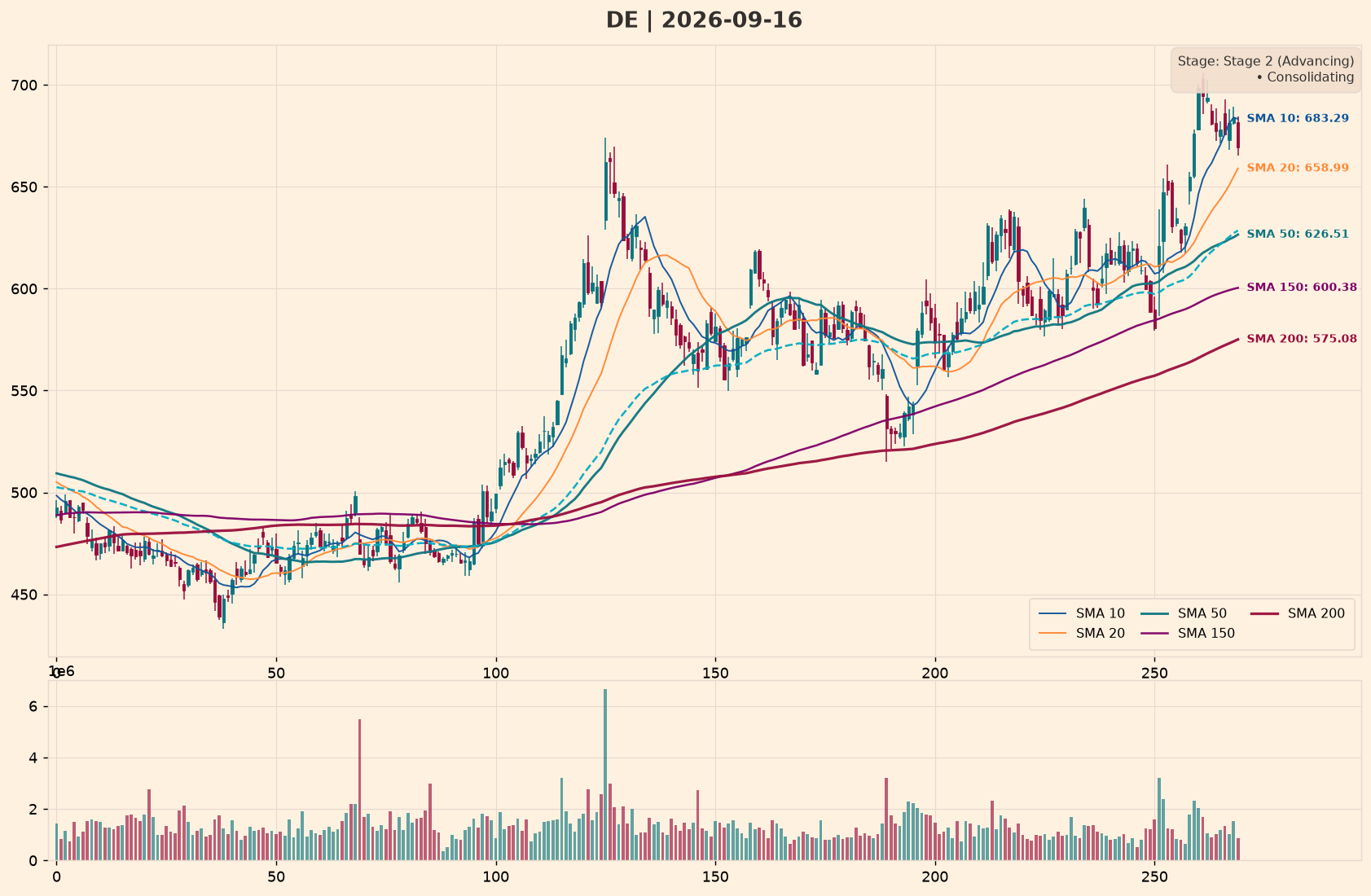
DE — Deere & CompanyBearish
Policy Nexus: Deere’s agricultural equipment sales are sensitive to farm incomes and export demand, which will be hit by Canadian retaliation and reduced Ohio exports.

Trend Structure: Stage 2 (Advancing)
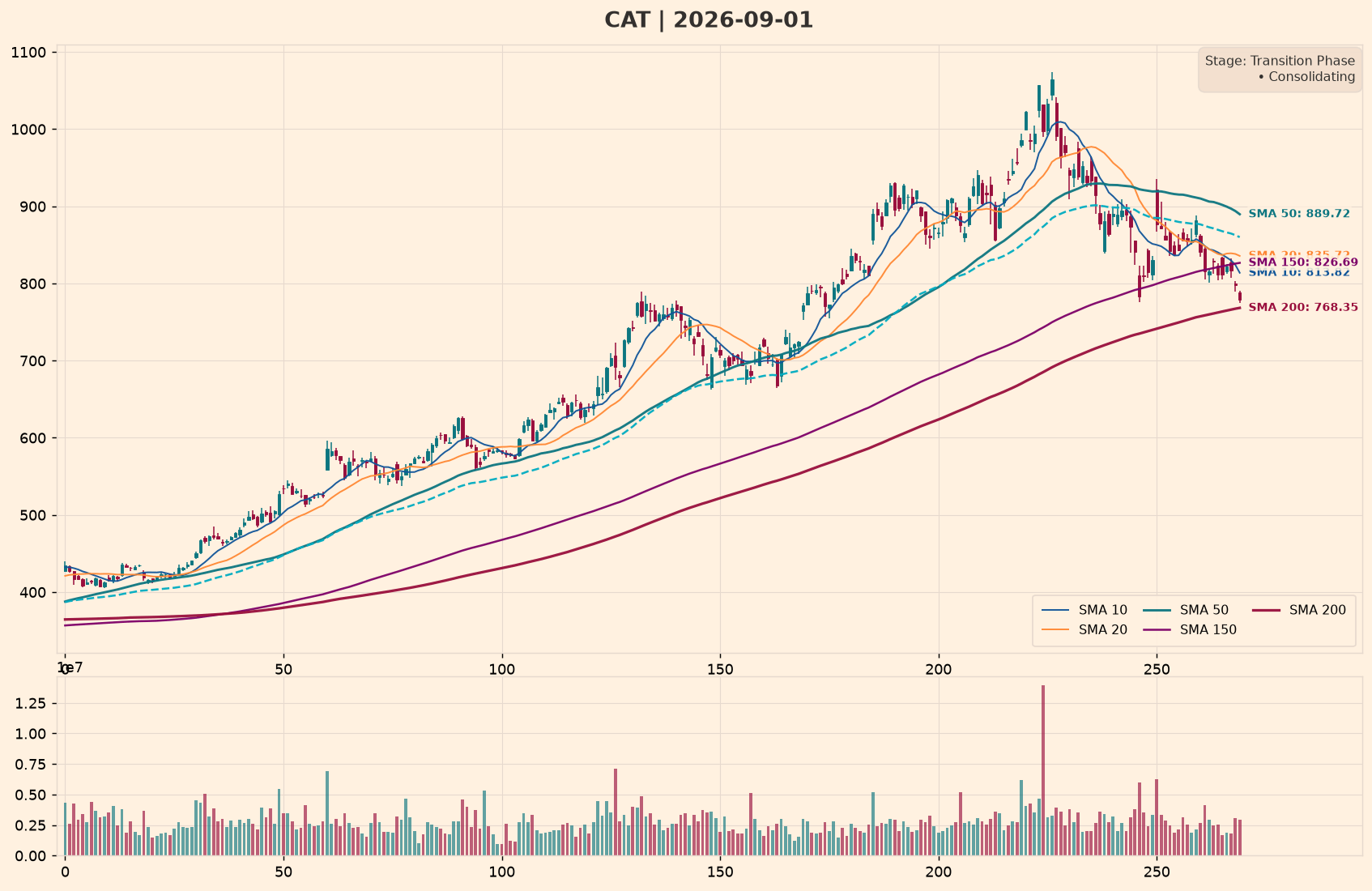
CAT — Caterpillar Inc.Bearish
Policy Nexus: Caterpillar’s machinery exports to Canada could face tariffs, and broader trade uncertainty may delay capital spending by farmers and construction firms.

Trend Structure: Transition Phase
House Backs Iran War Powers Resolution
Published: 16 September
The House passed a war powers resolution aimed at limiting President Trump’s ability to take military action against Iran without Congressional approval. Seven Republicans joined Democrats in support, including two from Iowa.
Market Implication: The resolution reduces the likelihood of a near-term military conflict with Iran, easing geopolitical risk premiums in energy markets. However, it also signals potential gridlock on foreign policy, which could embolden adversaries.
LMT — Lockheed Martin CorporationBearish
Policy Nexus: Reduced prospects for military escalation with Iran could lower demand for defence systems and munitions, pressuring defence stocks.

Trend Structure: Transition Phase
XOM — Exxon Mobil CorporationBullish
Policy Nexus: Lower geopolitical risk reduces the chance of supply disruptions, stabilising oil prices and benefiting integrated majors with less volatility.

Trend Structure: Stage 2 (Advancing)
House Democrats Target AI Data Center Tax Breaks
Published: 16 September
House Democrats are pushing to eliminate tax breaks for AI data centres, arguing they provide little local benefit while consuming massive energy resources. The move is part of a broader effort to redirect incentives toward sustainable projects.
Market Implication: The proposal threatens the profitability of AI infrastructure investments, potentially slowing the buildout of data centres. Technology companies and utilities with significant data centre exposure could see reduced capital expenditure and lower growth.
NVDA — NVIDIA CorporationBearish
Policy Nexus: NVIDIA’s AI chips are heavily used in data centres; removing tax breaks could dampen demand for new data centre construction and GPU orders.

Trend Structure: Stage 2 (Advancing)
MSFT — Microsoft CorporationBearish
Policy Nexus: Microsoft is a major investor in AI data centres through its Azure cloud; tax changes could increase costs and reduce returns on AI infrastructure.

Trend Structure: Transition Phase
Trump’s 300,000-Metric-Ton Beef Import Plan Roils Red-State Cattle Ranchers
Published: 16 September
President Trump’s plan to import 300,000 metric tons of beef has sparked backlash from cattle ranchers in red states, who fear it will depress domestic prices. The move is intended to lower food inflation but risks alienating a key political constituency.
Market Implication: Increased beef imports could pressure domestic cattle prices, hurting ranchers’ margins. Meat processors may benefit from lower input costs, but the political fallout could lead to policy adjustments.
TSN — Tyson Foods, Inc.Bearish
Policy Nexus: Tyson’s beef segment could face lower margins if imports increase supply and reduce prices, though its processing volumes might rise.

Trend Structure: Transition Phase
ADM — Archer-Daniels-Midland CompanyNeutral
Policy Nexus: ADM’s agricultural services and oilseed processing may see mixed effects from changes in livestock feed demand and trade flows.

Trend Structure: Stage 2 (Advancing)
State Dept Accuses ICC of Targeting Americans, Ignoring Atrocities
Published: 16 September
The State Department has accused the International Criminal Court of unfairly targeting Americans while ignoring atrocities committed by Iran, North Korea, and Syria. The statement escalates tensions with the ICC and signals a more confrontational US stance.
Market Implication: The diplomatic row is unlikely to have immediate market impact, but it could complicate international cooperation and lead to sanctions or travel restrictions affecting global businesses.
BA — The Boeing CompanyNeutral
Policy Nexus: Boeing’s defence and commercial sales could be affected by heightened diplomatic tensions, but the direct impact is uncertain.

Trend Structure: Transition Phase
RTX — RTX CorporationNeutral
Policy Nexus: RTX’s defence contracts may benefit from increased military spending if tensions escalate, but the ICC dispute alone is not a major driver.

Trend Structure: Transition Phase
Risk Management & Conclusion
In this environment of heightened policy uncertainty, investors must adhere to strict risk management. CAN SLIM principles remind us to focus on companies with strong fundamentals and technical leadership, while always employing stop-losses to protect against sudden reversals. The political landscape is fluid; staying disciplined and avoiding emotional reactions to headlines is paramount.
Read more market analysis at http://canslim.blog
Disclaimer: For institutional research observation only. Not investment advice. Always apply prudent risk management and strict stop-loss protocols.
Discover more from CANSLIM Research
Subscribe to get the latest posts sent to your email.