 Andrew@CANSLIM RESEARCH
The Fed Walks a Tightrope It Built Itself
Inflation is back on the front page. A hotter-than-expected CPI report pushed traders to nearly fully price in a rate hike at next week's FOMC meeting. The market now treats a 25bp hike as done. The real debate is what happens if the Fed does nothing. No hike would signal lost credibility. That is bearish. A hike would likely trigger a 1%–1.5% gap down, then get bought back. Wall Street often accumulates those panic gaps. The online crowd sees it the same way. One popular view: the Fed is cornered by fiscal dominance. The government cannot afford higher interest costs. That caps how far the Fed can push. Gold's new highs support that theory.

Oil Reopens an Old Inflation Wound
Energy is a fresh problem. Saudi Arabia's East-West pipeline, moving 7 million barrels per day, shut down after drone attacks. Satellite images showed fires southeast of Medina. Houthi attacks injured more than 70 people this week. Yet oil fell Friday. Brent settled down 2.8% at $104.61. WTI dropped about 2.4% to near $100. That ended an eight-session win streak. Brent still gained 8.7% for the week. USO closed at 154.88, down 2.19%. Higher crude feeds gasoline and input costs. That makes the inflation fight harder while consumers are already stretched.
Bond Yields Are the Real Circuit Breaker
The bond market is the true risk anchor. The 10-year Treasury yield rose nearly 20bp this week to about 4.96%. The 30-year moved above 5.3%. The crowd calls 5% the circuit-breaker threshold for financial markets. Mortgage rates hit their highest level in over a year. Rising yields are now a separate headwind for equities. If the move turns disorderly, it hits valuation-sensitive growth names first. Fear/Greed sits near 35 (Fear). Indexes are less than 2% below all-time highs. Yet behavior is defensive: cash, SGOV, less leverage, and calls to "go back to VOO and chill." The fear comes from rates and geopolitics, not price.
Memory and Servers Split While Dell Defies Gravity
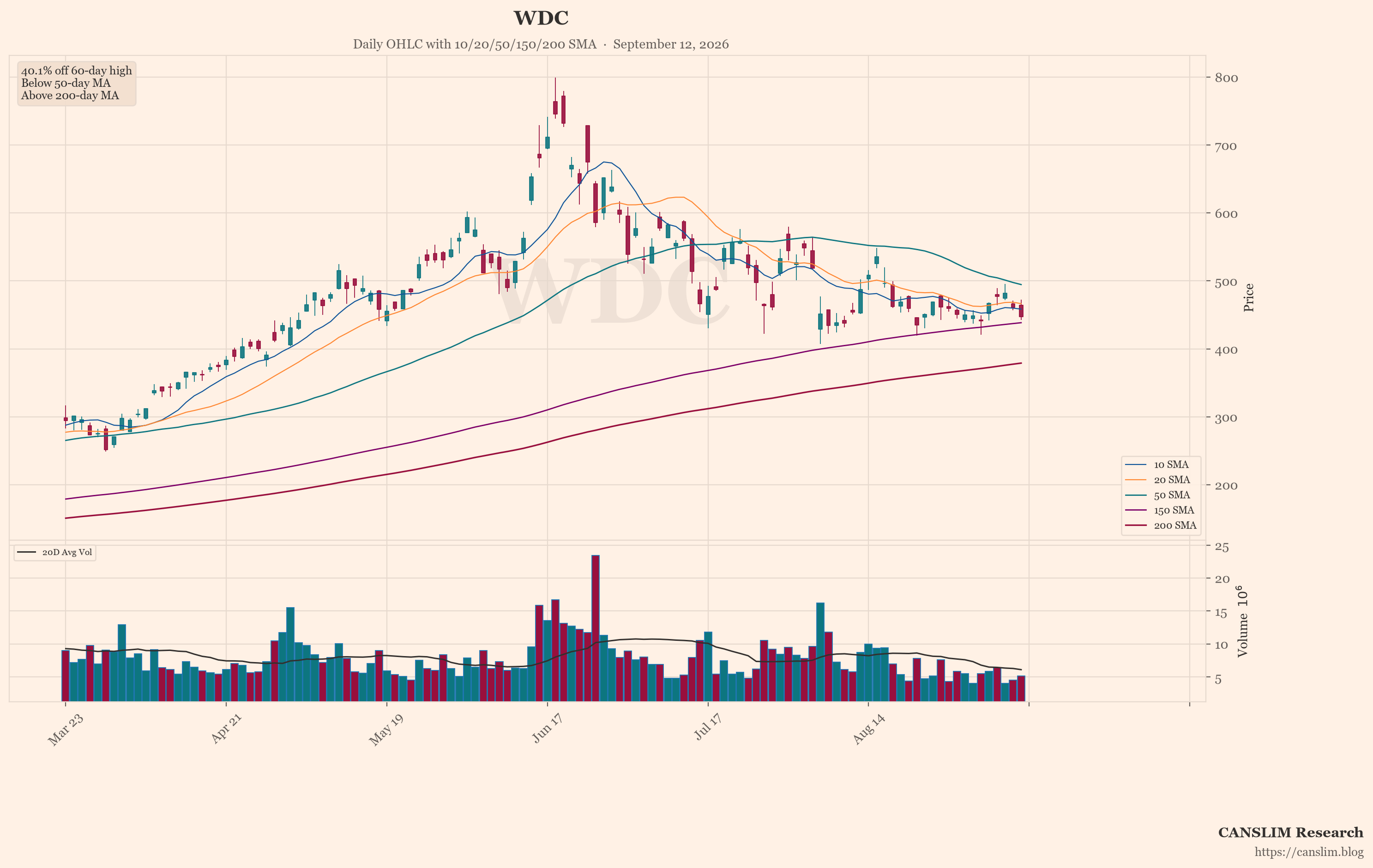
The memory-versus-server divide keeps widening. DELL surged +11.89% in one session to 567.14. It ran from around 100 to nearly 570 in two months. Meanwhile MU closed at 975.12 (-0.55%). SNDK fell 3.47% to 1632.99. WDC dropped 3.03% to 447.01. All fell despite strength in SOXX. The crowd's sharpest summary: the market prices DELL as if the AI buildout lasts forever, and MU as if it ends next week. Nobody could explain Dell's gain. Conspiracy theories mixed with technical talk. This is classic narrow leadership. When one name carries a group, the group is fragile.
Oracle's Inverted V and the Anatomy of a Failed Breakout
ORCL became the week's cautionary tale. It traced a textbook inverted V. It opened at 164, hit 165.90, then sank to 149.89 and closed at 150.30 (-1.81%). It gave back its entire post-earnings gain. Then came the filing: Ellison plans to sell up to $7.5 billion of stock. The 10b5-1 plan covers 50 million shares. The crowd flipped from "earnings were great, why isn't it up?" to "the earnings weren't that good." Targets got cut from 140 to "only reasonable below 100." This is what distribution looks like. Big volume, failed breakout, insider supply. Growth investors should study it.
WDC Shows the Weakest Chart in the Group
Our featured chart, WDC, shows the weakest technical pattern right now. It closed at 447.01, down 3.03%, even as SOXX held firm. That relative weakness matters. Leaders should hold while their group rallies. WDC is not holding. It is lagging. The memory complex is splitting, and WDC sits on the wrong side. Watch the 50-day line. A break there on heavy volume would confirm distribution. For CAN SLIM and Minervini-style traders, this is a pass, not a buy. Weak relative strength plus a soft group equals avoid.
Where the Next Move Gets Decided
Three things decide the next move. First, the FOMC meeting. A hike may clear uncertainty, but only if the Fed signals control without spooking growth stocks. Second, oil's reaction to Middle East headlines. Third, whether rising yields spill into equities more broadly. Company stories still matter. Comstock looks cleaner after the SOCAR and Jones deals. Entergy has visible regulated growth, but it depends on execution and approvals. Snap and Zeta are judged on execution, not hype. The crowd lost money this week despite flat indexes. Overnight gaps did the work. That is a choppy, unforgiving tape. Stay selective. Respect the 5% yield line. Let the leaders prove themselves.
Sources: market news brief & global social sentiment data. Updated 2026-09-12 22:00 HKT. For educational purposes only — not investment advice.
Discover more from CANSLIM Research
Subscribe to get the latest posts sent to your email.