 Andrew@CANSLIM RESEARCH
The Calm Before the Storm Fails to Materialize
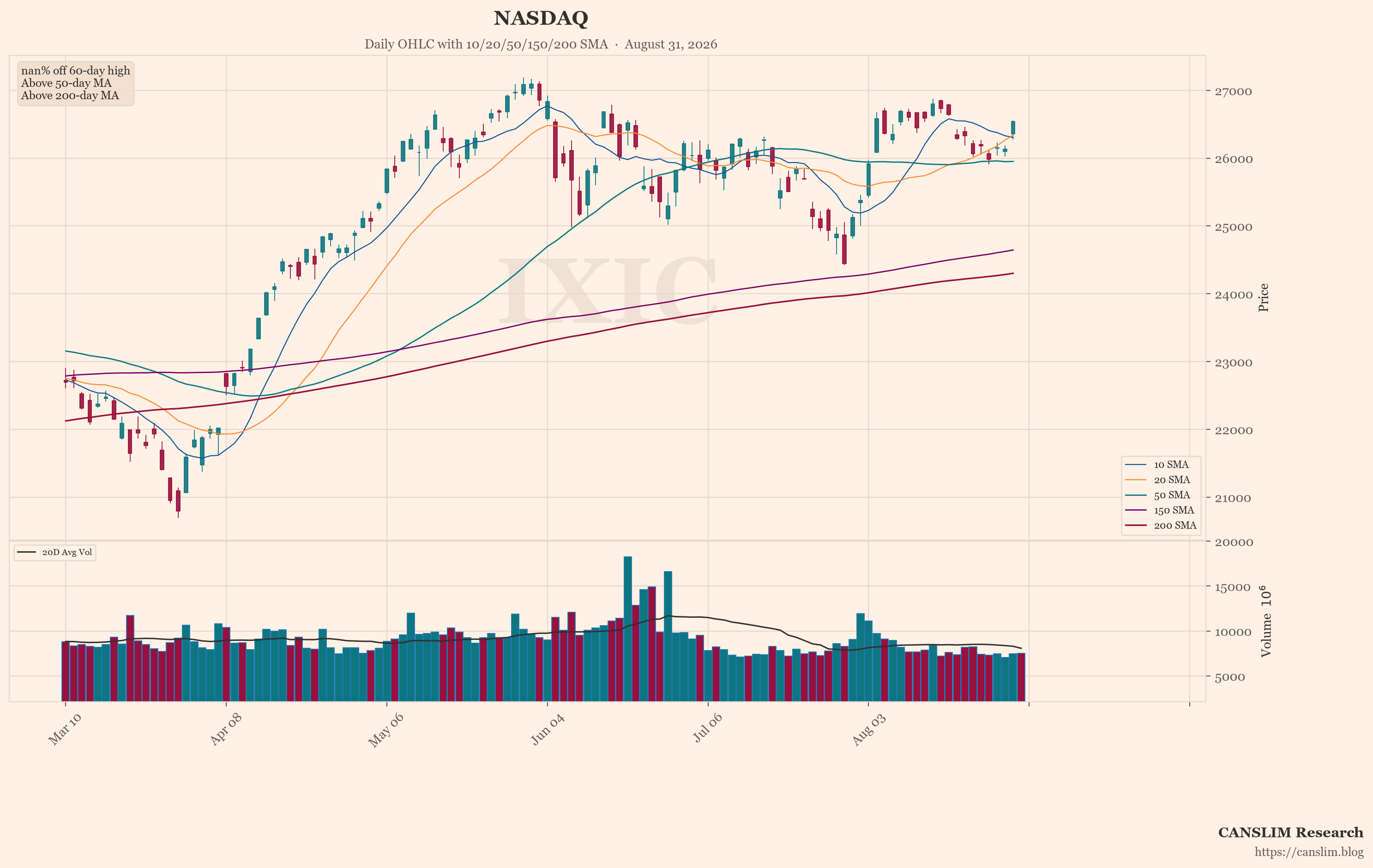
Markets opened the week with a tug-of-war between two powerful forces. Higher odds of a U.S. rate hike, fueled by Kevin Warsh’s hawkish Jackson Hole comments, are pulling one way. A jump in oil prices above $90 a barrel, following U.S. strikes on Iranian launchers, is pulling the other. This combination is a classic recipe for choppy September trading. It keeps pressure on growth-sensitive assets while reviving inflation worries. U.S. stock futures were basically flat, showing investors are waiting for more data before making big bets. The NASDAQ (^IXIC) is showing the weakest technical pattern among major indexes, reflecting this uncertainty.
The Online Crowd Paces as Indexes Stay Quiet
Global social sentiment is extremely divided and emotional. The online crowd spent Sunday night shouting about a “Black Monday” and “Circuit Breaker” scenarios. Yet, the actual decline in S&P futures was only about -0.2%. This is a severe divergence between sentiment and market movement. Many in the crowd recognize this, noting that Sunday-night panic has often led to green Monday closes. The real anxiety is not from the war headlines, which are seen as priced in. The true fear stems from the combination of rate hikes, higher oil, and month-end rebalancing. These are factors that cannot be dismissed within 24 hours.
Tech Support Wavers as the Fed Turns Hawkish
The Fed story is getting the most attention. Traders have pushed September hike odds higher, with futures now seeing a meaningful chance of a quarter-point move. Warsh stated that inflation remains too high and the labor market is near full employment. Under CME’s methodology, the probability of a September rate hike jumped from 35% to nearly 59%. This is a direct headwind for high-multiple growth stocks. Tech still has support from strong earnings and AI spending, but that tailwind now has to compete with a less forgiving rate environment. The VIX closed Friday at 14.4, its second-lowest level since December 2025, showing little fear at the index level.
Oil’s Ascent Creates a New Set of Winners and Losers
Oil’s jump of more than 2% after the U.S. attack on Iran’s Larak Island adds a fresh inflation shock. This raises the stakes for airlines, transport, and any company with heavy fuel exposure. China’s three biggest airlines posted heavy first-half losses as the fuel shock bites. However, energy and other inflation-linked sectors may benefit if oil stays elevated. The political backdrop is also shifting. Trump announced a deal with Venezuela to refill the Strategic Petroleum Reserve, but Sunday’s airstrike effectively erased this positive catalyst. The market must now digest a geopolitical premium in oil prices.
Breadth Narrows as Rate-Sensitive Names Bleed
The market’s internal health is deteriorating. While the S&P 500 has gone 22 consecutive trading days without a single-day decline of more than 1%, there is a bloodbath beneath the surface. Holders of semiconductor, AI infrastructure, and space-sector stocks have shifted into capitulation language. Top discussed tickers include MRVL, SOXL, MU, and NVDA, all of which are feeling the pressure. This combination of “calm indexes + bloodbath beneath the surface” is the primary source of the community’s unease. The bears’ argument is not based on the war, but on rate hikes and oil prices, which are persistent threats.
The Real Battlefield Is the Bond Market
The bond market is becoming the true source of anxiety. Several highly upvoted comments joked about staring at the 10-year yield like an old man. They argue that yields pose a greater threat to stocks than Iran. The tactical consensus is to avoid long-duration growth, hold more shares and fewer options, and keep cash on hand. A stronger dollar and higher U.S. yields are likely to keep pressure on Asian currencies and Japanese equities. The next big watchpoints are the U.S. jobs report and any follow-through in oil. The market must decide if it will price a more hawkish Fed path with conviction or just nervousness.
A Market Poised on a Knife’s Edge
The market is entering a delicate phase. The calm at the index level masks significant stress in individual stocks and sectors. The combination of a hawkish Fed, rising oil prices, and a strong dollar creates a challenging environment for growth stocks. The NASDAQ (^IXIC) is the weakest link, technically speaking. While the online crowd is performatively anxious, their historical contrarian signal suggests a green Monday is possible. However, the underlying threats of rate hikes and inflation are real and persistent. Investors should focus on the bond market and oil prices as the primary drivers of the next major move. The path of least resistance is lower until these forces subside.
Sources: market news brief & global social sentiment data. Updated 2026-08-31 14:00 HKT. For educational purposes only — not investment advice.
Discover more from CANSLIM Research
Subscribe to get the latest posts sent to your email.