Andrew@CANSLIM RESEARCH
The Hawkish Shift That Changed the Tape
The market’s main driver this week was Kevin Warsh’s Jackson Hole speech. He turned decisively hawkish. He said softer inflation data did not show real improvement. He added that the Fed still has work to do. The odds of a September rate hike jumped from 35% to nearly 60%. The 2-year yield rose above 4.29%. This is a clear macro shift. It pressures long-duration growth stocks the most. Higher bond yields make future earnings less valuable today. This is the core tension for the market right now. The Fed is tightening while the economy shows signs of cooling. Hiring is slowing. Help-wanted ads are thinning. This is a warning, but not a crack yet.
Semiconductor Bloodbath Hits the NASDAQ Hard
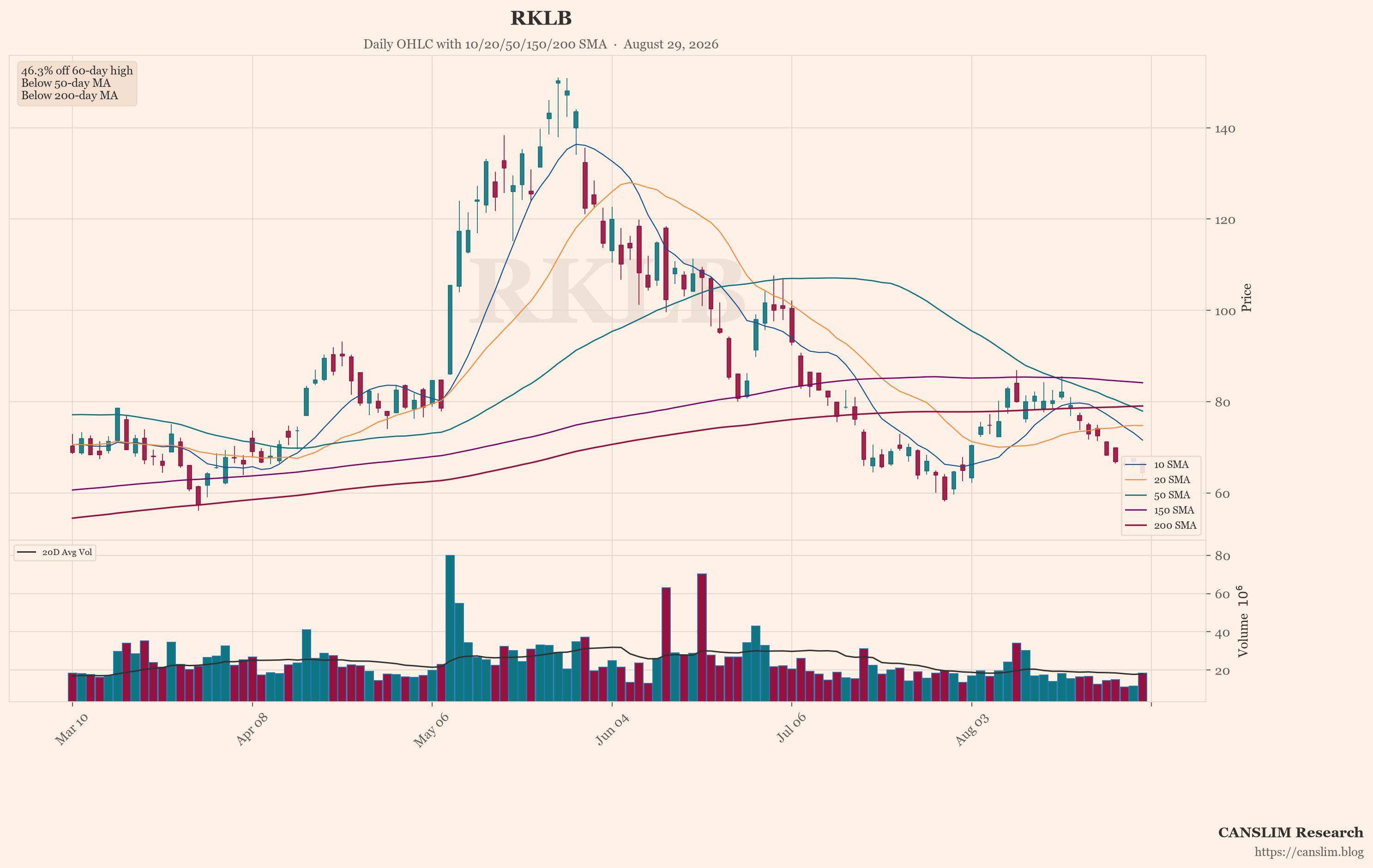
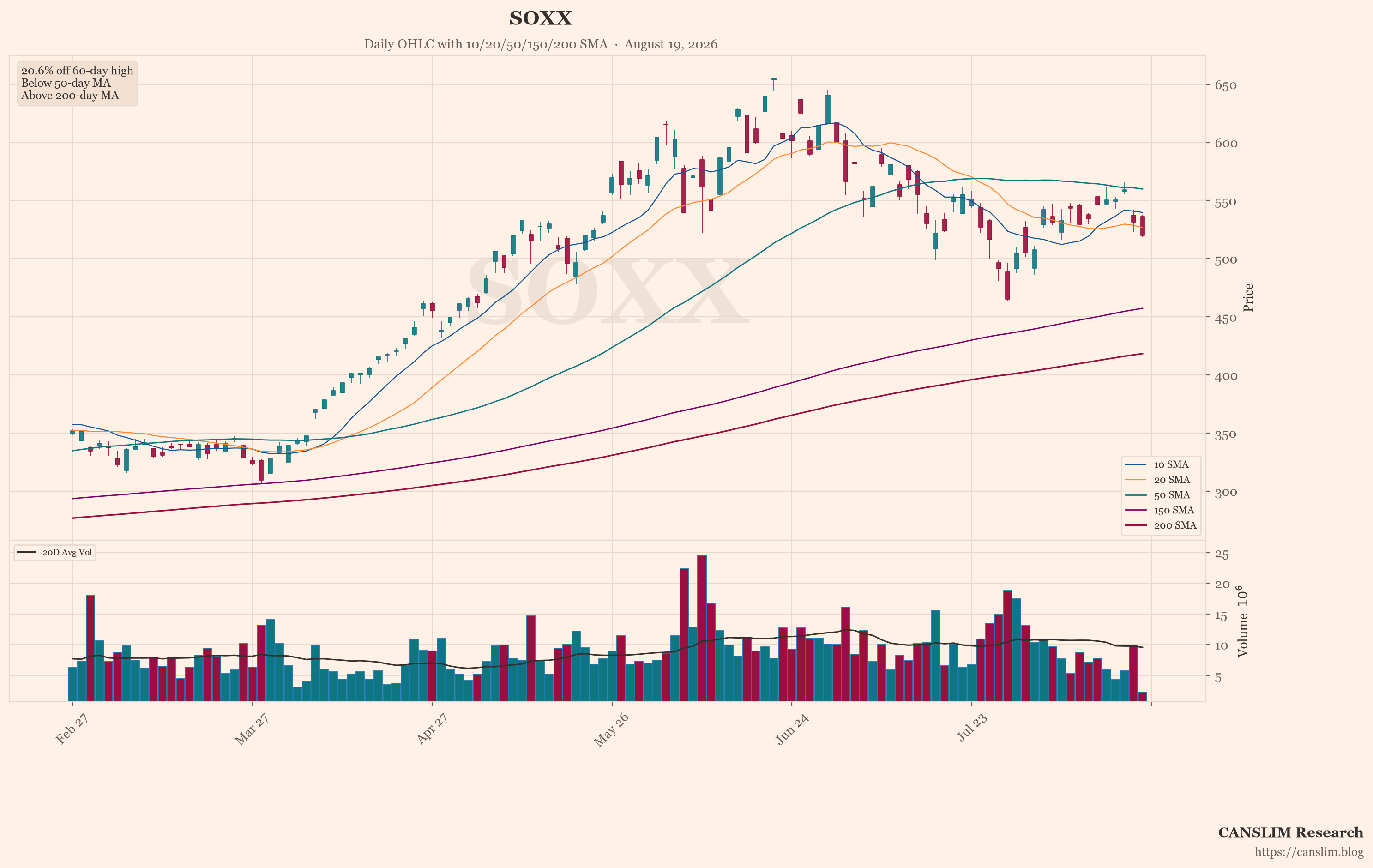
The AI hardware trade suffered its second major blow of the week. MRVL fell -10.48% to $216.00. Its earnings beat, but guidance disappointed. The stock trades at 53 times forward earnings. That is priced for perfection. Any miss on timing gets punished. NVDA fell -4.66% to $217.55. It gave back all its post-earnings gains. AMD dropped -2.32%. The SOXL semiconductor ETF fell -9.69%. Neocloud names were hit even harder. IREN plunged -12.60%. APLD fell -7.60%. This is the featured chart’s story. The NASDAQ shows the weakest technical pattern right now. The index is vulnerable because it is heavy in these beaten-down names.
Money Rotates Into Safety and Megacaps
While chips bled, capital moved elsewhere. Mega-cap tech and software caught a strong bid. AMZN rose +4.00%. GOOGL gained +1.77%. AAPL added +1.71%. NFLX climbed +2.39%. META was up +1.20%. This is a clear rotation. Money left high-beta AI hardware. It moved into quality names with strong balance sheets. This is a defensive shift within growth. It shows the market is not collapsing. It is repositioning. The leaders are changing. The old leaders are breaking down. The new leaders are holding firm. This is a classic sign of a market under pressure but not in freefall.
Rate Hikes Reprice Everything That Pays No Yield
The return of rate-hike expectations hit non-yielding assets hard. Gold fell -3.26%. Silver dropped -4.37%. MSTR lost -7.30%. Crypto was broadly weaker. This is a direct reaction to higher discount rates. When bonds pay more, assets with no cash flow lose appeal. PYPL also collapsed -12.68% to $53.66. A takeover deal fell apart. The Stripe-Advent consortium abandoned its offer. This shows deal risk is rising. It also shows that even beaten-down value names can get hit. The online crowd is angry and numb. They refuse to believe Warsh will hike before midterms. They call this a fake-out. They are verbally bullish. But they are also debating moving to cash. Fear is at 35 on the gauge. That is fearful, but not panicked.
Energy and Geopolitics Add a New Risk Layer
Oil supply remains fragile. The Iran conflict is straining Gulf flows. It also exposes limits on US military endurance. The Venezuela oil deal sounds big. Trump announced a 55% share of production from 17 fields. But the market barely reacted. USO closed at $129.70, down slightly. XLE rose just +0.63%. The deal will not add meaningful supply soon. This means inflation risks are not gone. Energy headlines can hit growth stocks fast. Supply chains remain vulnerable. The next big test is incoming inflation and jobs data. If they confirm the Fed’s tough tone, expect more pressure. If they soften, the market could rally hard.
The Online Crowd Fights the Fed With Defiance
The global social sentiment is a mix of anger, numbness, and defiance. Most traders refuse to believe a hike is coming. They cite debt costs and political timing. They see this as a setup. The thesis is simple. The Fed sets expectations for a hike. The market falls. The hike never comes. The market rebounds twice as hard. Some even call for SPY at 1000. But a minority warns that 2022 is a living counterexample. The crowd is buying dips. They mention buying APLD at $24. They talk about holding MU forever. This is emotional panic, not capitulation. It means the bottom may not be in. But it also means dip buyers are ready to step in.
The Divergence That Defines This Market
The key takeaway is divergence. Semiconductors are breaking down. Megacaps are holding up. Rate-sensitive assets are falling. Energy is stable. This is not a uniform sell-off. It is a rotation. The NASDAQ is the weakest index. It is overloaded with the broken chip names. The market is telling you to be selective. Some areas still have support. Morningstar sees a 15% recovery with room to climb. AI infrastructure and memory demand remain constructive. But the macro picture is hawkish. The Fed is the main driver. Until inflation data changes the story, expect volatility. The crowd is defiant. The charts are weak. The smart move is to respect the trend. The NASDAQ is showing you the risk. Listen to it.
Sources: market news brief & global social sentiment data. Updated 2026-08-29 22:00 HKT. For educational purposes only — not investment advice.
Discover more from CANSLIM Research
Subscribe to get the latest posts sent to your email.