 Andrew@CANSLIM RESEARCH
The Bond Market's Breather Does Not Break the Back of Rates
The stock market woke up to a two-sided tape on Wednesday. The Treasury’s expanded buyback plan for long-duration debt provided a genuine short-term lift, pulling yields off their recent multi-decade highs. This move offered a glimmer of hope to a market that has been tormented by the specter of higher-for-longer interest rates. However, the relief was shallow. The core problem remains untouched: massive fiscal deficits, heavy debt issuance, and the insatiable capital demands of the AI infrastructure buildout continue to exert upward pressure on borrowing costs. The bond market’s relief rally is a bandage, not a cure, and the underlying patient is still bleeding red ink.
A Historic Biotech Breakthrough Ignites the Online Crowd
While the macro picture remained murky, a single event dominated global social sentiment and created a frenzy of speculative greed. Moderna (MRNA) announced a historic Phase 3 trial success for its personalized mRNA cancer vaccine, sending shares up over 86% premarket. This is the first positive late-stage result in the history of mRNA cancer therapies, a monumental scientific achievement. The online crowd was immediately split into camps of regret and euphoria. Traders who had sold their positions days earlier were calculating the massive profits they had missed, while others were piling into short-dated call options with reckless abandon. This event-driven mania created a false sense of market-wide greed, masking the underlying fear that still gripped the major indices.
The Custom Silicon Shuffle Reshapes the AI Trade
The AI trade is no longer a one-way bet, and the news from Marvell Technology (MRVL) proves it. The company issued Google warrants for nearly 59 million shares, valued at roughly $12.2 billion, tied to revenue sharing from custom AI chips. This deal signals a major shift in the custom silicon landscape, moving business away from Broadcom (AVGO), which saw its stock drop over 6% premarket. While MRVL rallied on the news, the broader reaction was a warning. The market is starting to differentiate between AI winners and losers, and the leverage used to fund this massive infrastructure buildout is becoming a key concern. The "tug of war" between AI fundamentals and the leverage required to finance them is now playing out in real-time price action.
The Online Crowd's Bull Trap Fears Prove Justified
The divergence between social sentiment and actual price action was stark. Between 08:00 and 09:00, the online crowd was flooded with calls for a "+3% day" and new all-time highs, fueled by the Treasury news and Moderna's success. Yet, by 09:12, the SPY was flat, and the tech-heavy QQQ had fallen to -1.30%. The crowd mistook a bond-market reaction for an equity-market reaction. Yields did collapse, but equities, particularly high-duration tech names, did not follow. This rapid reversal turned cheers into self-deprecating jokes about a "bull trap." The event also exposed a second divergence in precious metals, where commentary about a "silver surge" was completely contradicted by the actual premarket decline in SLV. This suggests the crowd is trading on emotion and early headlines, not on the live tape.
The Weakest Link in the Rally Is the Chip Sector
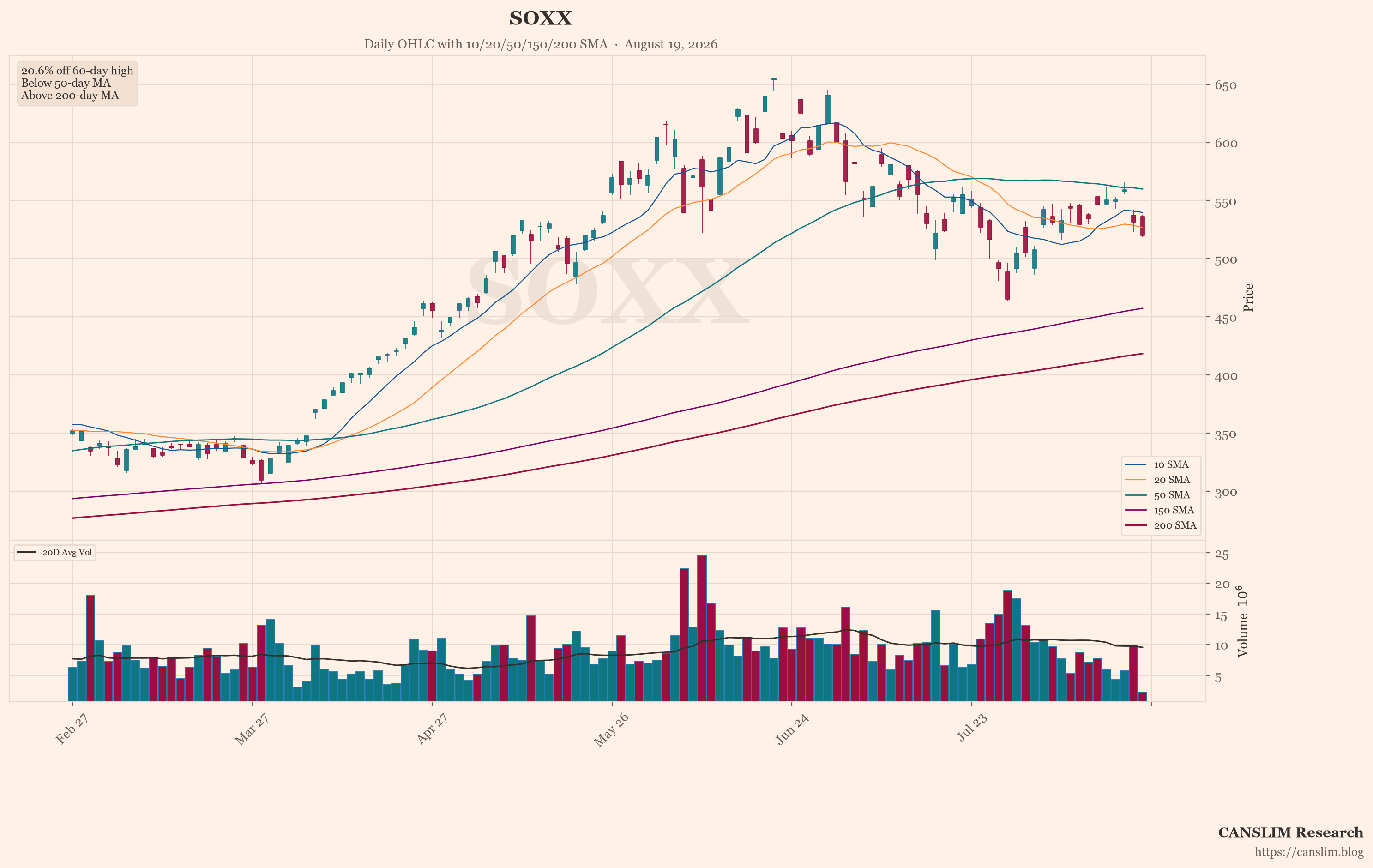
The technical picture for the semiconductor sector is deteriorating, and the chart of the SOXX ETF is the weakest of the featured charts. After a nearly 5% single-session drop, the ETF is showing a clear breakdown from its recent consolidation. This weakness is directly tied to the rates story. Chip stocks are high-duration assets, meaning their future earnings are heavily discounted by higher yields. As long as long-term Treasury yields remain pinned near multi-decade highs, the pressure on SOXX and other rate-sensitive tech names will persist. The AI narrative is strong, but the market is currently pricing in the cost of that future, and the bill is coming due in the form of higher discount rates.
A Market Split Between Event-Driven Greed and Structural Fear
The market is not moving as one; it is a battlefield of opposing forces. On one side, you have extreme, event-driven greed concentrated in names like MRNA. On the other, you have a persistent, structural fear that higher rates will eventually break the broader market. The composite sentiment reading of 60/100 for greed is misleading because that greed is not broad-based. It is a single-stock phenomenon. The real story is the residual fear at the index level, where traders are actively buying puts and warning others to "sell any bounce." This split personality makes for a fragile tape, where any negative catalyst, such as the upcoming Fed minutes, could easily tip the scales from greed to panic. The market is not healthy; it is a house divided, and the foundation of low rates has been removed.
Sources: market news brief & global social sentiment data. Updated 2026-08-19 22:00 HKT. For educational purposes only — not investment advice.
Discover more from CANSLIM Research
Subscribe to get the latest posts sent to your email.
