 Andrew@CANSLIM RESEARCH
Executive Summary
The Trump administration’s aggressive trade and immigration policies are creating market volatility, with new tariffs on Canadian imports and record ICE detentions. Sanctions on Iranian oil are tightening global supply, while a court ruling on mail-in voting could reshape electoral dynamics. Investors should brace for sector-specific impacts.
On August 27, 2026, the Trump administration’s policy agenda continues to dominate global markets, with a mix of protectionist trade measures, stringent immigration enforcement, and geopolitical manoeuvres. These actions are reshaping trade flows, labour markets, and energy prices, demanding careful navigation by investors.
Key Theme: The Trump administration’s protectionist and restrictive policies are creating winners and losers across sectors, with trade, immigration, and energy at the forefront.
Trump tariffs on Canadian imports
Published: 26 August
President Trump imposed tariffs on Canadian imports, described as ‘irrational’ by former Labor Secretary Robert Reich. The tariffs target a range of goods, escalating trade tensions with a key ally.
Market Implication: The tariffs are likely to increase costs for US manufacturers and consumers, potentially stoking inflation. Sectors reliant on Canadian inputs, such as automotive and agriculture, face margin pressure.
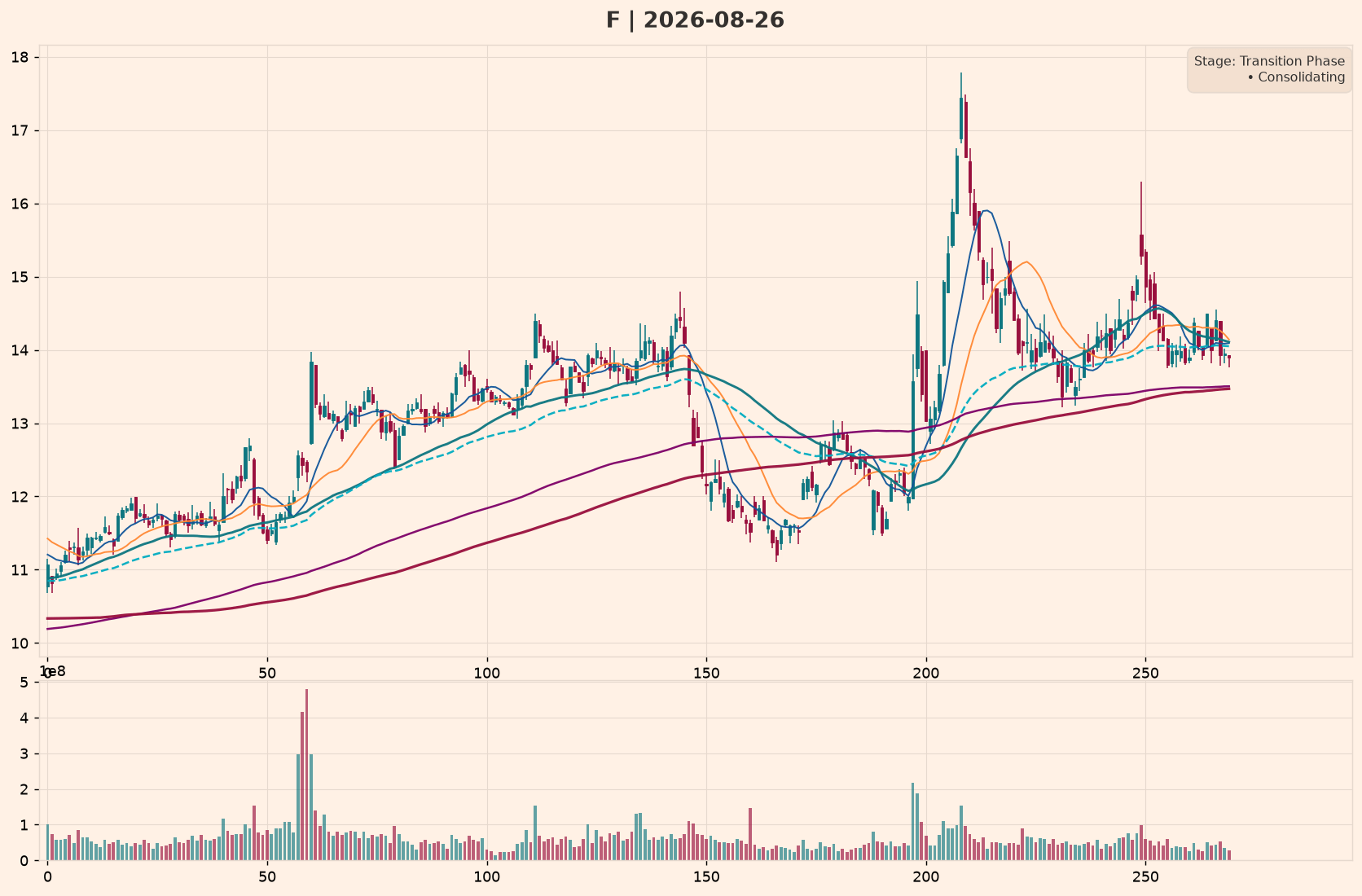
F — Ford Motor Co.Bearish
Policy Nexus: Ford relies on Canadian-made components and exports; tariffs raise costs and disrupt supply chains.

Trend Structure: Transition Phase
CAT — Caterpillar Inc.Bearish
Policy Nexus: Caterpillar uses Canadian steel and aluminium; tariffs increase input costs, hurting profitability.

Trend Structure: Transition Phase
ICE detentions hit 50,000 in July
Published: 25 August
US Immigration and Customs Enforcement (ICE) detentions reached 50,000 in July, a second-term high, reflecting the administration’s intensified immigration crackdown.
Market Implication: Tighter immigration policy could reduce labour supply in sectors like agriculture, construction, and hospitality, potentially pushing up wages and costs. It may also affect consumer spending in immigrant communities.
DHI — D.R. Horton Inc.Bearish
Policy Nexus: Construction relies heavily on immigrant labour; reduced supply could raise costs and slow housing starts.

Trend Structure: Stage 4 (Declining)
CMG — Chipotle Mexican Grill Inc.Bearish
Policy Nexus: Restaurant industry depends on immigrant workers; labour shortages may increase wages and hurt margins.

Trend Structure: Transition Phase
Court lifts injunction on mail-in voting policy
Published: 25 August
A federal court lifted an injunction against the Trump administration’s mail-in voting policy, allowing stricter rules to proceed. The policy is expected to affect voter turnout.
Market Implication: Changes to voting rules could alter election outcomes, influencing policy continuity. Sectors sensitive to regulatory changes, such as healthcare and energy, may see volatility.
UNH — UnitedHealth Group Inc.Neutral
Policy Nexus: Healthcare policy shifts could affect insurance dynamics, but immediate impact is uncertain.

Trend Structure: Transition Phase
XOM — Exxon Mobil Corp.Neutral
Policy Nexus: Energy policy may be affected by election results, but current impact is speculative.

Trend Structure: Transition Phase
Trump agrees to import beef; ranchers criticize
Published: 24 August
President Trump agreed to increase beef imports, drawing criticism from domestic ranchers who fear price declines and market disruption.
Market Implication: Increased beef imports could lower domestic beef prices, pressuring US ranchers and meat processing companies. Consumers may benefit from lower prices, but agricultural sector sentiment weakens.
TSN — Tyson Foods Inc.Bearish
Policy Nexus: Tyson, a major meat processor, may face lower margins due to cheaper imports and competition.

Trend Structure: Transition Phase
COST — Costco Wholesale Corp.Bullish
Policy Nexus: Costco could benefit from lower beef prices, improving margins and attracting price-sensitive consumers.

Trend Structure: Transition Phase
Trump sanctions Iranian oil; 40M barrels offshore
Published: 23 August
The Trump administration imposed new sanctions on Iranian oil, with an estimated 40 million barrels currently held offshore. The move aims to curb Iran’s oil exports.
Market Implication: Sanctions tighten global oil supply, likely supporting crude prices. Energy companies with upstream operations may benefit, while airlines and transport face higher fuel costs.
OXY — Occidental Petroleum Corp.Bullish
Policy Nexus: Higher oil prices boost revenues for oil producers like Occidental.

Trend Structure: Transition Phase
DAL — Delta Air Lines Inc.Bearish
Policy Nexus: Airlines are sensitive to fuel costs; rising oil prices increase operating expenses.

Trend Structure: Transition Phase
Risk Management & Conclusion
Investors must remain vigilant amid these policy-driven market swings. Adhering to CAN SLIM principles, strict stop-losses are essential to protect capital, especially in sectors directly exposed to trade and immigration policies. Diversification and disciplined risk management are paramount.
Sources aggregated: Administration News, BBC News, Latest Political News on Fox News, Politics
Disclaimer: For institutional research observation only. Not investment advice. Always apply prudent risk management and strict stop-loss protocols.
Discover more from CANSLIM Research
Subscribe to get the latest posts sent to your email.