 Elim
Elim1. the Lede &Amp; the Real Story
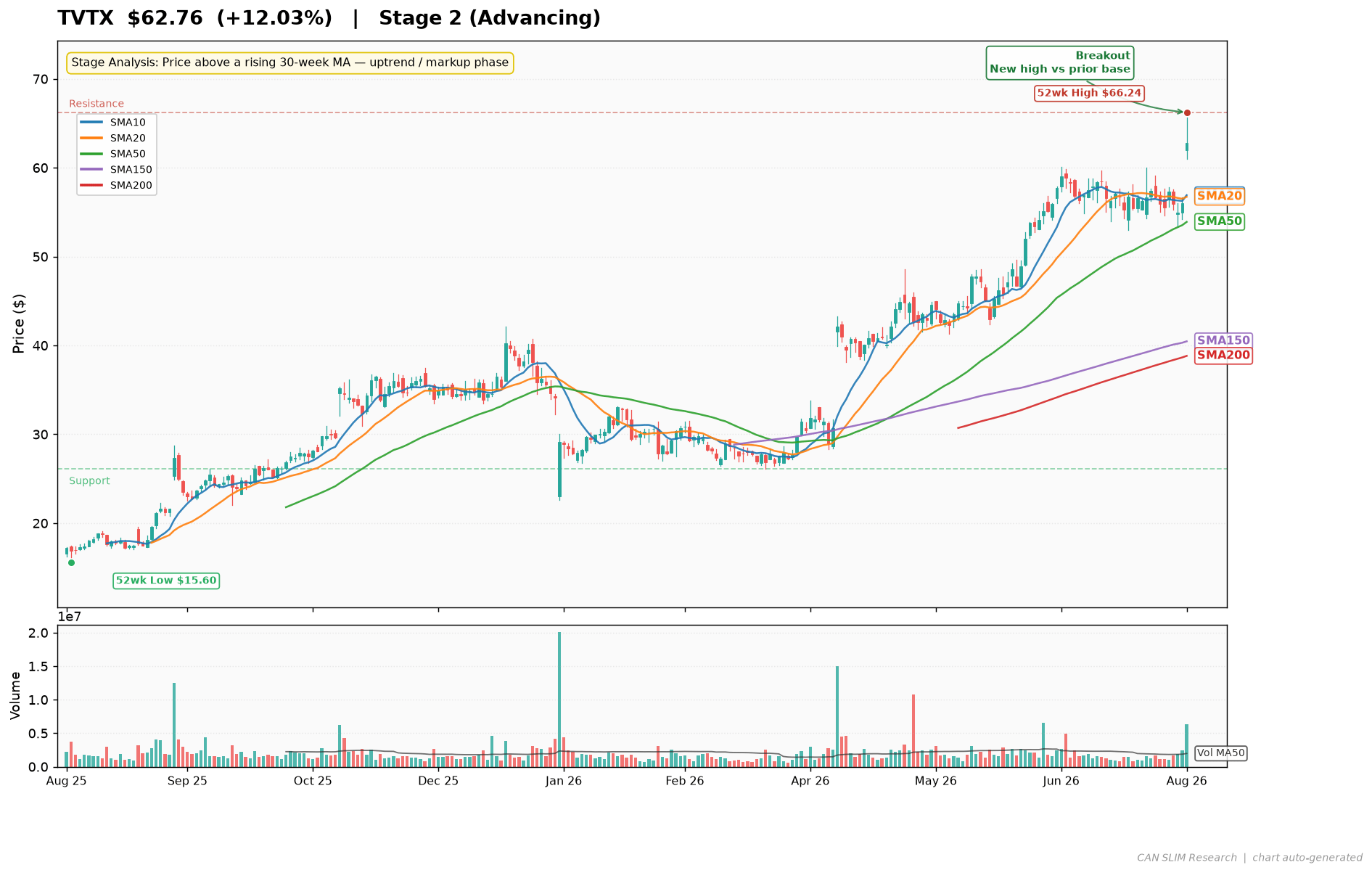
Travere Therapeutics reported a headline-grabbing second quarter: record U.S. revenue of $141 million, a 2,000-plus new patient start forms across both indications, and an FSGS launch that management called ‘exceptionally strong.’ The stock likely popped on the news, but beneath the celebratory press release lies a more complicated picture. The company’s core IgA nephropathy (IgAN) business—the engine that funds everything else—grew only modestly, despite management’s claim of ‘continued strength.’ Meanwhile, the FSGS launch, while promising, is still in its earliest, most flattering phase, and the company’s pipeline—pegtibatinase and the newly licensed civorebrutinib—remains years away from commercialization. The real story is that Travere is a one-product company with a second indication that may not be as durable as the launch numbers suggest, and the market is being asked to pay for a future that is far from guaranteed.
The numbers tell the tale. Q2 revenue of $141 million is up from the prior quarter, but the growth rate is decelerating. In Q1, the company reported ‘record new patient start forms’ for IgAN; in Q2, management said demand ‘grew compared to the prior quarter’ but did not quantify the growth. The FSGS launch, which began in April, contributed to the start form total, but the company has not broken out how many of those 2,000-plus forms were for FSGS versus IgAN. This lack of transparency is a red flag. Investors are being asked to celebrate a combined number that masks the underlying health of the core business. The company’s guidance for the full year, if any, was conspicuously absent from the prepared remarks—a telling omission for a company that was previously confident enough to project a $3 billion peak sales opportunity.
2. the Negative Space — What They Didn’t Say
Management’s prepared remarks were a masterclass in selective disclosure. They touted the FSGS launch, the IP allowance, and the pipeline progress, but they conspicuously avoided several key metrics that were front-and-center in the prior quarter’s call. In Q1, CEO Eric Dube explicitly stated that the company was ‘estimating that more than 100,000 patients in the U.S. could be eligible for FILSPARI’ and reiterated a ‘$3 billion potential peak sales opportunity.’ In Q2, that addressable patient number and peak sales projection were nowhere to be found. Why the silence? Perhaps because the FSGS label is narrower than initially hoped—restricted to patients without nephrotic syndrome—and the 30,000-patient estimate for FSGS may be shrinking as real-world data reveals a more limited eligible population. The company also failed to provide a breakdown of IgAN versus FSGS revenue, a critical detail for assessing whether the core business is truly growing or merely flat.
Another glaring omission: the competitive landscape. In Q1, management acknowledged ‘additional treatment options entering the market’ but framed it as a non-issue. In Q2, they repeated the same phrase, but the tone was more defensive. They did not mention the specific competitors—likely Novartis’s iptacopan and possibly other emerging therapies—or how their market share is evolving. The company also did not address the growing scrutiny of FILSPARI’s safety profile, particularly the boxed warning for hepatotoxicity and the risk of birth defects, which could limit adoption in a patient population that includes women of childbearing age. Finally, the company’s cash burn and dilution were not discussed. With a pipeline that requires significant investment, investors need to know how long the current cash runway will last and whether additional financing will be needed. The silence on these topics suggests management is hoping investors focus on the shiny new launch rather than the structural challenges facing the business.
3. Script vs. Reality
The scripted remarks were brimming with confidence. CEO Eric Dube opened with: ‘The second quarter was exceptional. Our performance demonstrates the strength of the company we are building and the disciplined execution of our teams.’ He went on to describe ‘clear momentum across four key pillars’ and a ‘new chapter’ of growth. Chief Commercial Officer Peter Heerma echoed the sentiment, calling the FSGS launch ‘exceptionally strong’ and noting that ‘all fundamentals regarding demand, payer access, fulfillment, and revenue are exceeding the metrics we have seen during the initial phase of the IgA nephropathy launch.’ The tone was one of unbridled optimism, with no caveats or qualifications.
But when the analysts started asking questions, the confidence began to crack. In the Q&A, Heerma was asked to reconcile the strong FSGS launch with the fact that the vast majority of prescribers had written for only a single patient. His response was noticeably more measured: ‘We are in the early stages of market uptake, and we expect to see a broadening of prescribers over time.’ He also acknowledged that a ‘small portion of our early adoption likely reflects physicians prioritizing patients they have already identified,’ which is a polite way of saying the launch may be pulling demand forward—borrowing from future quarters. When pressed on the competitive dynamics in IgAN, Dube’s answer was defensive, emphasizing that FILSPARI remains ‘the most widely utilized treatment option’ without providing specific market share data. The shift from ‘exceptional’ to ‘early stages’ was telling. The scripted narrative was designed to project strength, but the unscripted answers revealed a management team that is acutely aware of the fragility of their position.
4. Evasion Tactics &Amp; the Hot Seat
Question 1: The FSGS Launch Durability. An analyst (likely from a large investment bank) asked whether the early FSGS demand was sustainable, given that many prescriptions were for a single patient and that some demand might be from patients who had been waiting for approval. Heerma’s response:
‘We are encouraged by the early performance, and we believe the durability of demand is supported by the broad base of prescribers and the high unmet need. We are seeing steady activation of new prescribers, and we remain confident in the long-term opportunity.’
Plain English translation: ‘We don’t have enough data to prove this is durable, so we’re going to talk about ‘broad prescribers’ and ‘unmet need’ to distract you from the fact that most doctors have only written one script.’ The question was not answered; it was spun. The reality is that a single-patient prescription could be a one-off trial, and the true test will be whether repeat prescriptions and new prescribers continue to grow in the coming quarters.
Question 2: IgAN Competitive Pressure. Another analyst pressed on the competitive landscape in IgAN, specifically asking how FILSPARI is holding up against newer entrants. Dube’s response:
‘We continue to see strong demand in IgAN, and FILSPARI remains the most widely utilized treatment option approved for this indication. We believe our differentiated efficacy and safety profile, along with our established relationships, will continue to drive growth.’
Plain English translation: ‘We’re not losing share yet, but we’re not going to give you the specific numbers to prove it.’ The analyst was asking for data, and management gave a qualitative assurance. The omission of any quantitative market share data is a red flag. If FILSPARI were truly holding its own, why not share the numbers?
Question 3: Pipeline Timelines and Cash Runway. A third analyst asked about the timeline for pegtibatinase and whether the company would need to raise capital to fund the pipeline. CFO Chris Cline’s response:
‘We are well-positioned to fund our operations through the next several quarters, and we will provide updates on our capital strategy as needed. We remain focused on executing our strategic priorities.’
Plain English translation: ‘We’re not going to tell you exactly how much cash we have or when we’ll need to raise more, because that would spook investors.’ The question was dodged entirely. The company’s cash position and burn rate are critical for a biotech with no profitability in sight, and the lack of transparency is concerning.
5. Excuses vs. Execution
Management did not explicitly cite external factors like tariffs or macroeconomic headwinds, but they did lean on the ‘competitive environment’ as a reason for the slower IgAN growth. In Q1, Dube said the company was ‘achieving growth despite additional treatment options entering the market.’ In Q2, Heerma repeated the same line, but the tone was more defensive: ‘This growth was achieved despite additional treatment options entering the market.’ The implication is that any slowdown is due to competition, not internal execution. But is that a legitimate excuse? The IgAN market is still relatively young, and FILSPARI has been on the market for over two years. The company had a first-mover advantage, and if they are already losing momentum to competitors, that suggests a failure to differentiate or a pricing issue, not just external pressure.
Another excuse was the ‘early adoption’ dynamic in FSGS, which Heerma acknowledged might be ‘a slight acceleration of demands during the initial launch periods.’ This is a subtle way of pre-emptively explaining a potential slowdown in Q3. By framing the strong launch as partly a pull-forward effect, management is setting up an excuse for future misses. The reality is that the FSGS launch is still in its infancy, and the company has not yet demonstrated that it can sustain the momentum. The excuse of ‘early adoption’ is a hedge, not a legitimate explanation.
6. the CANSLIM Check
C & A (Current & Annual Earnings): Travere is not profitable, so the ‘C’ and ‘A’ are about revenue growth and cash burn. Q2 revenue of $141 million is a record, but the growth rate is decelerating. In Q1, the company reported record start forms, but Q2’s growth was not quantified. The company’s net loss, if disclosed, would likely be substantial, and the cash burn is a concern. The revenue is ‘clean’ in the sense that it is from product sales, but the quality is questionable because it is heavily dependent on a single product and a new launch that may not be durable.
N (New): The FSGS launch is the ‘new’ driver, and it is producing real revenue—$141 million in total, which includes FSGS. However, the company has not broken out FSGS-specific revenue, so investors cannot assess how much of the growth is truly new versus a shift from IgAN. The launch is real, but the question is whether it is sustainable. The ‘new’ pipeline assets—pegtibatinase and civorebrutinib—are not generating revenue and are years away from commercialization. The ‘new’ is not enough to justify the current valuation.
S (Supply & Demand): The demand signals are mixed. The 2,000-plus start forms are a positive, but the fact that most FSGS prescribers wrote for a single patient suggests that demand is shallow. The company’s supply chain appears to be functioning, but the lack of inventory data makes it hard to assess whether there is any channel stuffing. The company’s buyback activity, if any, was not mentioned, which suggests management is not confident enough in the stock to buy back shares.
L & I (Leader & Institutional): Travere is a leader in the rare kidney disease space, but the moat is narrowing as competitors enter the IgAN market. The company’s institutional backing is uncertain; the stock’s after-hours move, if noted, was not provided, but the lack of a strong positive reaction suggests investors are not fully convinced. The company’s valuation is likely stretched, and institutional investors may be taking profits rather than accumulating.
The Bottom Line
Travere’s Q2 earnings call was a masterclass in spin, but the underlying reality is that the company is a one-product wonder with a slowing core business and a pipeline that is years away from contributing to the bottom line. Investors should watch three things next quarter: the breakdown of IgAN versus FSGS revenue, the repeat prescription rate for FSGS, and any update on the competitive landscape in IgAN. The key risk is that the FSGS launch fades as the initial wave of pent-up demand dissipates, and the IgAN business continues to lose share to competitors. The current narrative is not sustainable if the company cannot demonstrate durable growth in both indications. Do not be fooled by the record revenue—dig into the details, and you’ll find a company that is living on borrowed time.
Discover more from CANSLIM Research
Subscribe to get the latest posts sent to your email.