 Andrew@CANSLIM RESEARCH
The Inflation Tug-of-War Keeps Bulls on a Leash
The market’s pulse remains steady, but the heartbeat is uneven. July CPI cooled to 3.4% year over year, with core inflation at 2.5%. That is progress, yet it is still above the Fed’s 2% target. The central bank has little reason to rush into cuts. Rick Rieder’s point cuts through the noise: keeping overnight rates high may no longer work as well as it once did. This raises a policy debate. Investors are left guessing whether the next move is a cut or a long pause. The index levels look calm, but the cross-currents beneath them are strong.
Consumer Warning Lights Flash While Small Caps Shine
The latest retail sales report was a dud. July sales fell -0.6% month over month, against expectations of a +0.1% gain. Consumer delinquencies are also rising. That is a warning sign for the household sector. Yet the market shrugged it off. The Russell 2000 proxy IWM rose +0.47% to 304.90, setting a new closing high. Small caps are leading while large caps stall. SPY closed at 776.03, down just -0.23%. The divergence tells a story: traders are rotating into riskier names, not fleeing the market. But the weak consumer data could show up in earnings soon. That is the next test.
The Treasury Trap Tightens as Debt Costs Explode
America’s debt problem is no longer a distant threat. The 30-year Treasury auction stopped at 5.216% , the highest since 2001. The 30-year yield rose another 6bp to 5.267% . The 10-year yield, by contrast, fell to 4.69% . This split is unusual. It signals fear about long-term deficits, not short-term inflation. Treasury interest costs are climbing fast. Federal debt is approaching $50 trillion. This is a structural drag on the market. It may not break the bull case today, but it is a growing weight. Investors cannot ignore the chart of rising debt service costs.
Memory Mania Hits New Highs While AI Financing Faces First Crack
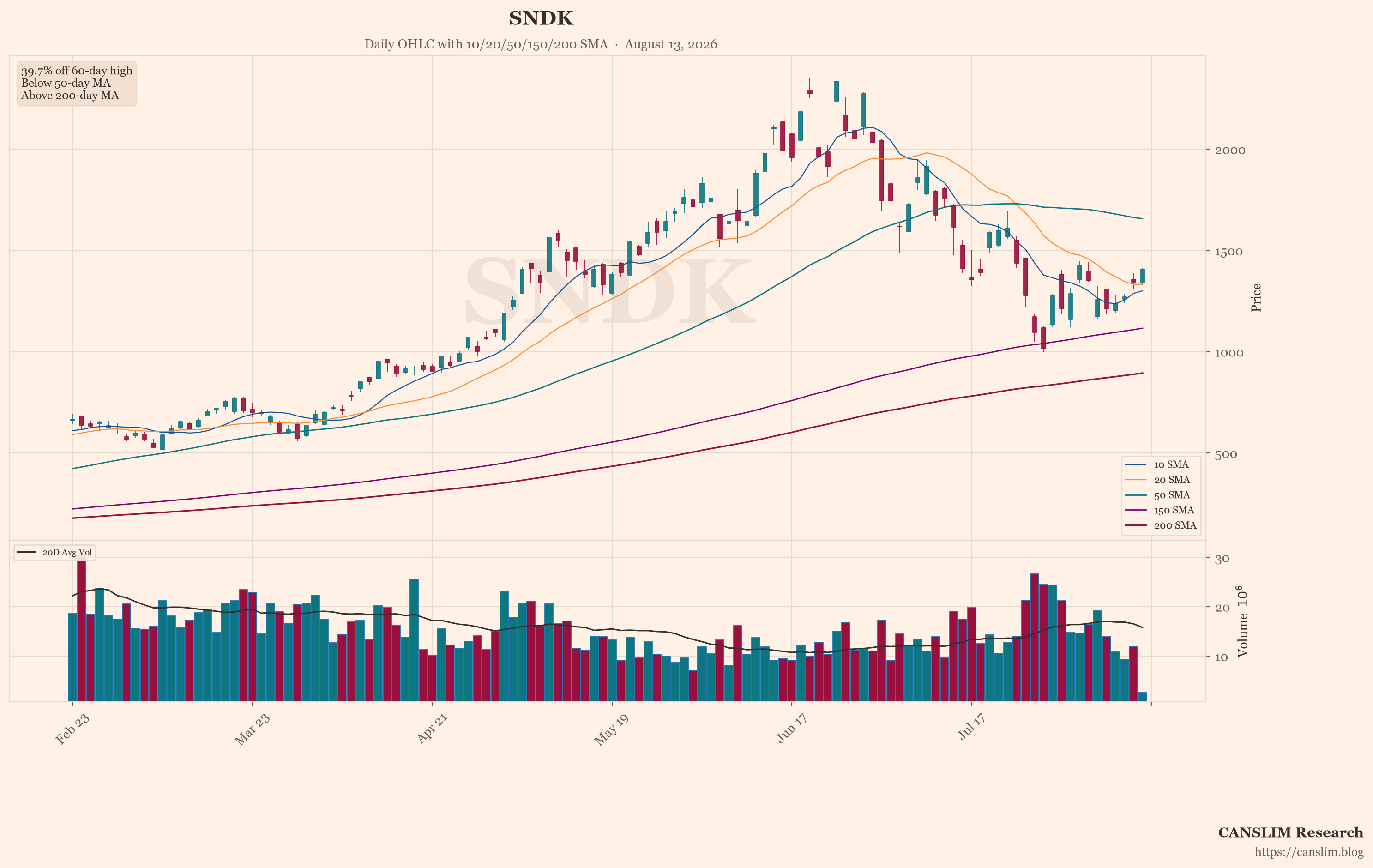
The online crowd is obsessed with memory stocks. SNDK surged +7.43% to 1641.28. MU rose +2.05% to 969.33. The CEO’s comments about “exploding” inference demand and guidance through 2030 fueled the fire. But fear of chasing is creeping in. Users keep asking, “Is it too late to go all-in?” That is classic FOMO. Meanwhile, the AI financing chain showed its first crack. Nvidia cut its OpenAI guarantee. Bears call it proof that AI infrastructure cannot secure funding. Bulls argue it is actually bullish for NVDA because spending less is better for the chipmaker. The 13F filings added fuel. Nvidia holds 122.8 million SpaceX shares, worth about $21 billion at quarter-end. The crowd mocks this as “circular financing.” NVDA earnings on August 26 are the make-or-break event. Implied volatility is ±7% .
The Featured Chart Shows a Weak Spot in AI Hardware
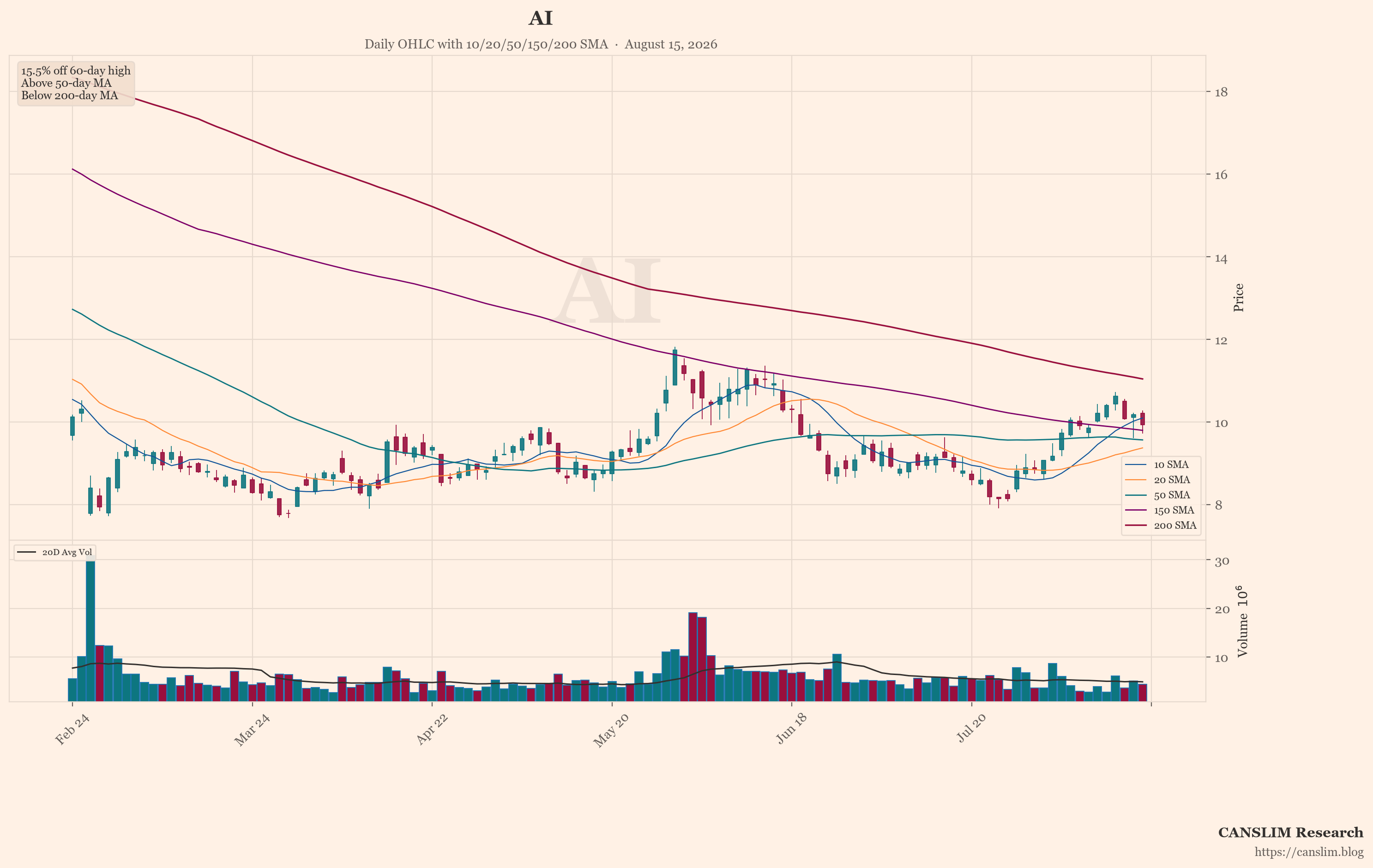
The featured chart is AI , the ticker for a major AI hardware name. It currently shows the weakest technical pattern among the leaders. While memory stocks break out and small caps make new highs, AI lags. This is a red flag for the sector. The online crowd is not talking about it much. They are focused on SNDK and MU . But the weak chart suggests that not all AI plays are equal. The market is rewarding specific niches, not the whole theme. If AI continues to underperform, it could signal that the AI trade is narrowing. Leaders like NVDA may hold, but laggards will drag.
Oil and Geopolitics Fade Into the Background for Now
Trump said he would declare the Strait of Hormuz “U.S. territory.” The market ignored it. The online crowd turned it into jokes. But the risk is real. About one-fifth of global crude passes through that waterway. Iran sanctions could push oil prices higher again. That would feed back into inflation. For now, the market is desensitized. But a real supply shock would change the narrative fast. The bullish case depends on inflation easing. An oil spike would break that assumption. Watch energy prices closely, even if the crowd is laughing.
The Path Forward Depends on Earnings and Patience
The market can support risk assets, but the road is narrow. The bullish case is intact if inflation keeps drifting lower and AI capex keeps pulling earnings higher. The bearish case is getting louder around deficits, rates, and consumer weakness. The online crowd is emotionally swinging between greed and fear, while the actual price action stays tight. That gap is the most consistent feature of this cycle. The key is to follow the volume and the charts, not the noise. AI ’s weak pattern is a warning. Memory strength is a signal. The next few weeks will tell which side wins. Stay patient, stay selective, and let the market prove itself.
Sources: market news brief & global social sentiment data. Updated 2026-08-15 22:00 HKT. For educational purposes only — not investment advice.
Discover more from CANSLIM Research
Subscribe to get the latest posts sent to your email.