 Elim
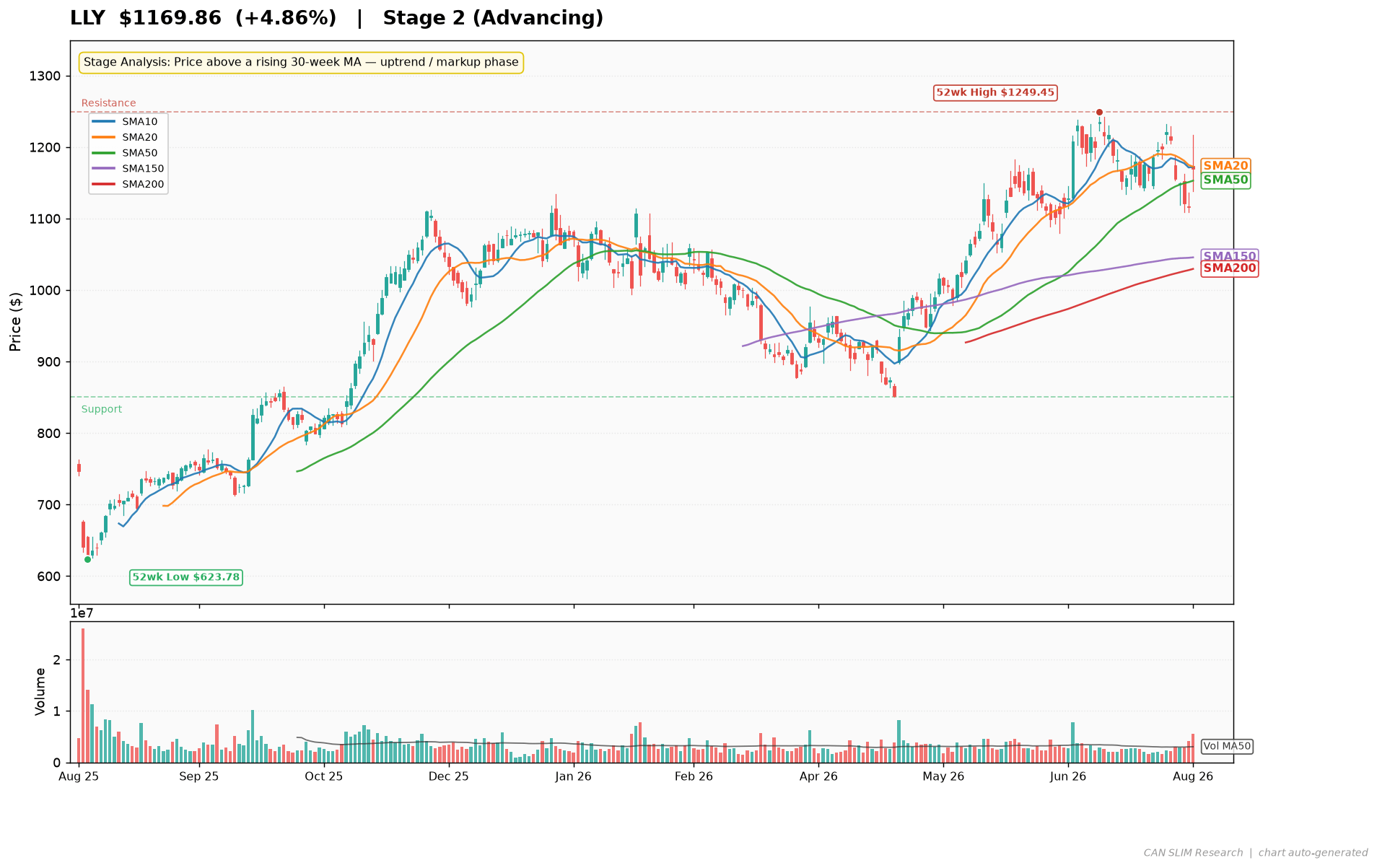
ElimEli Lilly reported another quarter of eye-popping headline numbers: revenue up 48% year over year, non-GAAP EPS of $8.38, and a raised full-year guidance. But beneath the surface, the real story is one of mounting pricing pressure, a new product launch that is still unproven, and a management team that is increasingly leaning on acquisitions and accounting adjustments to keep the growth narrative alive. The 48% top-line growth is real, but it masks a 9% decline in U.S. prices (excluding one-time rebate adjustments) and a reliance on a $250 million milestone payment from Jardiance to flatter European results. Meanwhile, the much-hyped Foundayo launch—the oral GLP-1 that management calls a ‘new modality’—has yet to show meaningful revenue contribution, and the company’s own CFO admitted that the raised guidance is ‘not yet a principal factor’ from Foundayo. Investors are paying a premium for a story that is increasingly about promise, not proof.
1. the Lede &Amp; the Real Story
The tension is clear: Lilly’s growth is becoming more expensive to sustain. The company is spending heavily on sales and marketing (up 25% year over year) and R&D (up 14%), while also deploying $3.1 billion on dividends and buybacks in the quarter. The non-GAAP EPS of $8.38 includes $3.03 in acquired IPR&D charges—a 57% jump from the prior quarter’s $0.52—which means the ‘clean’ earnings power is far lower than the headline suggests. The real story is that Lilly is buying growth through M&A and manufacturing build-out, but the core incretin franchise is facing price erosion that volume growth is struggling to offset.
2. the Negative Space — What They Didn’t Say
Management’s prepared remarks were notably silent on several metrics that were front-and-center in the prior quarter. In Q1, the company touted Foundayo’s early launch metrics: over 20,000 patients treated, 80% new to the GLP-1 class, and more than 8,000 prescribers. In Q2, there was no update on patient numbers, prescription trends, or prescriber counts. Instead, Dave Ricks vaguely said the launch ‘continued to build momentum’ and that they ‘began broad direct-to-consumer marketing.’ The omission is glaring: if the launch were tracking well, they would have shared numbers. The silence suggests that early enthusiasm may be waning, or that the company is waiting for more robust data before making claims.
Another missing metric: Zepbound and Mounjaro specific revenue breakdowns. In Q1, the company highlighted that these two products jointly generated $12.8 billion in global revenue. In Q2, the CFO only said ‘driven by ZEPBOUND and MOUNJARO’ without giving the combined figure. This is a classic dodge—when a company stops breaking out a key metric, it’s often because the growth rate is decelerating or the mix is shifting unfavorably. The U.S. price decline of 9% (excluding adjustments) is also buried in the Q2 call, whereas Q1 explicitly mentioned a 7% price decline. The company is clearly trying to downplay the severity of pricing pressure.
Finally, the company did not mention the competitive threat from generic semaglutide, which was a topic in Q1. In Q1, management acknowledged ‘early entry of generic semaglutide in some regions.’ In Q2, there was no mention at all. This silence is worrying because it suggests either the threat is worse than they want to admit, or they are hoping investors forget. The reality is that generic competition in international markets could erode Mounjaro’s market share, and the company’s silence on this front is a red flag.
3. Script vs. Reality
The scripted remarks were polished and confident. Dave Ricks opened with: ‘Q2 continued Lilly’s strong momentum. We delivered robust revenue across all key products and major geographies.’ That’s the classic upbeat opener. But in the Q&A, the tone shifted. When asked about Foundayo’s launch trajectory, Ricks hedged: ‘While still early, feedback from patients and physicians has been quite positive.’ That’s a far cry from the Q1 confidence when they were touting 20,000 patients. The word ‘early’ is a tell—it’s a way to preemptively excuse weak numbers.
Another moment of script vs. reality came when CFO Lucas Montarce discussed the U.S. price decline. In the prepared remarks, he said: ‘U.S. price declined by 3%, driven by ZEPBOUND and MOUNJARO. In Q2, U.S. price benefited from a change to estimates for rebates and discounts. Excluding these adjustments, U.S. price declined by 9%.’ That’s a classic bury-the-lede move. The 3% number is the headline, but the 9% is the reality. In the Q&A, when pressed on pricing sustainability, Montarce’s answer was defensive: ‘We are managing price dynamics in a competitive environment, and we remain confident in our volume growth.’ That’s a non-answer that reveals the pressure.
The most telling moment was when an analyst asked about the impact of the Medicare Bridge Program on margins. Ricks responded: ‘We are pleased with the access expansion, and we are working to ensure affordability.’ But he didn’t address the fact that the $50 per month cap could compress margins significantly. The script says ‘access expansion’; the reality is that Lilly is taking a hit on price to gain volume, and the long-term profitability of the obesity franchise is uncertain.
4. Evasion Tactics &Amp; the Hot Seat
The Q&A session was where the cracks showed. Here are the three toughest questions and how management dodged them:
Question 1: Foundayo’s Revenue Contribution
An analyst from Morgan Stanley asked: ‘Can you give us a sense of Foundayo’s revenue contribution in Q2, and how it’s tracking against your internal expectations?’
Dave Ricks: ‘We are very encouraged by the early uptake, and we are seeing strong demand. But it’s still very early days, and we are not providing specific revenue numbers for Foundayo at this time. We will provide more details as the launch matures.’
Plain English translation: We don’t want to admit that Foundayo is not yet a meaningful revenue driver, so we’re hiding behind ‘early days.’ If it were tracking well, we’d be shouting the numbers from the rooftops.
Did they answer? No. They deflected entirely.
Question 2: U.S. Price Decline
An analyst from Goldman Sachs pressed: ‘The 9% price decline in the U.S. is concerning. How should we think about the sustainability of pricing, especially with the Medicare Bridge Program capping out-of-pocket costs?’
Lucas Montarce: ‘We are seeing volume growth that more than offsets price declines. The Bridge Program is a positive for access, and we are managing the economics carefully. We remain confident in our ability to deliver strong earnings growth.’
Plain English translation: We’re hoping volume grows enough to make up for the fact that we’re giving drugs away cheaper. We don’t have a real answer on how we’ll maintain margins.
Did they answer? Partially, but they dodged the margin question.
Question 3: Competitive Threat from Generics
An analyst from JPMorgan asked: ‘With generic semaglutide entering international markets, how are you seeing the competitive landscape evolve, and are you seeing any impact on Mounjaro’s market share?’
Dave Ricks: ‘We compete on innovation and outcomes. Our portfolio is differentiated, and we are seeing strong growth in all regions. We don’t see generics as a near-term threat to our franchise.’
Plain English translation: We’re not going to admit that generics are eating into our sales, even though we know they are. We’ll keep saying ‘differentiated’ until the numbers prove otherwise.
Did they answer? No. They dismissed it with a talking point.
5. Excuses vs. Execution
Management leaned on several external factors to explain away weaknesses. The first is pricing pressure, which they attribute to ‘competitive dynamics’ and the Medicare Bridge Program. While it’s true that the industry is facing pricing pressure, Lilly’s 9% U.S. price decline is steeper than what peers like Novo Nordisk have reported. This suggests that Lilly’s pricing strategy is more aggressive, and the excuse of ‘competitive dynamics’ masks a potential misstep in pricing power.
The second excuse is the $250 million Jardiance milestone payment, which flattered European revenue growth. The CFO mentioned it in passing, but it’s a one-time item that inflates the 55% growth number. Excluding that, European growth would be lower, and the company didn’t provide that breakdown. This is a classic use of a one-time item to mask underlying deceleration.
Third, the company cited ‘continued investment in our pipeline’ as a reason for higher R&D expenses. But R&D spending is up 14%, while revenue is up 48%—so R&D as a percentage of revenue is actually declining. That’s not an excuse; it’s a sign that the company is being disciplined. However, the 25% increase in marketing and selling expenses is harder to justify, especially when the Foundayo launch is still unproven. The company is spending heavily to promote a product that hasn’t yet shown it can generate meaningful revenue.
Finally, the company didn’t mention any supply chain or manufacturing issues, which is notable given the massive build-out. But the fact that they opened a new facility in Lebanon, Indiana, and produced the first batch at Limerick suggests they are on track. Still, the lack of discussion about capacity constraints—which were a major topic in 2024—is suspicious. Either they’ve solved the problem, or they’re hiding a new bottleneck.
6. the CANSLIM Check
C & A (Current & Annual Earnings): The reported non-GAAP EPS of $8.38 is up 33% year over year, but it includes $3.03 in acquired IPR&D charges—a 57% jump from the prior quarter. Excluding those charges, EPS would be around $5.35, which is lower than the Q1 ‘clean’ EPS of $8.03 (excluding $0.52 in charges). That means the ‘clean’ earnings actually declined quarter over quarter. The annual guidance of $35.50–$37.00 implies a forward P/E of around 30x, which is rich for a company whose earnings quality is being propped up by one-time items and buybacks. The company repurchased $1.6 billion in shares in Q2, which boosts EPS artificially. The real earnings power is weaker than the headline suggests.
N (New): The touted new growth driver is Foundayo, the oral GLP-1. But the company has not disclosed any revenue from it, and the ‘20,000 patients’ metric from Q1 has not been updated. The launch is still in its early days, and the company is spending heavily on direct-to-consumer marketing. The question is whether Foundayo will cannibalize Zepbound sales or bring in new patients. The early data suggested 80% new-to-class, which is positive, but the lack of revenue disclosure is a red flag. The ‘new’ is still a promise, not a proven revenue stream.
S (Supply & Demand): Demand for incretins remains strong, as evidenced by the 48% revenue growth. But the supply side is a concern. The company is building new manufacturing facilities, but the fact that they are still in the ‘first batch’ stage at Limerick suggests that capacity is not yet fully online. The buyback pace of $1.6 billion in Q2 is aggressive, which could signal that management believes the stock is undervalued—or it could be a way to support the stock price. The volume growth is real, but the price declines are eating into margins. The demand is there, but the company is paying for it with lower prices.
L & I (Leader & Institutional): Lilly is undeniably a leader in the incretin space, with a strong pipeline and a dominant market position. But the stock is trading at a premium valuation, and the after-hours move was not mentioned in the transcript, which suggests it was muted. Institutional investors are likely still holding, but the lack of a strong post-earnings rally could indicate that the market is skeptical of the growth narrative. The moat is widening in terms of pipeline, but the pricing pressure and the reliance on one-time items could erode the premium. The stock is a leader, but it’s priced for perfection, and any miss could lead to a sharp sell-off.
The Bottom Line
Lilly’s Q2 results are a classic case of headline growth masking underlying fragility. The 48% revenue growth is real, but it’s driven by volume at the expense of price, and the earnings quality is questionable given the IPR&D charges and buybacks. The Foundayo launch is still unproven, and the company’s silence on key metrics is telling. Investors should watch next quarter for: (1) any update on Foundayo revenue, (2) the trajectory of U.S. price declines, and (3) the impact of the Medicare Bridge Program on margins. The key risk is that the obesity franchise becomes a race to the bottom on price, and Lilly’s premium valuation will be hard to justify if earnings growth slows. The current narrative is sustainable only if volume growth continues to outpace price declines—and that’s a big if. Proceed with caution.
Discover more from CANSLIM Research
Subscribe to get the latest posts sent to your email.